TOPSAIL BEACH WELL ISSUES?
Salt air, narrow lots, and barrier island reality demand the right equipment. Call 910.750.2312 for honest diagnostics.
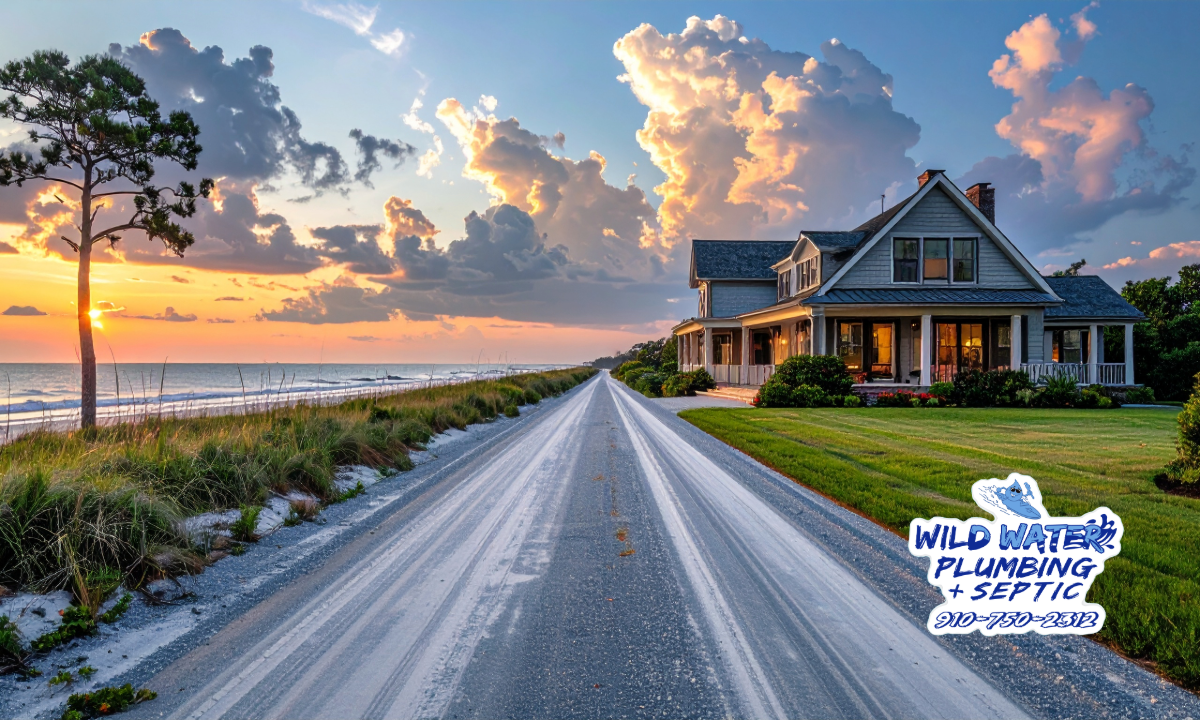
Topsail Beach is one of the most challenging environments in coastal North Carolina for a private well. The salt air corrodes equipment 3 to 5 times faster than inland installations. The narrow island lots mean wells, septic systems, and homes sit closer together than the state would prefer. The freshwater lens beneath the island is thinner than the mainland’s, increasing the risk of saltwater intrusion. And FEMA flood zone classifications add another layer of consideration whenever wellhead work occurs.
I run Wild Water Plumbing and Septic. Topsail Beach is part of my regular service rotation, and I have learned over the years what works on the island and what does not. Here is what every Topsail Beach well owner should know.
The salt air problem
Salt air does not sleep. Twenty-four hours a day, salt particles in the wind settle on every exposed metal surface within reach of the ocean. Brass and copper components turn green within months. Pressure switches develop pitted contacts, causing intermittent pump operation. Standard galvanized steel fittings show visible rust within a year. The upper section of a submersible pump just below the wellhead corrodes from the inside out as salt-laden air enters the casing through the cap vent.
The practical effect is shorter equipment life. A pump that would last 15 years in Burgaw might last 8 years on Topsail Beach if installed with standard components. The fix is to install stainless steel everywhere salt air can reach: pump motor housing, fittings, pressure switch, and control wire connections. The premium runs 15 to 25 percent above standard, and the lifespan extension pays for itself.
The narrow lot challenge
NC code requires a minimum 100-foot separation between a private well and any septic system. On a typical Topsail Beach lot that is 50 to 75 feet wide, the math gets tight fast. Many older Topsail Beach properties were drilled before current standards or are grandfathered under older spacing requirements. The result is some wells sitting closer to septic systems than ideal, which can show up in water quality testing as elevated nitrate or coliform bacteria.
For properties that fail to meet current standards, the options are limited. Drilling a new well further from the septic may not be possible. Switching to municipal water, if available, is the cleanest answer. For properties that must continue using the existing well, annual bacteria and nitrate testing, plus a treatment system to handle those contaminants, becomes the standing protocol.
The saltwater intrusion risk
Under Topsail Beach, freshwater floats on saltwater in a layered aquifer system. The freshwater lens is thinner than on the mainland because the barrier island sits between the ocean and the sound. Heavy pumping pulls the saltwater interface upward toward the well. Drought reduces rainfall recharge, further thinning the lens.
Chloride testing every two years catches early intrusions before they become a problem. Wells under 80 feet on the oceanside or soundside edges of the island carry the highest risk. Deeper wells into the Castle Hayne formation are safer because the freshwater lens is thicker at depth.
For confirmed intrusion, the options are reverse osmosis treatment for drinking water at the kitchen tap, drilling a deeper replacement well, or switching to municipal water where the line reaches.
FEMA flood zone considerations
Most of Topsail Beach sits in FEMA Special Flood Hazard Areas. That affects wellhead installation requirements: the casing must extend high enough above grade to keep floodwater out, and the electrical connections need to be above the base flood elevation. Any well work on the island should account for current flood zone standards even if the existing installation was grandfathered.
For properties planning major work or replacement, raising the wellhead and rerouting the electrical to meet current standards is a smart upgrade. Cost runs $400 to $800 depending on existing conditions.
📖 Topsail Beach wells face unique barrier island challenges.
For the full picture on every coastal NC well water issue including salt corrosion, water quality, and pump reliability, read my Complete Coastal NC Well Water Homeowner Guide.
Frequently Asked Questions
Do Topsail Beach homes have private wells?
Many older Topsail Beach homes still rely on private wells, particularly properties built before the municipal water system expanded across the island. Newer construction and homes closer to the developed core are usually on public water. The mix changes from block to block, and many properties have legacy wells used for irrigation only.
What does salt air do to Topsail Beach well equipment?
Salt air corrodes brass, copper, and standard steel components 3 to 5 times faster than inland equipment. Pressure switches, fittings, control wiring, and exposed pump components show visible corrosion within months. Pumps installed with standard components in Topsail Beach often fail 30 to 40 percent earlier than equivalent inland installations.
How does the narrow lot situation affect Topsail Beach wells?
Narrow lots mean wells, septics, and homes all sit closer together than ideal. The state minimum separation distance between a well and a septic is 100 feet, which is challenging to maintain on a 50 foot wide barrier island lot. Older properties sometimes do not meet current standards, which can affect water quality and resale value.
Should Topsail Beach wells use stainless steel components?
Yes for any equipment exposed to the salt air. Stainless steel pump motors, fittings, and pressure switches resist corrosion for years longer than standard components in this environment. The upgrade cost is 15 to 25 percent above standard, and the lifespan extension typically justifies the premium for any installation that needs to last more than 5 years.
Are Topsail Beach wells at risk of saltwater intrusion?
Yes, the risk is higher than on the mainland. The freshwater lens under a barrier island is thin compared to inland aquifers, which means pumping can pull saltwater toward the well faster. Chloride testing every two years is recommended. Wells under 80 feet deep on the soundside or oceanside edges of the island carry the highest risk.
Topsail Beach well service done right
I install stainless steel components on every Topsail Beach well install, test for chloride routinely, and bring island-specific experience to every service call.