Servicing Greater Jacksonville and Richlands • Veteran Owned
Cold Showers End Here. Expert Water Heater Repair and Installation.
Gas, electric, and tankless water heaters installed and repaired with military precision. We help homeowners across Onslow, Pender, and New Hanover Counties, plus Cedar Point, pick the right unit and install it right.
Licensed and insured • Schedule service ($99 standard service fee in our service area; higher fee outside our service area) • Rated 5.0 by local homeowners
Signs It Is Time to Replace
Six things a tank does on its way out. Two of them have the same cause, and it is the one nobody mentions.
Age of the unit
A storage tank heater usually lasts 8 to 12 years for gas and 10 to 15 for electric. Near or past that, start planning ahead rather than waiting for the cold shower.
Rusty water
When the hot water runs rusty or smells metallic, the tank is corroding from the inside, and that is usually terminal. The section below explains why it starts.
A leaking tank
A small amount of condensation is normal, but a puddle around the tank means a serious problem that needs prompt replacement.
Not enough hot water
Running out sooner than you used to is a classic sign the unit is struggling to heat as it should.
Rumbling or popping sounds
Sediment hardening at the bottom of the tank makes noise and forces the unit to work harder and less efficiently.
Rising energy bills
An aging, inefficient heater quietly costs you more each month. A modern unit can bring that back down.
Why Your Last Water Heater Died Young
A steel tank full of hot water should rust out in a few years. Yours does not, and the reason is a part most homeowners have never heard of. Inside the tank hangs a rod made of a metal more reactive than steel. Corrosion goes for the rod instead of the tank walls. That is its entire job, and it is consumed doing it.
Rod intact
Corrosion attacks the rod. The tank walls stay sound, and the heater quietly goes on doing its job for years longer than it otherwise would.
Rod spent
Nothing left to sacrifice, so the corrosion moves to the steel. This is the point where rusty hot water starts, and it is usually somewhere around year four or five.
Rods typically last three to five years. Tanks are sold as lasting ten or more. Those two numbers do not match, and the gap between them is where most water heaters actually die. A tank whose rod was replaced on schedule can reach the far end of its expected life. One whose rod was gone by year five spends the rest of its life unprotected, and it goes early. Then everyone calls it an old water heater.
It matters more here than in most places. Hard water, well water, and higher temperature settings all consume a rod faster. If you are on a private well, assume the shorter end of that range rather than the longer one.
Rod life and replacement intervals vary with water chemistry and use. Check what your manufacturer requires, since maintenance is often a condition of their coverage.
Three Types, One Right Fit for Your Home
What you have available and what you value decide this more than anything else.

Gas Water Heater
A popular pick for homes with natural gas service. Gas units typically cost less to run than electric and heat water quickly, so you get hot water fast.

Electric Water Heater
The right choice for homes without a gas supply. Electric units are simple, safe, and often more energy efficient, which helps keep energy costs down.

Tankless Water Heater
The modern option that heats water on demand, so you never run out. Tankless units use less energy than a standard tank and free up floor space.
Gas vs Electric vs Tankless, Side by Side
A quick look at how the three compare on the things that matter most.
| Feature | Gas | Electric | Tankless |
|---|---|---|---|
| Upfront cost | Moderate | Lower | Higher |
| Operating cost | Low | Higher | Lowest |
| Energy efficiency | Good | Better | Best |
| Hot water supply | Limited by tank | Limited by tank | Endless on demand |
| Typical lifespan | 8 to 12 years | 10 to 15 years | 20 plus years |
| Space needed | Tank footprint | Tank footprint | Compact, wall mounted |
| Heating speed | Fast | Slower | On demand |
| Best for | Homes with gas service | Homes without gas | Endless hot water and space saving |
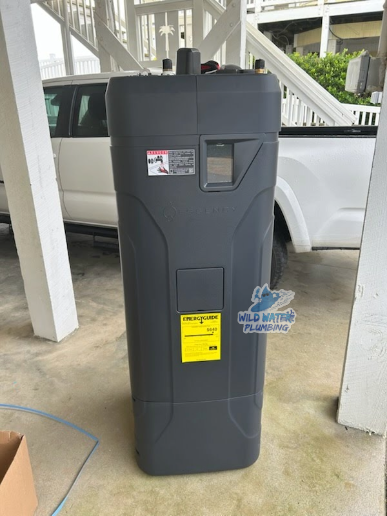
The Essency 55 Gallon On-Demand Electric Water Heater
When homeowners want dependable hot water that keeps up with the whole family, owner Justin Wilder recommends the Essency 55 gallon on demand electric water heater. It delivers fast, consistent hot water with dual heating elements and durable, corrosion resistant construction.
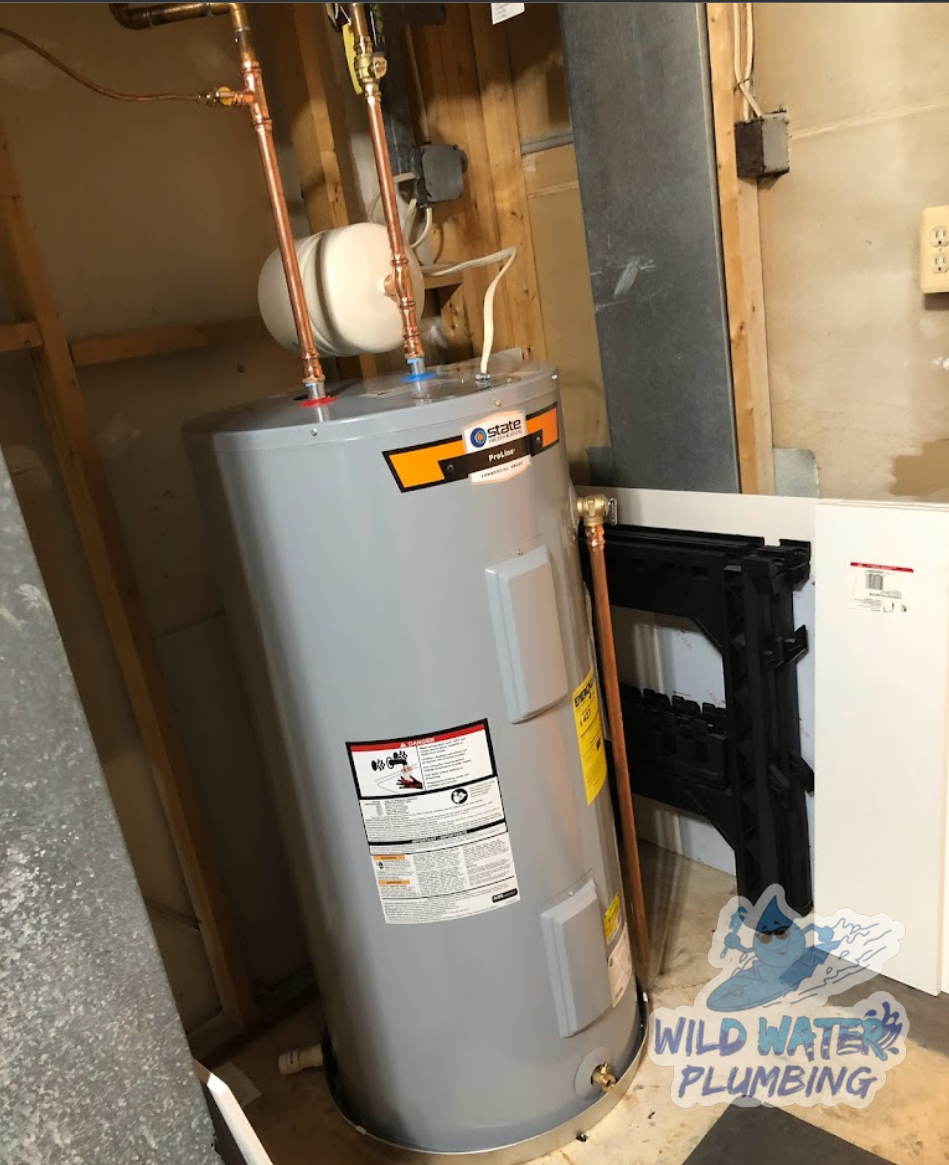
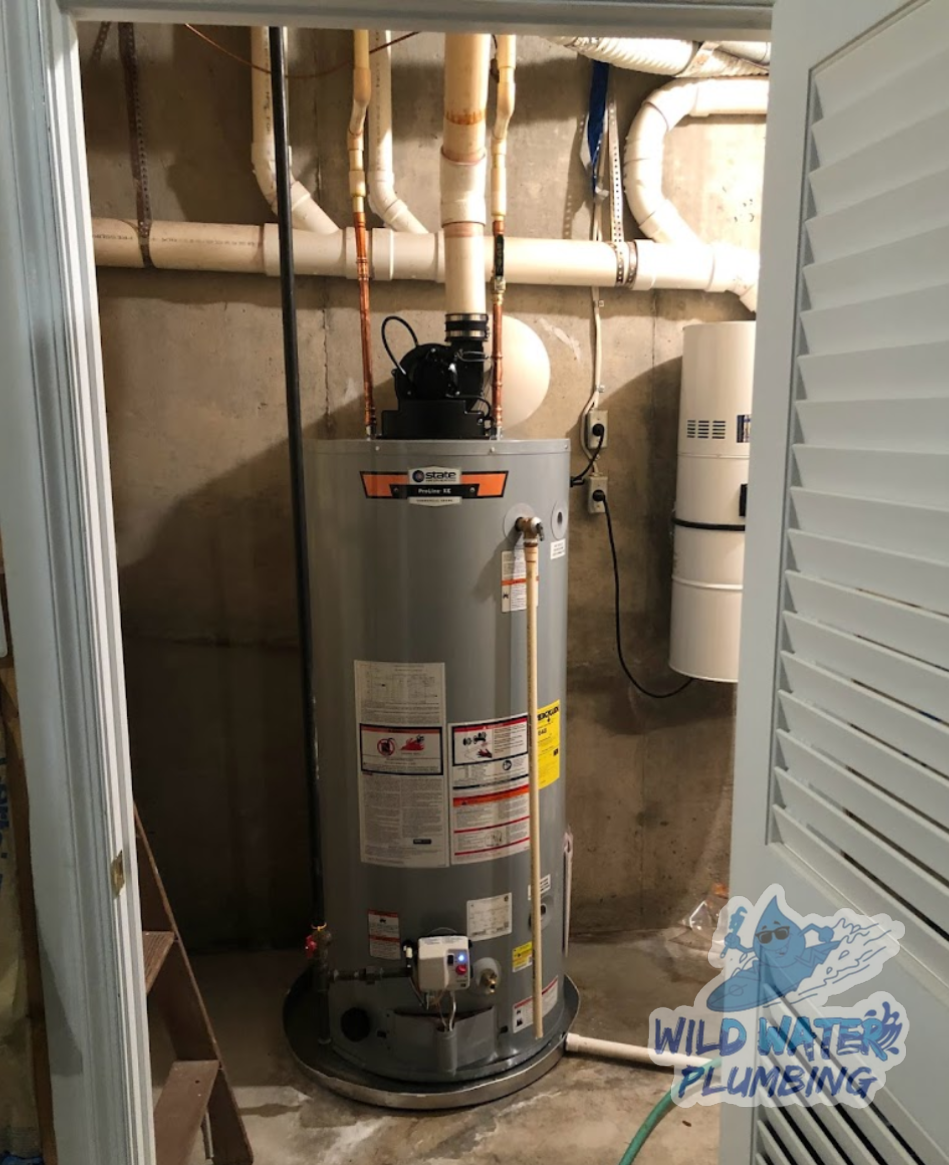
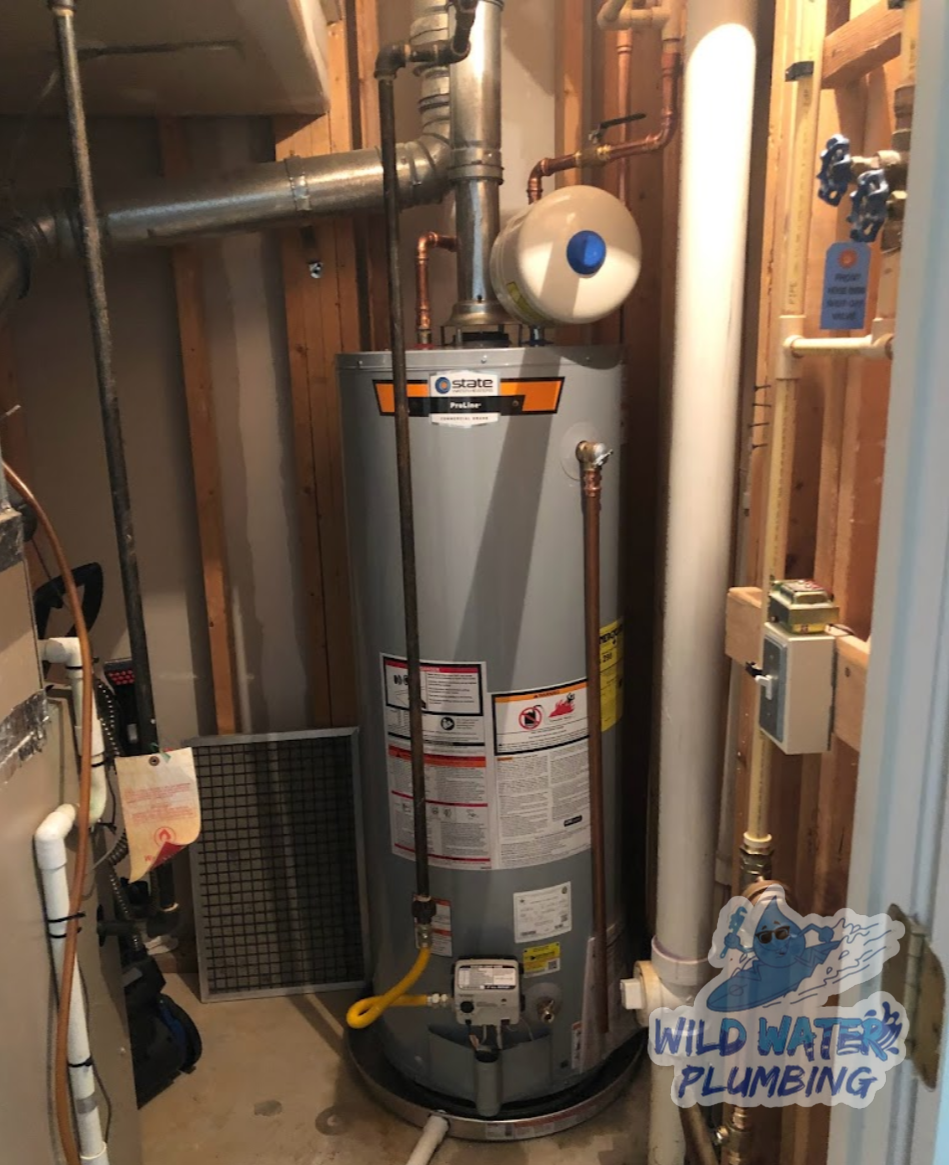
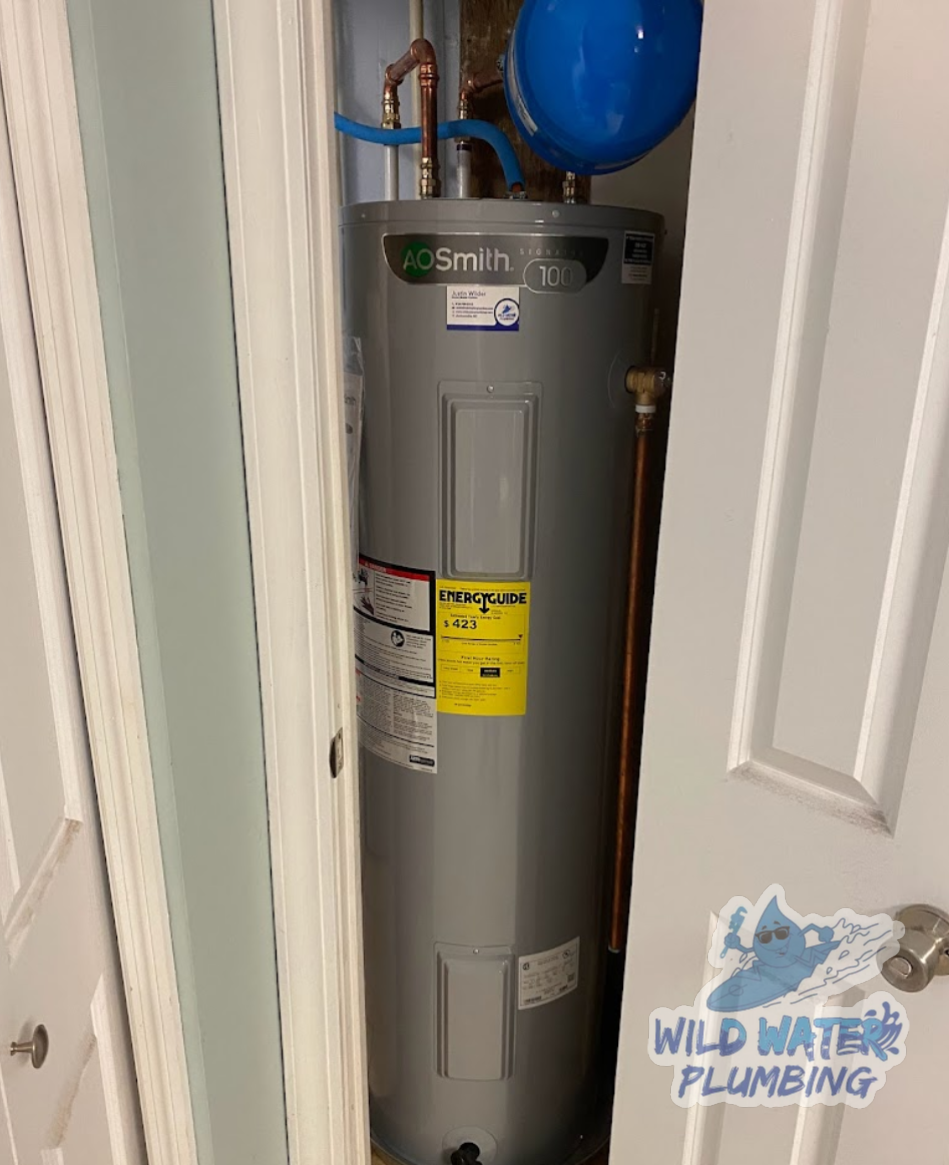
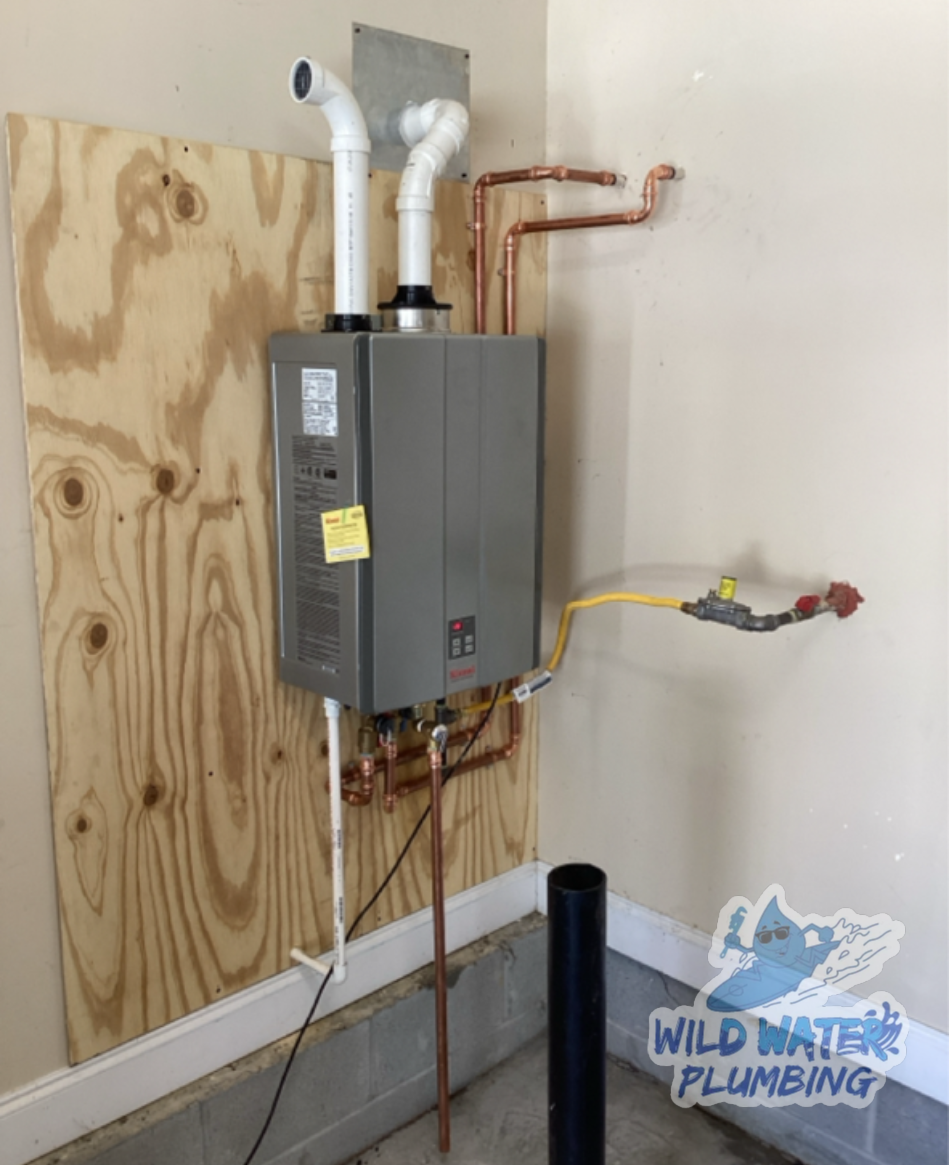
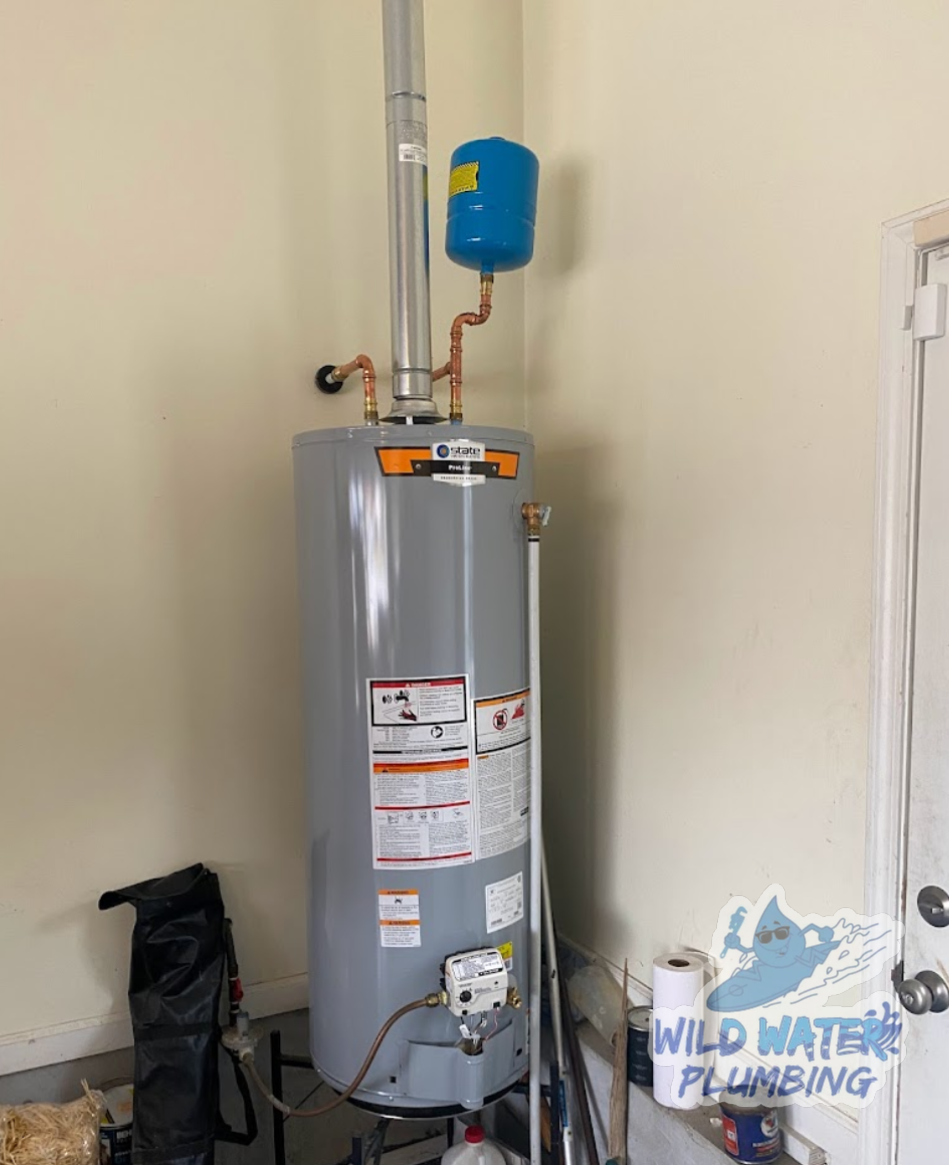
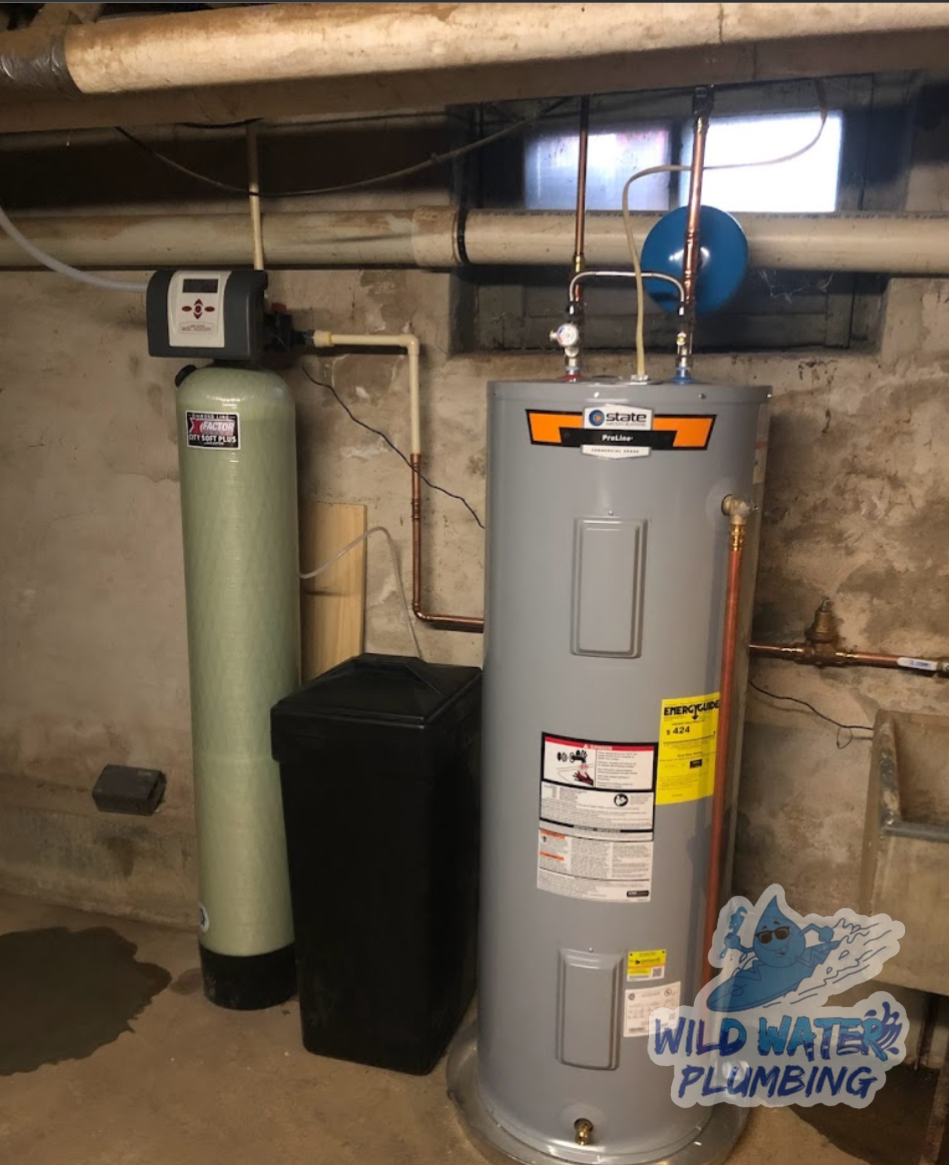
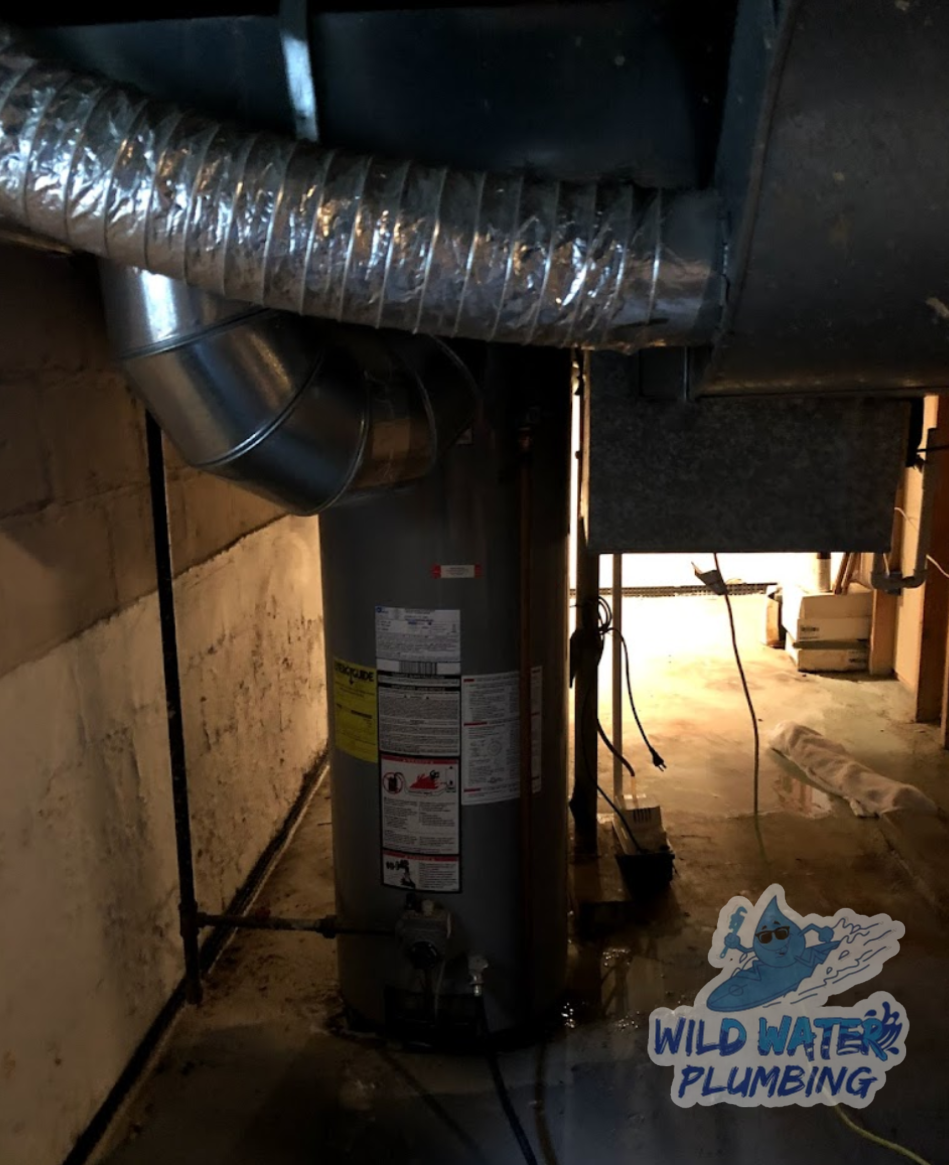
Recent Water Heater Installations
Real jobs across Onslow, Pender, and New Hanover Counties.
Replacing, or Trying to Get a Few More Years?
Both are worth a conversation, and they are very different conversations. Tell us how old it is and what it is doing.
Call 910.750.2312 Get a Water Heater QuoteWater Heater Service for Onslow, Pender, and New Hanover Counties
Wild Water Plumbing Reviews
Google reviews from homeowners across Greater Jacksonville, North Carolina.
Get Your Water Heater Quote
Fill out the form below and we will get right back to you. Prefer to talk? Call 910.750.2312.
Water Heater FAQs
How do I know which water heater is right for my home?
The right choice depends on your family size, your available fuel type, and your budget. Our team compares the options with you and helps you select the best unit for your household.
What are the signs I need to replace my water heater?
Watch for an aging unit, rusty or metallic smelling hot water, a leaking tank, running out of hot water, rumbling sounds from sediment, and rising energy bills. Any of these means it is time to have it looked at.
What size water heater do I need?
It depends on how many people are in your home and how much hot water you use. As a guide, a 40 gallon electric heater suits most two to four person households, while smaller or larger households may want something different. We size it with you.
Which is better, a gas or electric water heater?
Neither is better for everyone. It depends on what you have and what you value. Gas is often cheaper to run and heats faster, while electric units are simple, safe, and often more efficient.
Are tankless water heaters worth it?
For many homes, yes. Tankless units heat water on demand so you never run out, use less energy than a standard tank, last longer, and free up space. They do need proper venting and sizing, which is part of what we work out with you.
How long does a new water heater installation take?
It depends on the type and the complexity of the job, but most water heater installations are completed within one to two days.
Can I install a water heater myself?
A water heater is not a do it yourself job. It should be installed by a professional, since the gas, venting, and electrical work can be dangerous and a DIY install can void manufacturer coverage.
Why did my last water heater not last as long as it should have?
Very often because of the anode rod. It is a sacrificial metal rod inside the tank that corrodes in place of the steel, and it typically lasts around three to five years. Once it is gone the tank starts rusting from the inside. Hard water, well water, and higher temperature settings all use it up faster. Replacing it on a healthy tank is a small job, and it is the single biggest thing that decides whether you get eight years or fifteen.
What areas do you serve?
We serve homeowners across Onslow, Pender, and New Hanover Counties, including Greater Jacksonville and Richlands, North Carolina. In Carteret County we serve Cedar Point.
Related Services and Reading
Hot Water, Sized and Fitted Properly
We size it for your household rather than the shelf, handle the gas, venting, and electrical properly, and tell you when a tank has years left in it.
Call 910.750.2312 Schedule ServiceWild Water Plumbing + Septic • U.S. Navy Veteran Owned and Operated • Serving Onslow, Pender, and New Hanover Counties, plus Cedar Point, North Carolina Licensed and insured. • 200 Valencia Dr Unit 313, Jacksonville, NC 28546
Veteran Owned Plumbing Repair, Inspection, & Installation Services.
Plumbing Services
Additional Services
Plumbing Tips


PENDER, CARTERET, NEW HANOVER & ONSLOW COUNTIESAffordable Plumbing Services For Greater Jacksonville, North Carolina
