
BLUF (Bottom Line Upfront)
I live and work in Onslow County, North Carolina, and I’ve seen firsthand that a sump pump can be the only thing standing between your home and a flooded crawl space or basement. Our coastal region gets about 50 60 inches of rain annually, far above the U.S. average, and a single hurricane can dump two to three feet of water in days (Hurricane Florence dropped ~34 inches near Swansboro in 2018). Without a reliable sump pump, that water has nowhere to go but into your foundation and living space.
The bottom line: if your sump pump fails during a storm or when groundwater rises, your property is at risk of major damage. Even just 1 inch of water can cause up to $25,000 in damage to a home, ruining drywall, floors, and precious belongings. In this guide, I’ll explain in plain language how to troubleshoot common sump pump problems so you can keep your North Carolina home dry and safe. I’ll cover power outages (a major issue during hurricanes), mechanical failures, drainage issues, seasonal maintenance, and local coastal factors. By the end, you’ll know how to spot and fix sump pump issues before they become disasters, with practical tips drawn from my experience as a plumber in Onslow, Pender, Carteret, and New Hanover counties.
Top 10 Sump Pump Questions (FAQ)
- Why isn’t my sump pump turning on at all? First, check if it has power (plugged in and breaker not tripped). If the power is fine, a stuck float switch or a clogged pump inlet could be preventing it from activating. Gently inspect and free the float, and clear any debris from the intake. If it still won’t start, the motor or switch may have failed and need repair or replacement.
- Why does my sump pump run constantly? A pump that runs non-stop usually points to a stuck float switch or a problem with the switch settings. Ensure the float moves freely and isn’t snagged. Another cause could be water cycling back from the discharge line due to a missing/failed check valve, causing the pump to repeatedly re-pump the same water. High groundwater after heavy rains can also keep it running. Don’t let a pump run continuously; it can burn out the motor address the underlying cause.
- The pump is running, but it’s not removing any water why? If you hear the motor but little or no water is coming out, the likely culprit is a discharge blockage or frozen line. Check the discharge pipe for clogs (dirt, leaves) and ensure it isn’t frozen or kinked. Also verify the outlet outside hasn’t been buried or blocked. Less commonly, the pump impeller (the part that moves water) may be jammed or broken, requiring cleaning or repair.
- How far from the house should my sump pump discharge? At least 10 to 20 feet away from your foundation. If the outlet is too close, the water can seep back toward your basement or crawl space, causing the pump to run in a vicious cycle. Ideally, the water should exit downhill away from the home. Never route the discharge into your sewer line or septic system it’s often illegal and can overwhelm those systems.
- What maintenance does a sump pump need? Routine upkeep is simple but crucial. Test the pump monthly by pouring water into the pit to make sure it kicks on. Every few months, unplug and inspect the sump pit: clear any mud, gravel, or debris that could clog the pump. Check that the float switch moves freely and isn’t obstructed. Also, inspect the discharge line for clogs or freezing, especially before the rainy season or winter freeze. Consider an annual professional inspection for peace of mind.
- How often should I replace my sump pump (and how long do they last)? Most sump pumps last about 5 to 10 years in normal service. In coastal NC, where pumps may run frequently, the lifespan can be on the shorter end of that range. Manufacturers often recommend replacing the float switch every 2 years and the pump every 5 years as part of preventive maintenance. If your pump is over 5 7 years old or you don’t know its age, it’s wise to plan for a replacement. Keeping a backup pump on hand (pre-fitted with the right connectors) is also a smart move so you can swap quickly in an emergency.
- Do I need a sump pump if I don’t have a basement? Yes crawl spaces and low-lying foundations can absolutely benefit from sump pumps. Even homes without basements can flood; a crawl space sump pump helps keep groundwater from soaking your foundation, prevents mold and wood rot, and protects your HVAC ductwork or supports that might be in the crawl space. In our area, water often rises from below, so a pump is useful anywhere water can collect under the house.
- Is a sump pump required by the North Carolina building code? Not for every house. North Carolina’s building codes address sump pumps (how to install them safely) but don’t mandate them in every home. Typically, whether you need one is determined by local conditions high water table, flood-prone lot, or a basement below grade. That said, if you do have a sump system, NC code requires some specific features (like a high-water alarm, which I cover in this guide). Always check local code or ask an inspector if you’re unsure, since some jurisdictions in NC may effectively require them in certain new constructions or flood zones.
- What happens if my sump pump fails during a storm? If a sump pump gives out (or loses power) when you need it most say during a tropical storm or hurricane water can flood your basement or crawl space very quickly. You could end up with several inches (or feet) of water, leading to soaked belongings, mold growth, and even structural damage to your foundation. It’s a nightmare scenario: I’ve seen flooring ruined and drywall crumble because a pump died during a downpour. That’s why I strongly recommend having a battery backup pump or generator hookup. A backup pump will kick in automatically if the main pump or power fails, vastly reducing your flood risk.
- What’s the best way to protect my sump pump from power outages? In coastal NC, outages are common in big storms for example, Hurricane Florence knocked out power to over 100,000 homes in New Hanover County alone. To keep your pump running when the grid is down, you have a few options: battery backup systems (a secondary 12V DC pump powered by a battery bank) are popular and will automatically take over during an outage. Another approach is using a home generator (portable or standby) to supply power to your existing pump just be extremely careful with generator safety and backfeeding. There are also water-powered backup pumps that use municipal water pressure to pump out sump water (useful if you have city water). In any case, having some form of backup power or pump is critical for storm resilience.
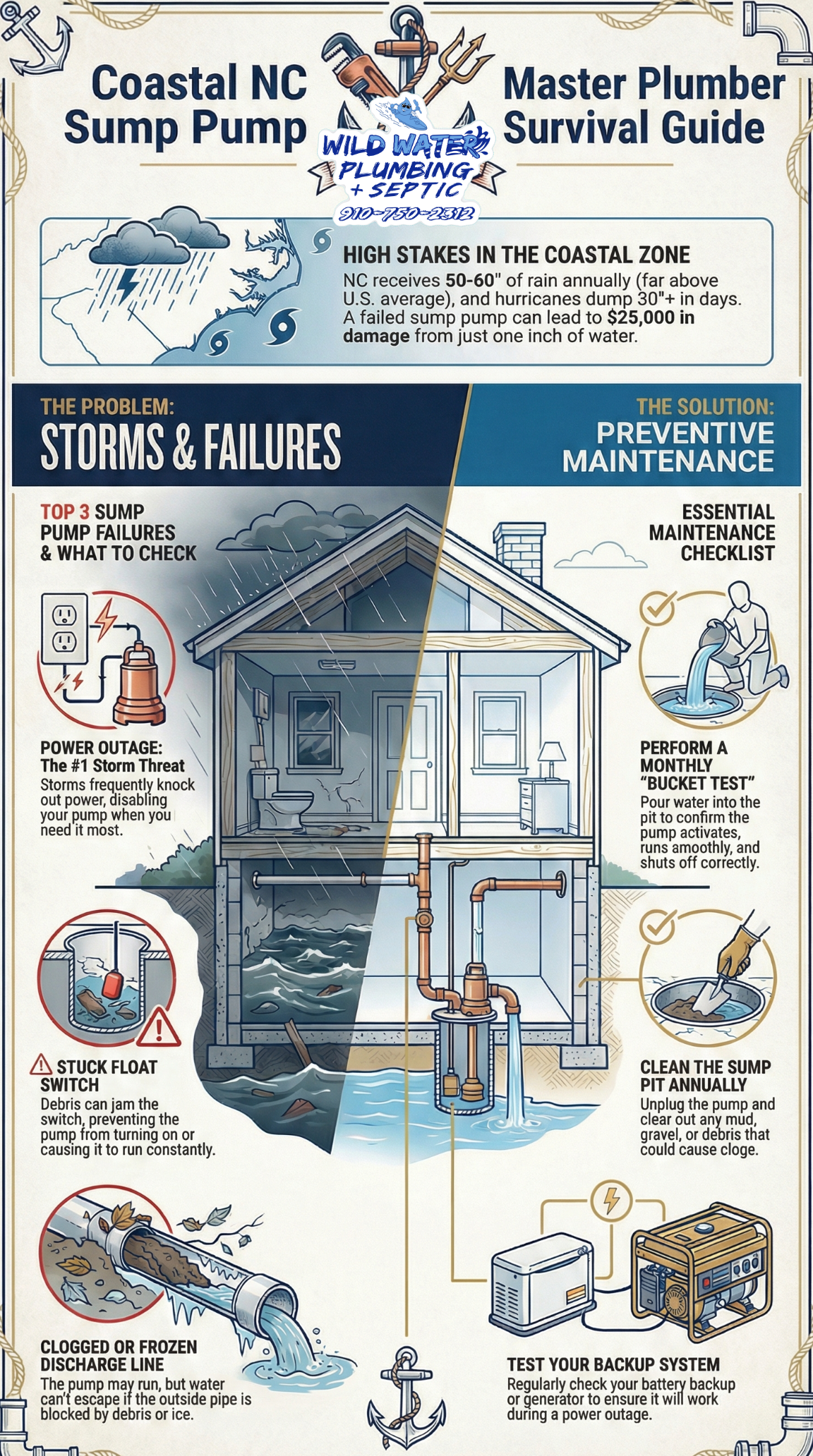
Table of Contents
- Chapter 1: Power Failures and Electrical Issues Understanding sump pump electrical needs, power outage strategies, GFCI tripping, and alarm systems.
- Chapter 2: Mechanical Problems and Pump Failures Troubleshooting float switches, motors, impellers, and common wear-and-tear issues.
- Chapter 3: Drainage and Discharge Issues Fixing problems with discharge lines, check valves, water cycling, and groundwater drainage.
- Chapter 4: Seasonal Maintenance and Safety Tips Routine upkeep, preparing for hurricane season, winterizing your sump system, and general safety.
- Chapter 5: Local Environmental Considerations (NC Coast) How our coastal geography and climate affect sump pumps, from high water tables to storm surges and saltwater concerns.
- References
Chapter 1: Power Failures and Electrical Issues
Keeping the Lights On (Literally): Sump pumps are useless without power. In coastal North Carolina, this is a major concern because strong storms often cause prolonged outages. When Hurricane Florence made landfall, 106,000+ homes in New Hanover County lost power within hours and countless sump pumps went silent. The first troubleshooting step if your pump isn’t working is always to check the power: Is the unit plugged in? Is the circuit breaker on? Many pumps are on a dedicated circuit as they should be so go to your electrical panel and see if that breaker has tripped. If so, reset it and listen if the pump kicks on. If the breaker keeps tripping immediately, don’t keep resetting it; that indicates an electrical fault in the pump or wiring that requires professional attention.
Dedicated Circuit & GFCI: Ideally, your sump pump’s outlet is on its own circuit with no other devices drawing power. This helps prevent overloads and nuisance trips. In fact, the North Dakota Extension notes that while sump pumps usually plug into a GFCI for safety, a ground-fault interrupter can sometimes trip due to surges (for instance, lightning during storms) and shut off power to the pump at the worst time. North Carolina’s electrical code has recognized this issue. As of 2025, NC requires that any GFCI outlet protecting a crawl space or basement sump pump must have the reset button in an accessible spot inside the home, with an indicator light to show if it’s tripped. This way, you’ll know if the pump’s outlet has lost power and can reset it quickly, rather than discovering a dead pump after your basement is full of water. If your pump is in an older home, consider having an electrician implement a similar setup so you can know immediately if a trip occurs. And remember: never bypass or remove a GFCI on a sump pump; it’s there to protect you from electrocution in damp locations.
High-Water Alarms: One of the best investments I recommend is a sump pump alarm. In fact, it’s not just a recommendation North Carolina plumbing code now mandates a high-water alarm for automatically pumped sumps in homes. This is a small float or sensor in your sump pit that triggers an audible (and sometimes Wi-Fi) alarm when the water rises too high (indicating the pump isn’t keeping up). It’s a critical early warning that something’s wrong either the pump failed, can’t handle the water inflow, or lost power. The alarm gives you precious time to respond (grab a generator, call a plumber, etc.) before the sump overflows. Ensure your alarm is on a different electrical circuit than the pump (as code requires), so that if the pump’s circuit breaker trips or power goes out, the alarm can still sound off (some alarms even have battery backup). If you don’t already have a high-water alarm, installing one or even a smart water sensor in the sump pit is a wise move for peace of mind.
Backup Power Solutions: Because power outages are so common during storms in our region, I can’t emphasize enough how important a backup power strategy is. There are two main avenues: a battery backup sump pump or a generator hookup. A battery backup system is typically a second, smaller pump that sits in the pit alongside your primary pump, wired to a marine-grade battery. When the power fails (or the main pump fails), the backup float switch activates the battery-powered pump to keep water moving. It can run for hours on a good battery easily through a passing storm squall or until you can get a generator running. Some higher-end backup systems will also kick on if the main pump is overwhelmed or dead (not just power outages), providing redundancy. The other option is to use a portable generator to power your main pump during outages. If you go this route, plan ahead: have a safe connection method to avoid backfeeding (ideally a transfer switch or inlet installed by an electrician). And always run generators outdoors with proper ventilation. The advantage of a generator is that it can run indefinitely as long as you have fuel, and can power other appliances; the downside is that you need to be home to start it (unless you have a fully automatic standby generator). For most homeowners, a battery backup pump is a simpler hands-off solution. In fact, FEMA’s National Flood Insurance Program specifically advises installing a battery backup to keep your sump running during outages. Personally, I have both: a battery backup for short outages and a portable generator for multi-day hurricanes. That combination has saved my home from flooding more than once.
Common Electrical Pitfalls: Sometimes the “failure” isn’t the pump at all, but the little electrical quirks. One example is a tripped GFCI outlet if your sump is plugged into a GFCI receptacle (which it likely is, per code), the GFCI can trip due to moisture or surges and cut power. If your pump’s not running, check the GFCI reset button on the outlet or upstream. Another one: accidental unplugging. It sounds silly, but I’ve seen cases where someone unplugged the sump pump to plug in a tool or holiday lights and forgot to plug it back in. Hours or days later, there’s water everywhere. Make sure the pump’s cord is secure and only in its outlet. If you need an extra outlet down there, hire an electrician don’t piggyback off the sump pump’s outlet. Lastly, old or undersized wiring can cause a voltage drop to the pump. If the pump hums but won’t start, especially on a long extension cord, it might be getting insufficient voltage. Pumps should be plugged directly into a properly grounded outlet no extension cords, except in an emergency; if so, use a heavy-gauge one. In short: give your sump pump a reliable power feed and backup power, and it will reward you by operating when it’s most needed.
Chapter 2: Mechanical Problems and Pump Failures
Even with steady power, a sump pump is a mechanical device with moving parts and will eventually have hiccups. Let’s run through the common mechanical failures and how to troubleshoot them:
Float Switch Stuck or Malfunctioning: The float switch is the “brain” of your sump pump, telling it when to turn on and off. If a sump pump is not kicking on or not turning off, nine times out of ten it’s a float issue. In a healthy system, when water rises, the float (whether a ball float or a vertical float) rises, triggering the switch to power the pump. If debris or pump wires jam the float, it may get stuck in the OFF position (water rises and the pump never engages) or in the ON position (the pump runs constantly and won’t shut off). Troubleshooting: Open your sump pit (ensure the pump is unplugged for safety while you manipulate the float) and inspect the float’s movement. Clear out any debris that could be impeding it; sometimes, a small piece of plastic or a wire tie is enough to jam it. If the float moves freely but the pump doesn’t respond, the float switch itself could be bad. Mechanical float switches do wear out; contacts corrode or internal parts stick. If you suspect this, you might need to replace the switch. Some pumps have an external float switch that you can replace independently; others (especially submersibles with internal floats) might require replacing the whole pump or adding an external piggyback switch. Pro tip: Make sure the sump pit is large enough if the pit is very narrow, a float can get wedged against the liner or pump. Most floats need about 18 inches of diameter clearance. If your pit is small, consider a low-profile float or a different switch type to avoid hangups.
Pump Runs But No Water Removal: If you hear the motor running but the sump pit water level isn’t dropping, the pump is not actually moving water. One likely cause is the impeller is jammed or broken. The impeller is a small fan-like rotor that spins to push water; if it’s clogged with gravel, dirt, or even a small toy (I’ve found kids’ toys in sump pits), it will spin ineffectively or not at all. Unplug the pump and pull it out of the pit. Inspect the intake and impeller area clear out any debris. Many sump pumps have a removable screen at the bottom; clean that. Also check the discharge check valve: if the check valve is stuck shut, the pump will pressurize but water can’t leave, so it just circulates internally (and often vibrates or gets hot). Detach the check valve and see if water in the discharge pipe flows back or if the valve is clogged. A frozen or blocked discharge line is another culprit (especially in winter), effectively causing a pressure lock the pump runs but water hits an ice plug and stops. You’ll notice this if the pipe outside is not spitting out water or you see ice. Thaw or clear the line before running the pump more. One more possibility: the pump has lost prime or is air-locked. Some pumps (particularly pedestal types) can get an air bubble trapped in the pump housing. Many pumps have a small vent hole in the discharge pipe near the pump to prevent air lock. If that hole is clogged, clear it with a toothpick. After any interventions, test the pump with a bucket of water in the pit and watch that it actually draws down the water.
Strange Noises, Shaking, or Grinding: All sump pumps make some noise, but you’ll learn what’s normal (a low hum and gurgle) versus bad noises. If you hear grinding, rattling, or screeching, that’s a sign of mechanical trouble. Common causes include a worn or damaged impeller (it might be scraping the pump housing), debris rattling around inside, or worn pump bearings. Sediment is a pump’s enemy abrasives like sand can wear the bearings and impeller quickly. Troubleshoot by pulling the pump and inspecting it. If you see obvious damage like broken impeller blades or a wobbling shaft, those parts likely need replacement (though at that point, replacing the pump is often easier unless it’s a high-end model with spare parts available). Clunk or thud: If you hear a loud clunk when the pump shuts off, that’s probably the check valve closing. A check valve with no silent or soft-close mechanism will slam as water pressure falls. It’s more of an annoyance than a critical issue, but if it’s very loud you can consider a spring-loaded silent check valve to dampen the noise. Vibration: If the pump vibrates excessively, check that it’s sitting level at the bottom of the pit and not against the sidewalls. Sometimes simply repositioning the pump or adding a rubber pad beneath it can quiet it down. Also ensure the discharge piping is secure; loose pipes can bang against framing when the pump starts or stops.
Overheating and Automatic Shut-offs: Sump pump motors can overheat if they run too long or get jammed. Most modern sump pumps have a thermal cutoff switch built in. If the motor overheats, it will shut itself off (to avoid burning out) and usually reset after it cools (typically 15 30 minutes). If you notice the pump runs, then stops on its own and later resumes, it may be tripping its internal thermal protection. This often indicates it’s overworked or there’s a blockage. One scenario is if the discharge pipe is frozen or clogged: the pump runs against a blockage, overheats, shuts off, cools, and repeats. In that case, immediately unplug the pump and clear the discharge path. Running a pump in a dead-head (no flow) condition will heat the water and the pump quickly. Also, ensure the pump isn’t running dry (that is, pumping when the pit is empty) that will also overheat a motor. Some pumps have float switches that can get hung, causing the pump to run even when no water is present, which is another reason to fix float issues promptly. If your pump frequently goes into thermal cutoff, it might be undersized (working too hard) or nearing end of life.
Short Cycling (Frequent On-Off): Does your pump seem to turn on every minute or two, even in moderate rain? Rapid cycling can wear out the motor and definitely the switch. The typical causes are float adjustment and check valve problems. If the float’s “on” range is too short (for example, turns on when water is 6 inches high but off when water is 4 inches, in a small pit), the pump will only empty a tiny bit before stopping, and then a trickle of water fills it again and restarts it. This can be resolved by raising the float or using a deeper sump basin, so the pump runs less often but for longer intervals. The other cause is a missing or leaking check valve on the discharge line. Without a check valve, when the pump shuts off, all the water in the vertical pipe just falls right back into the pit raising the water level and triggering the float again. It’s an endless loop. Make sure you have a functioning check valve installed; it should be just above the pump or at the top of the pit. If you do have one, listen for water trickling back when the pump stops if you hear it, the valve might be stuck open or cracked. Replacing a faulty check valve is a quick and inexpensive fix that will often stop short-cycling immediately. The North Dakota Extension notes that without a check valve, a pump will turn on and off more frequently than necessary and greatly shorten the pump’s life.
Total Pump Failure: Finally, sometimes a sump pump just dies no sound, no movement, nothing. If you’ve verified power is reaching it, the motor might be burned out or the internal wiring failed. Before declaring it dead, try pressing the reset (if it has one) most sump pumps do not have a reset button, but a few models with built-in GFCI plugs do. Usually, though, a non-responsive pump means it’s time for a replacement. As mentioned earlier, a lifespan of 5 10 years is typical. If a pump older than that stops working, I generally don’t bother trying to repair it (except perhaps replacing an external switch); a new unit is the safer bet. When replacing, consider upgrading to a more robust pump if your old one struggled to keep up, and take the time to clean out the sump pit and inspect the electrical when installing the new one.
Keep a Backup Handy: One lesson I’ve learned servicing coastal NC homes is that when a sump pump fails, the situation can get critical fast you may not have the luxury of time to go buy a new one while water is rising. I advise homeowners to keep a backup pump (or at least a backup plan). This could mean storing an inexpensive secondary sump pump on a shelf, ready to drop in if needed, along with the proper fittings to connect it to your discharge line. Some folks even install dual pumps side by side in the pit (one slightly higher than the other) the higher one acts as a backup if the primary fails or can assist if the first can’t keep up. Redundancy is your friend when it comes to flood prevention. Also, after any mechanical fix or replacement, test the system thoroughly: pour water in the pit, observe the on/off cycling, check for leaks in the discharge, and listen for any odd sounds. A few test runs on a sunny day can save your home on the next rainy night.
Chapter 3: Drainage and Discharge Issues
A sump pump is only as good as its ability to collect water and send it away from your house. Many problems that appear to be “pump failures” are actually drainage issues. In coastal North Carolina, where the ground can be saturated for weeks, ensuring proper discharge and drainage is critical.
Clogged Discharge Pipes: Your pump might be working perfectly, but if the water can’t get out of the house, you’ll still end up flooding. One common issue is a blocked discharge line. Debris, dirt, or even small critters can clog the pipe that leads water outside. I’ve pulled out pine needles, kids’ sticks, and even a buried hornet’s nest from discharge ends. Solution: Inspect the end of the discharge line outside your home regularly. Make sure it’s not covered by grass, mulch, or trash. Many homeowners add a protective grate or mesh on the end this can keep rodents out but also can accumulate debris, so clean it as needed. During heavy storms, check that water is freely flowing from the outlet. If you suspect an underground section is clogged, you may need to disconnect it and flush it with a garden hose or use a plumber’s snake to clear the obstruction.
Frozen Lines (Winter Troubles): While deep freezes are rarer on the NC coast than up north, we do get hard freezes some winters. A discharge pipe full of water in freezing temperatures can turn to ice and block flow. If your pump runs in winter (for example, during heavy rain or snowmelt) and the line freezes, the water will back up and potentially burn out the pump. Prevention: Bury your discharge line below the frost line (typically 12 18 inches down) or at least insulate any sections that are above grade. Ensure the pipe has a positive slope so water drains out and doesn’t sit and freeze. You can also install a freeze-resistant discharge adapter, which allows water to escape from the basement if the buried line is frozen essentially a relief outlet that will spill water near the house instead of in the basement (better a puddle outside than a flood inside). If you discover a frozen pipe, use safe methods to thaw it (heat tape or warm water on exposed sections). And consider adding an insulated cover over your sump pit or sealing any open crawlspace vents in extreme cold to keep the sump area a bit warmer.
Improper Discharge Location: Where your sump pump dumps water is as important as anything. In our service counties, I often see sump outlets that just dump right at the foundation footers effectively recycling water. North Dakota State University’s guidance (and common sense) is to route the water at least 20 feet away from the house if possible. In practice, 10 20 feet away is a good target in a yard. Use solid PVC pipe or a hose to carry water to a spot where it can safely percolate or run off. The goal is to send water downhill away from your foundation and your neighbors’ foundations. It should never be connected directly to your sanitary sewer line or a basement floor drain not only is that against code in most places, but during heavy rain, the sewer can back up into your house (a very nasty situation). In some areas, hooking a sump to the sewer can also get you fined because it contributes to sewage overflows. If you’re on a septic system, definitely do not pump into any part of that system the drain field can be overwhelmed, and it’s not built for that volume of water.
Recirculation and Grading Issues: Sometimes I hear from homeowners, “My pump runs constantly, and it’s always pumping out water, but my yard is always wet where is it coming from?” This could be a sign that the discharged water is finding its way back into the foundation drains a vicious cycle. This often happens if the ground near the foundation is poorly graded (sloping towards the house) or the discharge point is too close. The water you pump out simply percolates back down along the basement walls and into the drain tile, returning to the sump. Solution: extend the discharge farther and consider improving the yard grading around your home so that surface water flows away. In coastal NC’s flat terrain, it can be tough you may need to use swales or French drains to route water to a lower point. Also, make sure your gutters and downspouts are clear and directing roof runoff well away a significant amount of water can come off your roof in storms, and if those downspouts dump it at the foundation, your sump will have to work that much harder. Simple downspout extensions to carry water 10+ feet out can dramatically reduce how often your sump pump runs.
Drain Tile or Inlet Issues: A sump pump usually isn’t working on its own; it’s part of a system that includes perimeter drain tiles or pipes that feed water into the sump pit from around your foundation. If those drains are clogged (say with sediment) or broken, water might not reach the sump pit efficiently and could be leaking into your basement instead. Signs of this include water seeping through cracks even when the sump pit is relatively low. While cleaning or repairing foundation drains is a bigger job (often requiring a pro to flush or even excavate), one thing you can check is the inlet holes of your sump basin. If your sump pit has small holes where water enters from the drain tile, make sure they are clear. I’ve seen pits where silt or iron bacteria clogged the inlet holes, effectively sealing off the basin from incoming water. That can lead to water pooling elsewhere. Cleaning those out or drilling a couple of new, clean inlet holes (if the system design allows) can help the water reach the pump. If you suspect a drain tile blockage, you might need a plumber or waterproofing specialist to do a high-pressure flush of the system or other remediation.
Check Valve and Discharge Line Leaks: I mentioned check valves earlier in the context of short cycling. Here’s another nuance: if the check valve is not seated properly or has a slight leak, water from the vertical column will seep back and can keep the pump primed with water (not enough to trigger the float immediately, but enough to slowly refill the pit). Over hours, that could cause the pump to periodically burp on for a second. If you experience intermittent, low-volume pump cycles, inspect the check valve for leaks. Also, check all fittings on the discharge line for drips. A small sprayer leak in the discharge pipe inside your basement can go unnoticed but it might be spraying onto the foundation wall causing water to seemingly “leak in” when in fact it’s sump water escaping. Run the pump and watch the piping. Tighten any hose clamps or PVC joints that show moisture.
Sump Discharge Odors or Iron Bacteria: On the topic of drainage, occasionally, homeowners call about a “rotten egg smell” or orange slime in the sump or discharge. This is often due to anaerobic bacteria or iron ochre in the groundwater. While it’s not a typical mechanical problem, heavy bacterial growth can coat and clog drains. If you see orange-brown jelly-like slime, that’s iron bacteria common in some areas with high iron content in groundwater. It can clog drain tile perforations and sumps. Flushing the system with a bleach solution can help (pump the bleach water out to kill growth), but be cautious: do not use strong chemicals regularly in the sump it can corrode the pump and pit. If odors are an issue, a diluted bleach (like a cup of bleach in the pit water, then pump out) can occasionally freshen it. Just avoid using harsh cleaners too often. If sewer gas smell is coming, it means someone may have tied a floor drain or something to the sump discharge incorrectly sumps should not be connected to the sewer, as noted. That would need a plumber’s correction.
Bottom line for Chapter 3: Ensure your sump pump’s hard work doesn’t go to waste by fixing discharge issues. The water needs to get out of your home and stay out. If you troubleshoot and make improvements to the discharge line, check valve, and yard drainage, you’ll reduce the load on the pump and lower the risk of it ever being overwhelmed. This is especially important in our flat, flood-prone NC coastal areas, where standing water can linger you want that water as far from your foundation as possible.
Chapter 4: Seasonal Maintenance and Safety Tips
Think of your sump pump like a trusty firefighter: it sits most of the time quietly, but when a “fire” (flood) starts, it has to spring into action.Regular maintenance is how you ensure it will answer the call. Many homeowners (understandably) forget about the sump pump when the weather is dry. But in Onslow, Carteret, Pender, and New Hanover counties, we have definite wet seasons and storm seasons that demand a ready sump. Here’s how to keep your system in top shape year-round:
Routine Testing Make it a Habit: Set a recurring reminder (monthly is great, especially during rainy months) to test your sump pump. This is simple: pour a bucket or two of water into the sump pit, enough to raise the float until the pump kicks on. Watch it discharge the water. The pump should run smoothly and then shut off a few seconds after the water level drops. If it doesn’t run, or sounds sluggish, treat that as an early warning and investigate why now not when there’s a storm and a foot of water down there. Many experts, including local pros, suggest doing a quick test at least every month or two during wet seasons. At minimum, test before the heavy spring rains and before hurricane season peaks (late summer). Also, after a long dry spell, keep in mind the pump’s internal seals can dry out. Pouring a bit of water in occasionally not only tests the pump but also keeps it lubricated and prevents odors by flushing out stagnant water.
Inspect and Clean the Sump Pit: Over time, any sump pit will accumulate some sediment sand, dirt, little rocks that come in with the water. If too much gunk builds up, it can clog the pump’s intake or affect the float. I recommend cleaning the pit once or twice a year (spring and fall, perhaps). Always unplug the pump before maintenance! After ensuring power is off, lift the pump (if feasible) and set it aside. Scoop or shop-vac out the debris from the bottom of the pit. Also clean the pump’s intake screen on submersible pumps, there’s usually a grate where water enters; clear any slime or mineral deposits off it. Be gentle with the float and switch. If you removed the pump, when you put it back, make sure it’s positioned properly (straight, level) and that the float can’t hit the basin wall. A little trick: placing the pump on a brick can help elevate it so it’s not sitting in the very bottom where debris accumulates, which can extend its life by avoiding sucking up as much sediment. Just make sure the brick is stable and doesn’t interfere with the float.
Check the Discharge and Vent: We’ve discussed discharge line issues in Chapter 3. Maintenance-wise, do a seasonal walk-around of your property. In fall, make sure leaves haven’t piled up over the outlet. In winter, ensure the end of the line isn’t buried by snow or frozen. If your discharge has any kind of grate, clear it. If your pump has a vent hole (a small anti-airlock hole in the discharge near the pump), quickly check that too use a toothpick to ensure it’s open. These small steps will guarantee that when the pump runs, the water has an open path out.
Backup Systems Check: If you have a battery backup pump, include it in your maintenance routine. Check the battery fluid levels (if it’s a lead-acid battery) and refill with distilled water as needed per the manufacturer. Backup batteries typically last 3 5 years; testing the backup pump is just as important as testing the main pump. Many backup systems have a test button use it. Or you can simulate a power outage (unplug the main pump, or trip its circuit) and then fill the pit with water to see if the backup kicks on. Better to discover a dead backup battery on a calm day than during a power outage in a storm. If you rely on a generator, test-start the generator each season as well, and keep fresh fuel (with stabilizer) on hand. Practice hooking it up to ensure you know the drill.
Seasonal Specific Tips Spring and Hurricane Season: Spring in eastern NC can bring heavy rains, and late summer into fall is hurricane season with torrential rains. Before the rainy season (April May), give your sump system a thorough check: test the pump, clean the pit, and consider proactively replacing an old pump if it’s near the end of its life. I often advise folks: if your pump is 7+ years old and we’re heading into a predicted bad hurricane season, it might be worth changing it out now. Also, review your backup plan is that battery good? Is the alarm working? Have emergency phone numbers handy in case you need professional help under duress.
Winter Prep: While we don’t get severe winters, a mid-winter warm spell with heavy rain on frozen ground can cause surprise flooding. Before winter, disconnect any exterior sump discharge extensions that can’t be buried and might hold water or use a freeze-proof attachment. If your pump rarely runs in winter, still test it occasionally. Some people cover their sump pit in winter with an insulated cover (not sealed airtight, but something to keep very cold air out of the pit). If you do this, ensure it’s removable, and the pump can still function if needed. Additionally, remember to keep your basement or crawl space above freezing; if you have vents in a crawl space, close them in winter to protect plumbing and the sump pump from extreme cold.
Safety First Electrical and Personal: Whenever you work on your sump pump, unplug it. If you’re standing in any water, absolutely cut power at the breaker before touching the pump. Sump pits can be nasty wear gloves, and if you suspect the water might be contaminated (e.g., from a sewage backup or high levels of bacteria), wear protective clothing. I keep goggles and even a face mask handy when cleaning out long-neglected sumps, as the splashback can be unpleasant. Another safety tip: never stick your hand into a sump pit with the pump powered, even if it’s not running. The pump could turn on unexpectedly, and you don’t want your hand near the impeller. Keep children away from sump pits; curious kids might see them as little indoor ponds I’ve found toys in there as evidence!
Professional Inspection: I’m all for DIY when it’s manageable, but consider having a professional inspect your sump system once every year or two, especially if you’ve had issues or if your pump runs very frequently. A pro might spot things you miss like a partially blocked drain tile, an undersized pump, or an electrical risk. They can also flush your drain lines, service any backup battery, or replace components preemptively. Think of it like servicing your HVAC before summer a quick checkup can save a lot of trouble.
Extra Equipment Nice-to-haves: In addition to the high-water alarm we discussed, there are some other additions worth considering. One is a sump pump cover a lid over the pit (often plastic) that can be sealed. This is required in some places for radon mitigation, but even aside from radon, a cover will reduce evaporation and humidity from the pit and keep debris (and kids’ toys) from falling in. Just ensure any cover is not fully airtight if your sump also collects water from a perimeter drain (some airflow is needed, or use one with a vent). Another gadget is a Wi-Fi water sensor: you can place it to alert your phone if water is detected where it shouldn’t be (like on the basement floor). This can give you early warning of a sump overflow or failure if you’re away. Finally, if your sump pump discharges across a yard or into a french drain, consider an inspection port or cleanout in the discharge line. This is simply a way to periodically access and flush the line or check for obstructions.
In summary, seasonal maintenance of your sump pump is not time-consuming a quick check here, a cleaning there, done in maybe 15 30 minutes but it dramatically increases the chances your pump will work flawlessly when Mother Nature challenges it. Given our local climate’s mood swings (dry one month, flooded the next), a little regular TLC for your sump pump will protect your home and give you peace of mind year-round.
Chapter 5: Local Environmental Considerations (Specific to Coastal NC)
Sump pumps don’t operate in a vacuum they’re deeply affected by the environment around your home. In Onslow, Carteret, Pender, and New Hanover counties, we have some unique coastal factors at play. I want to close this guide by discussing how our local geography, climate, and soil conditions influence sump pump issues, and what extra steps homeowners here should take.
High Water Table and Soil Types: Much of coastal Carolina sits at or near sea level, with a water table that can be just a few feet below the surface (or at the surface in wet seasons!). In Onslow County, for example, areas around Jacksonville and Richlands often have clay-heavy subsoil beneath a sandy top layer. That clay acts like a bowl, holding water. I’ve dug down a foot in some yards and hit water because the soil is so saturated. This means that after rains, the groundwater rises quickly sometimes even without rain, a high tide or upstream rainfall can push groundwater up. Homes in such areas experience sump pumps running frequently even days after a storm, because the earth is draining slowly. In other parts of our region, like eastern Pender or around Wilmington, you may literally be on former marshland or “made” land that used to be wetlands. The soil just stays wet. If your house is in a neighborhood with swampy place names (we have areas called “Castle Hayne” after a wetland, or “Burnt Mill Creek” etc.), chances are the soil doesn’t drain quickly and your sump may run more often. What can you do? Mainly, just be aware that your sump pump might have to handle continuous groundwater, not just occasional rainwater. Choose a pump rated for continuous duty and consider a backup pump because the wear and tear is higher. If you notice your pump runs during high tide cycles, you’re not imagining things in low areas like parts of Carteret County, tidal flooding inland can raise groundwater and absolutely cause your sump to activate.
Torrential Rain and Storm Surges: Coastal NC is hurricane alley. We get not only hurricanes but also nor’easters and severe thunderstorms that can drop an astounding amount of water in a short time. For instance, during Hurricane Florence in 2018, parts of Pender County (such as around Burgaw) and Onslow County received well over 30 inches of rain in a single event, leading to historic flooding. No sump pump can single-handedly save a home from that much water if it has nowhere to go, but a good sump pump can mitigate much of the water intrusion. One big consideration here is power loss during big storms, which we covered make sure to have backup power. Another is inflow volume: if you know your area is prone to flash flooding or extreme rain, you might need to oversize your sump pump or have a secondary pump. The standard 1/3 HP pump might not keep up when 3 inches per hour of rain is falling. Many homeowners, after Florence, upgraded to 1/2 HP or even dual pumps because their original pump just couldn’t keep up with the inflow, and the basement still got a foot of water. Storm surge and coastal flooding pose another challenge if the area outside your home is flooded (say your yard has a foot of standing water from surge or river flooding), a sump pump actually can’t push water out because there’s nowhere for it to go (the discharge would be underwater). In these scenarios, the sump pump still helps by moving water around and possibly keeping the interior water level a bit lower, but it’s fighting a losing battle until external flood waters recede. For those in low-lying evacuation zones, keep in mind a sump pump is not a substitute for proper flood preparedness consider things like installing flood vents in crawl spaces and elevating HVAC and electrical systems. The pump is one tool in the toolkit.
Salt Air and Corrosion: Being near the ocean comes with its own maintenance challenges. The salt-laden air in coastal counties can corrode metals faster. Sump pumps often have cast-iron or steel components (though many have stainless-steel parts to resist rust). Keep an eye on any visible corrosion on your pump, especially if you live right on the coast or on a saltwater canal. Also, if your sump pit ever receives saltwater (brackish) intrusion which could happen if, say, a storm surge pushes saltwater under your slab be sure to rinse the pump and pit with fresh water after the event if possible. Salt can crystallize and corrode pump internals. In general, coastal homeowners might consider sump pumps with higher corrosion resistance (bronze or stainless construction, or high-quality thermoplastic). And remember the Superior, WI city guide’s point: sump pumps are not designed to pump salt water or chemicals. Doing so can void warranties and eat away at components. Sometimes you can’t avoid a bit of saltwater in a flood situation, but minimize it and clean up afterward. Additionally, any electrical connections or alarms should be in protected, non-corroding enclosures. A tiny bit of corrosion on a float switch contact can make it fail at the worst time, so ensure your sump system components are rated for damp environments.
Crawl Spaces vs. Basements on the Coast: A lot of homes in our area are built on crawl spaces due to the high water table full basements are less common, especially closer to the coast (they do exist in some elevated or inland spots). Sump pump setups in crawl spaces have some special considerations. Crawls are often tighter and get dirtier. If your sump is in a crawl space, make sure you have easy access to it I’ve crawled under homes where reaching the sump pump was an adventure in itself. It’s worth installing a decent access door or hatch if one doesn’t exist, because you’ll need to maintain that pump. Also, use a tight-fitting lid on crawl space sump pits if you can (many crawl sumps are just open holes) this helps keep moisture and odors down and prevents critters from exploring your pit. And speaking of critters: coastal NC has its share of snakes, frogs, and insects. I’ve found a small frog clogging a sump switch before! A cover helps, and some mosquito dunks in standing water nearby can reduce bugs. Another consideration: vented vs. sealed crawl spaces. In a sealed crawl (which is becoming more popular, with dehumidifiers and all), if you have a sump, that sump pit should be sealed too to not allow moisture vapor out. Make sure any sump in a conditioned/sealed crawl space has an airtight lid and, if required, an exterior vent.
Local Code and Resources: It’s worth noting that our local county governments and utilities sometimes have resources for homeowners about drainage and flooding. For example, the Carteret County inspections department offers guides on flood zones and advises homeowners on drainage improvements. They encourage practices such as French drains, grading, and other measures that go hand in hand with a sump system. Some towns in these counties also require backflow preventers on outfall lines if you’re in a city sewer area (to prevent sewer backflow slightly separate issue from sump, but relevant if you have any combined systems). Always check if you need a permit or inspection when installing a new sump pump system in NC. A plumbing permit is often required for installing a sump pump, since it ties into the drainage system. As mentioned earlier, the NC building code requires certain features for sump pumps, such as alarms and proper piping, as well as dedicated circuits per electrical code. Hiring a professional installer in our area will ensure these are done right.
Environmental Stresses Hurricanes to Heat: The coastal environment can be harsh. We’ve talked about water and salt, but also consider heat. Summers here are hot and humid. A sump pump in a crawl space that’s 90+ degrees and humid can create more condensation, potentially rusting things more quickly. It’s not a huge issue, but I’ve seen some pump motors with rusted housings, presumably from years in a damp, warm crawl. If your crawl space is unvented or encapsulated, keep the dehumidifier running to protect not just your wood joists but also metal equipment like pumps. Conversely, on rare, very cold days, a pump in an unheated crawl space could freeze though the ground usually insulates it enough.
Community and Relief: One thing I love about our area is the community spirit during storms. After a big event, neighbors help neighbors pump out water. If your home floods due to an overwhelmed sump, don’t hesitate to reach out for community resources local emergency management sometimes has pumps or generators to lend in widespread flooding. But ideally, with the knowledge from this guide, you’ll be well-prepared and maybe even be the one helping your neighbors who didn’t maintain their sump pumps!
In conclusion, our coastal North Carolina conditions mean sump pumps often work overtime. Heavy rains, high water tables, salt air, and power outages all conspire against us. But by choosing the right equipment, maintaining it, and planning for the local challenges, you can greatly reduce the risk of basement or crawl space flooding. I’ve seen homes survive 100-year floods bone dry because the owners were prepared with robust sump systems (and I’ve sadly seen the opposite). Now that you’re armed with knowledge, I’m confident you can troubleshoot and fortify your sump pump setup to handle whatever our beautiful but temperamental coastal environment throws at it.
Stay safe and dry! Justin
Stay safe and prepared, Jacksonville.
Justin Wilder, Owner
📞 Call or text me directly at (910) 750-2312 to schedule your storm check today.
Wild Water Plumbing—Local, Veteran-Owned, and Always Ready.
—
Contact Form
References
- FEMA (National Flood Insurance Program). (2023, May). Five Facts to Help New Homeowners Protect Against Water Damage. FEMA Floodsmart. (Recommends battery backups for sump pumps during power outages and notes 1 inch of water can cause ~$25,000 in damage)
- North Carolina Building Code Council. (2018). North Carolina State Building Code: Plumbing Code, Section 712 Sumps and Pumping Systems. ICC Digital Codes. (Requires check valves on sump pump discharge and high-water alarms with separate circuits for residential sumps)
- North Carolina Office of State Fire Marshal. (2024). 2023 State Electrical Code Amendments (Session Law 2024-49 GFCI Sump Pumps). NC Department of Insurance. (Provides an exception for sump pump GFCI placement: requires GFCI resets with indicator lights in accessible indoor locations to prevent unnoticed trips)
- Scherer, T. (2021). Sump Pump Questions (NDSU Extension Publication AE1573). North Dakota State University Extension. (Comprehensive homeowner Q&A on sump systems covers testing pumps, discharge guidelines, electrical needs, lifespan and backup pump advice)
- Superior, WI Public Works Department. (n.d.). Sump Pumps Preventive Maintenance. City of Superior Guide. (Offers maintenance tips: keep sump pit clear of debris, raise pump on brick, ensure float moves freely, avoid pumping hot or salty water, and test pump monthly to prevent seal dry-out)
- Midtown Plumbing. (2025, April 14). How to Prepare Your Sump Pump for North Carolina’s Rainy Season. Midtown Plumbing Blog. (Step-by-step seasonal tips from Raleigh, NC plumbers inspecting power/GFCI, testing with water, cleaning pit, checking discharge 10 20 ft away, ensuring float operation, etc.)
- Charlotte Plumbing. (2023, August 16). Answers to the Most Common Sump Pump Questions. CharlottePlumbing.com Blog. (FAQ format covering usage and installation questions advises not to unplug pump, notes most pumps lack reset buttons, proper discharge distance of 10 20 feet, the need for GFCI and frost-depth burial of lines, and that crawl spaces often utilize sump pumps)
- Parmar, P. (2024, October 23). Common Sump Pump Problems and How to Troubleshoot Them. EDDY Pump Blog. (Identifies typical issues like failure to turn on (power, float, clog), continuous running (stuck float or undersized pump), noisy operation (debris or worn parts), failure to eject water (blocked/frozen discharge), and electrical problems like GFCI trips)
- Wilder, J. (2023). If You Don’t Have a French Drain, You Must Read This! Wild Water Plumbing Blog. (BLUF and guide on yard drainage in Onslow, Pender, Carteret, New Hanover counties provides local rainfall stats, soil and flooding characteristics of each county, and underscores high annual rainfall (~56″) and extreme hurricane events like 34″ from Florence in Swansboro)
- Henson, B. (2018, September 18). What It’s Like to Measure 34 Inches of Rain in a Hurricane. The Weather Channel. (Details record-shattering rainfall totals during Hurricane Florence in NC, including the 33.90″ measured in Swansboro, NC evidence of extreme conditions sump pumps may face)
- Global News (2018, September 14). Officials report 106,000 power outages in New Hanover County, N.C. GlobalNews.ca. (News report confirming extensive power loss in New Hanover County due to Hurricane Florence, highlighting the need for sump pump power backup in such events)
- North Carolina State Climate Office. (2018, September 17). Rapid Reaction: Record Rainfall and Flooding Follow Florence. NC Climate Blog. (Reports numerous stations over 30″ rain in Florence, including 34.00″ in Onslow County and ~36″ in Bladen, and discusses the resulting flooding context for sump pump performance limits in record storms)