
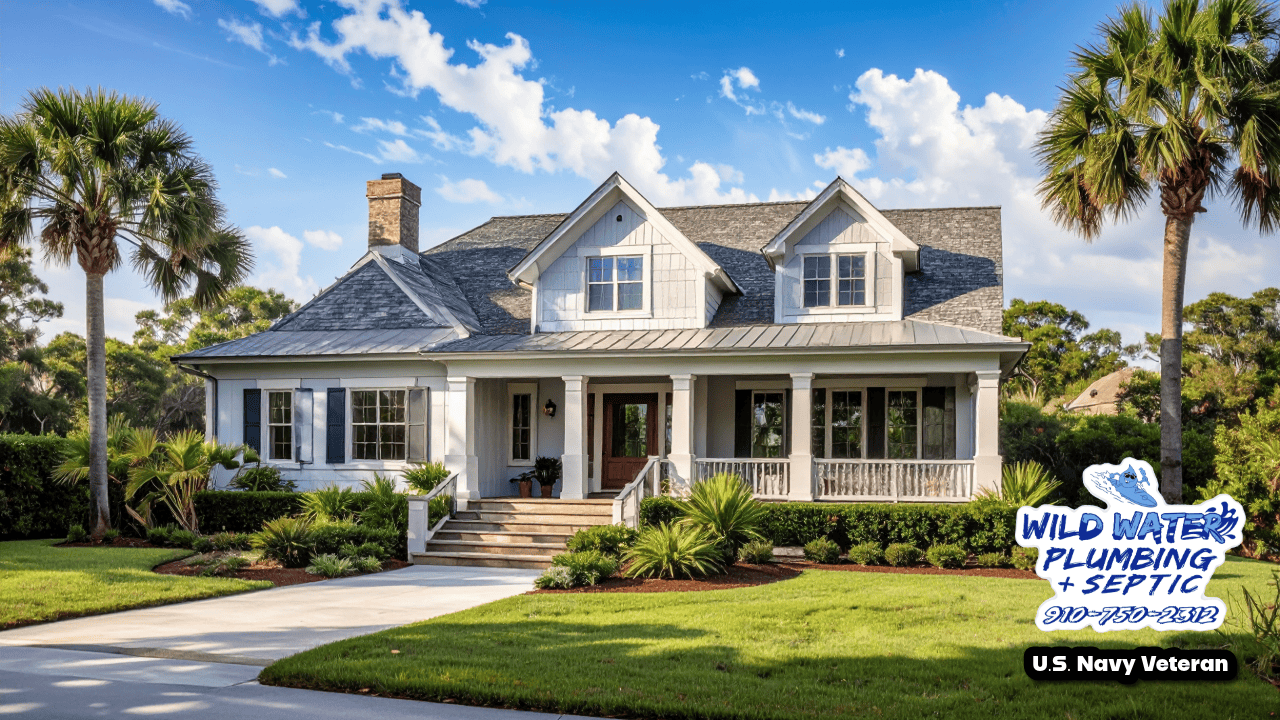
Holly Ridge homeowners know the pattern well. Heavy rain falls, the yard stays flooded for days, and then the ground barely dries out before the next storm hits. That standing water is not just an annoyance. It is systematically damaging your foundation, your septic system, and your lawn’s soil structure.
Holly Ridge sits in a stretch of Onslow County where terrain is flat, soils have limited natural drainage capacity, and storm events arrive with coastal intensity. The town has grown significantly over the past decade, with newer subdivisions covering land that was previously forested. When trees and native vegetation are removed to make way for homes and roads, the natural water absorption they provided disappears with them. What was once absorbed over acres now concentrates in your yard.
Why Holly Ridge Yards Hold Water Longer Than They Should
Several factors work against natural drainage in Holly Ridge. First, the soil profile in much of this area includes a clay-heavy subsoil layer that sits just below the surface. Water percolates through the sandy topsoil quickly but stops at that clay layer, pooling horizontally and saturating the root zone. Second, lot grading in many subdivisions does not provide adequate fall away from the foundation, meaning heavy rain pushes water toward the home rather than away from it.
Holly Ridge homes with on-site septic systems are doubly at risk from poor yard drainage. A drainfield that sits in saturated soil cannot absorb and treat wastewater. The system backs up, and effluent pushes to the surface or back into the home. Fixing yard drainage is often the most direct way to extend the life of a septic drainfield.
What a French Drain Actually Does
A French drain is a gravel-filled trench with a perforated pipe at the bottom. The trench intercepts water moving through the soil and redirects it through the pipe to a discharge point away from your home. Unlike surface swales or catch basins that only address water sitting on top of the ground, a properly installed French drain captures the water that is moving horizontally through the soil before it ever reaches your foundation or drainfield.
Where French Drains Are Most Effective in Holly Ridge
The most common installation scenarios Wild Water handles in Holly Ridge include:
- Perimeter drainage around foundations where water consistently pushes against crawl space walls or basement walls
- Interceptor drains installed uphill from septic drainfields to stop groundwater from saturating the field
- Yard curtain drains that catch subsurface flow from neighboring properties or upslope areas before it reaches the home
- Downspout discharge management where roof runoff concentrates and floods a specific yard zone
Signs Your Holly Ridge Property Needs a French Drain Now
Water Along the Foundation
If your crawl space smells musty after rain, if you see moisture staining on foundation walls, or if your crawl space insulation has dropped or shows signs of moisture damage, water is working against your foundation. This is not a cosmetic issue. Sustained moisture at the foundation accelerates wood rot in floor joists and sills, promotes mold growth, and can compromise structural integrity over years.
Yard That Stays Wet for Days After Rain
A yard that is still wet three to five days after a storm, with no additional rain, has a drainage problem in the soil. The water table beneath that area is high enough that the standing water has nowhere to go. A French drain intercepts that water and moves it to a location where it can safely discharge.
Erosion Channels Forming in the Yard
When water concentrates and moves across the surface fast enough to carry soil particles, you develop erosion channels. These channels get wider and deeper with each storm, eventually creating significant landscape damage and washing soil away from around the foundation footing.
Surface regrading moves the problem by changing where water flows on top of the ground. A French drain solves the problem by removing water from the soil itself. Holly Ridge’s clay subsoil profile means surface regrading alone often produces disappointing results. Most properties here benefit from a combined approach, with both improved surface grading and subsurface drainage working together.
How Wild Water Designs a French Drain System for Your Property
Every French drain installation Wild Water completes begins with a site evaluation. We identify where water is entering, how it is moving through the soil, and where it can safely discharge on your property. We account for your septic system location, existing utility lines, and lot boundaries. The result is a system sized and routed to address your specific flooding pattern, not a one-size-fits-all trench.
If your yard flooding is also affecting your septic system, the problem goes deeper than drainage alone. Read our article on early septic warning signs Onslow County homeowners miss to understand what flooding near your drainfield really means.
Wild Water also installs French drain systems in combination with sump pumps for properties where gravity discharge is not sufficient. Sump pump solutions are especially useful in Holly Ridge lots where the discharge point has limited elevation drop.
📖 Holly Ridge yard flooding is one chapter in a coastal NC drainage story that affects every county and every type of property. Our complete cornerstone guide covers why coastal NC yards flood, the eight warning signs you cannot ignore, what each county faces, and what actually fixes it: Why Coastal NC Yards Flood: The Complete French Drain and Yard Drainage Guide.
Wild Water Plumbing + Septic designs and installs French drain systems throughout Onslow County. Stop the flooding before it damages what is under your home.
Frequently Asked Questions
What is a French drain and how does it work?
A French drain is a gravel-filled trench with a perforated pipe that collects and redirects groundwater away from your home. It captures water moving through the soil and safely discharges it away from foundations and septic systems.
Why does my yard stay wet for days after rain?
Yards that stay wet for days often have poor soil drainage, especially in areas with clay subsoil. Water cannot drain downward, so it becomes trapped and saturates the ground until it slowly evaporates.
Can poor drainage damage my septic system?
Yes. A saturated yard can overwhelm a septic drainfield, preventing it from properly absorbing wastewater. This can lead to backups, system failure, and costly repairs.
Do I need a French drain or just grading?
Surface grading moves water across the yard, but it does not remove water trapped in the soil. In many coastal areas, a combination of grading and a French drain system is the most effective solution.
Where should a French drain be installed on my property?
French drains are typically installed around foundations, uphill from septic systems, along property lines where water flows in, or in low areas where water collects. Proper placement depends on how water moves through your property.
References
Chesapeake Stormwater Network. (2020). Stormwater best management practices for coastal plain residential properties. CSN Technical Bulletin No. 4. https://chesapeakestormwater.net
North Carolina Cooperative Extension. (2021). Soil drainage classes and their implications for home construction in the Coastal Plain. NC State Extension Publications. https://content.ces.ncsu.edu
Federal Emergency Management Agency. (2020). Reducing flood losses through the International Codes: Meeting the requirements of the National Flood Insurance Program. FEMA. https://www.fema.gov