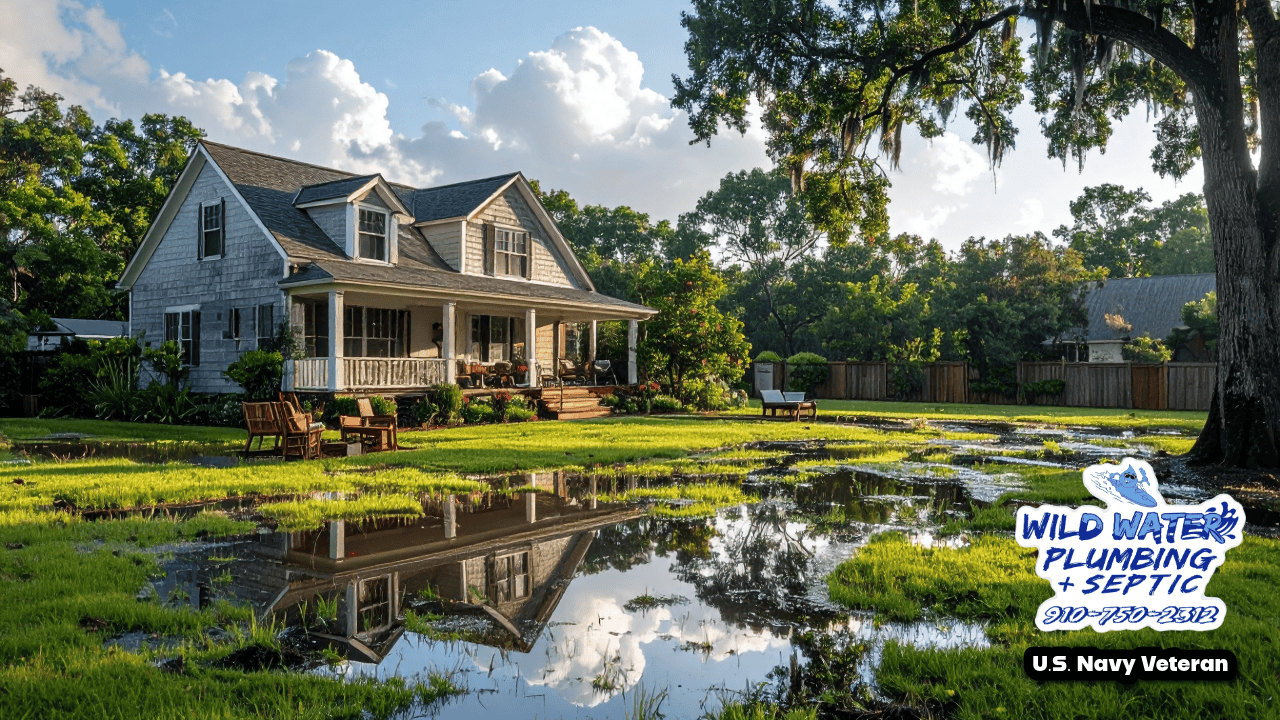
Castle Hayne sits in a part of New Hanover County that feels genuinely different from Wilmington’s suburban corridors and the coastal barrier island communities to the south and east. Larger lots. Older properties. A rural character that has persisted even as the county around it has developed rapidly. For homeowners who value that character, Castle Hayne offers something increasingly rare in New Hanover County: space, privacy, and a sense that the land has been lived with rather than built over.
What that character also means, from a plumbing and septic standpoint, is a set of infrastructure conditions that rarely get discussed and almost never get proactively evaluated. The risks sitting beneath Castle Hayne’s rural properties are not dramatic in most cases. They are quiet, cumulative, and significantly more expensive to address by the time they become visible than they would have been at any earlier stage.
What Makes Castle Hayne Different as a Plumbing Environment
Castle Hayne and the surrounding rural sections of northern New Hanover County have a soil profile that is unlike the sandy barrier island soils to the south. The area sits above portions of the Castle Hayne Limestone formation, and surface soils range from moderately well-drained sandy loams to areas with heavier clay content that retains moisture and limits drainage significantly. The Northeast Cape Fear River runs through this area, and its influence on the regional water table affects properties in the lower-lying sections of the community.
Homes in Castle Hayne also tend to be older than the county average, with a significant stock of properties built from the 1950s through the 1980s. That age range coincides with pipe materials, tank designs, and installation practices that have now been in the ground long enough to present real structural questions.
The Specific Risks That Rural Castle Hayne Properties Carry
Older Septic Systems That Predate Modern Sizing and Design Standards
The regulatory framework governing septic system design in North Carolina has changed substantially since many Castle Hayne systems were installed. Standards for soil evaluation, system sizing, setback requirements, and drain field design are significantly more rigorous today than they were in the 1960s and 1970s. Systems installed under the older standards may have drain fields that are undersized for the home’s current use, placed in locations that current regulations would not permit, or constructed with materials that have passed their reliable service life.
A system that passed inspection when it was installed in 1972 was evaluated against a standard that no longer applies. The only way to know what that system’s current condition is, is to have someone actually look at it using current knowledge and methods.
Private Well and Septic in Close Proximity
Many Castle Hayne rural properties rely on private wells for drinking water and private septic systems for waste management. The relationship between these two systems is one of the most important considerations in rural property plumbing, and it is one that most homeowners in this area have never had a professional evaluate.
Minimum setback requirements between wells and septic systems exist precisely because a failing septic system can contaminate a nearby well with pathogens that cause serious illness. The required setbacks were established when the systems were installed. Over the subsequent decades, drain field locations can shift as distribution pipes settle or fail, and cracks in older concrete tanks can release effluent at points closer to a well than the original installation achieved. Annual well water testing for coliform bacteria is the basic standard for any private well near an aging septic system, and it is a standard that many Castle Hayne homeowners have never adopted.
Aging Cast Iron and Galvanized Supply Lines
Homes built in Castle Hayne before the late 1970s often have cast iron or galvanized steel supply and drain lines that have been in the walls and under the slab for forty to sixty years. Galvanized steel supply lines develop internal corrosion that progressively narrows the pipe diameter, reducing water pressure and eventually causing pinhole leaks. Cast iron drain lines develop internal scaling and, in areas where the lines run through soil with variable moisture content, experience external corrosion that can compromise structural integrity.
The water pressure problem associated with galvanized supply line deterioration is something homeowners often attribute to other causes: a failing pressure tank, a struggling well pump, or simply how the house has always been. A camera inspection of the interior of these lines often reveals a heavily scaled pipe delivering a fraction of its original flow capacity.
Pump-Assisted Systems That Have Never Been Serviced
Some Castle Hayne properties sit at elevations or have topography that required a pump-assisted septic system from the original installation. These systems, like all pump-dependent systems, have mechanical components that wear and fail on a timeline much shorter than the surrounding infrastructure. A pump running in an unmonitored, unserviced system does not announce its deterioration until it stops. By the time the backup forces the discovery, the system has usually been operating in a compromised state for days or longer. Our article on how septic pump failures develop and what to do when one stops covers the warning signs and response process in full detail.
Drainage Challenges in Clay-Heavy Soil Sections
Properties in the sections of Castle Hayne with higher clay content in the soil profile face drainage challenges that sandy-soil properties do not. Clay soils absorb water slowly and hold it longer. A drain field in clay-heavy soil receiving more daily effluent than the soil can process accumulates that excess below the surface until it eventually finds a way out, either by surfacing in the yard or backing up into the home. This type of failure develops more slowly than the rapid saturation events common on barrier island properties, but it is no less complete when it arrives.
The Inspection Conversation That Castle Hayne Homeowners Need to Have
For a rural Castle Hayne property owner who has never had a comprehensive septic and plumbing evaluation, the most useful starting point is a tank inspection and pump-out combined with a drain field condition assessment and a review of the well-septic proximity situation. This gives a clear baseline picture of the three systems that most directly affect the property’s long-term habitability and the health of the people living in it.
From there, the findings determine next steps. If the tank and field are in reasonable condition and the well separation is adequate, a regular maintenance schedule and monitoring plan is the appropriate outcome. If the inspection reveals more significant issues, the homeowner has real information about what those issues are, what they will cost to address, and what happens if they are left unaddressed. For an overview of what these inspections typically find in similarly situated rural properties, our article on what homeowners discover at first-time septic inspections covers the pattern in plain terms.
Frequently Asked Questions
New Hanover County Environmental Health maintains records for permitted septic systems in Castle Hayne, including original installation permits and some repair documentation. For older properties, records are often incomplete. A licensed septic contractor can physically locate the tank and drain field using probe rods or electronic locating equipment when documentation is absent. Call Wild Water Plumbing + Septic at 910.750.2312 to schedule a system locate and evaluation.
Yes, without exception. The bacteria and pathogens that enter a well from a nearby failing septic system are not detectable by taste, smell, or appearance. Annual testing for coliform bacteria and periodic testing for nitrates are the standard protective measures for any Castle Hayne property with both a private well and a septic system.
In clay-heavy soils common in parts of Castle Hayne, the earliest sign of drain field failure is typically persistent wetness in the drain field area that remains long after rainfall has ended, combined with gradually slowing drains throughout the home.
Yes. Properties in lower-elevation sections near the Northeast Cape Fear River corridor experience higher baseline water table conditions and more significant seasonal fluctuation. This reduced separation between drain field pipes and the saturated zone directly limits drain field performance and increases the risk of seasonal backup events.
Homes built in Castle Hayne before the late 1970s commonly have galvanized steel supply lines and cast iron drain lines in service for forty to sixty years. Galvanized steel develops internal corrosion that progressively narrows the pipe, reducing water pressure. A camera inspection often reveals heavily scaled interiors delivering a fraction of their original flow capacity.
A failing septic system can contaminate a private well with bacteria, viruses, and parasites that cause serious illness. Annual coliform testing is the basic protective standard for any Castle Hayne property with both systems, particularly where the septic system has never been formally assessed.
Yes. Septic pump failures often develop without obvious indoor symptoms until the pump stops completely. Warning signs can include an alarm panel that activates briefly and then silences itself, drains running slightly slower than normal, and the pump cycling more frequently than usual.
For most Castle Hayne rural properties, a professional inspection every three to five years is a reasonable baseline. Properties with systems older than twenty-five years or those in lower-elevation areas near the Northeast Cape Fear River should be evaluated more frequently.
Septic systems installed in Castle Hayne during the 1960s and 1970s were permitted under significantly less rigorous standards than those in effect today. These systems may have undersized drain fields, non-compliant placement, or materials past their reliable service life. A current professional evaluation is the only way to know what condition the system is in today.
Reduce all household water use immediately and avoid running the dishwasher, washing machine, or back-to-back showers. Do not use chemical drain treatments. Call Wild Water Plumbing + Septic at 910.750.2312 or visit wildwaterplumbing.com/contact to request a professional diagnosis. The earlier a failing system is evaluated, the more repair options remain available.
Castle Hayne Properties Deserve the Same Attention as Any Other Home.
Wild Water Plumbing + Septic serves Castle Hayne and all of New Hanover County with honest evaluations, real repair options, and maintenance programs that protect rural properties and the people who live in them.
Call 910.750.2312 or schedule your property evaluation online.