Coastal Drainage Specialists • Veteran Owned
If Your Yard Floods Every Storm, You Need a French Drain.
A properly installed French drain moves standing water away from your septic system, foundation, and yard before it causes damage. We design septic safe drainage for homeowners across Onslow, Pender, and New Hanover Counties, plus Cedar Point.
Free evaluations • Septic safe drainage planning • Licensed and insured

The Water Our Coast Has to Handle
When Hurricane Florence stalled over the Carolinas in 2018 it came ashore at Wrightsville Beach and crawled inland at two to three miles an hour, dropping historic rain on the exact counties we serve.
Storm totals from the North Carolina State Climate Office. Wilmington annual figures from the National Weather Service, Wilmington.
Why Each Area Floods the Way It Does
Every part of our service area has its own drainage challenge. We plan for the one in your backyard.
Onslow County
Low, flat coastal plain ground around Jacksonville drains slowly, and many mid century neighborhoods were graded before modern drainage was standard. Base adjacent housing near Camp Lejeune sees the same saturated yards storm after storm.
Jacksonville drainage guide →Pender County
Florence pushed water into the streets across Pender, and the county seat of Burgaw sits on dense clay soil that holds water for days. From inland clay to the barrier island lots at Surf City, drainage here demands a tailored plan.
Burgaw drainage guide →New Hanover County
Florence came ashore right at Wrightsville Beach, and Wilmington went on to record its wettest year ever. Historic neighborhoods with aging drainage and low barrier island lots both struggle to shed that much water.
Wilmington drainage guide →Cedar Point
Sandy soil near the sound sits close to the water table, so yards here saturate faster than almost anywhere else we work. There is very little dry ground below the surface to take the runoff, which puts drain fields under pressure first.
Cedar Point service area →What Exactly Is a French Drain?
A French drain is a gravel lined trench containing a perforated pipe. Its job is simple but powerful: collect groundwater and surface water and redirect it away from the sensitive areas of your property, like your septic tank, drain field, and foundation.
By pulling water away before it pools, a properly built French drain gives your soil the room to breathe and keeps the buried systems you depend on dry and working the way they should.
Signs Your Property Needs a French Drain
If your yard shows any of these, your ground has stopped moving water the way it should.
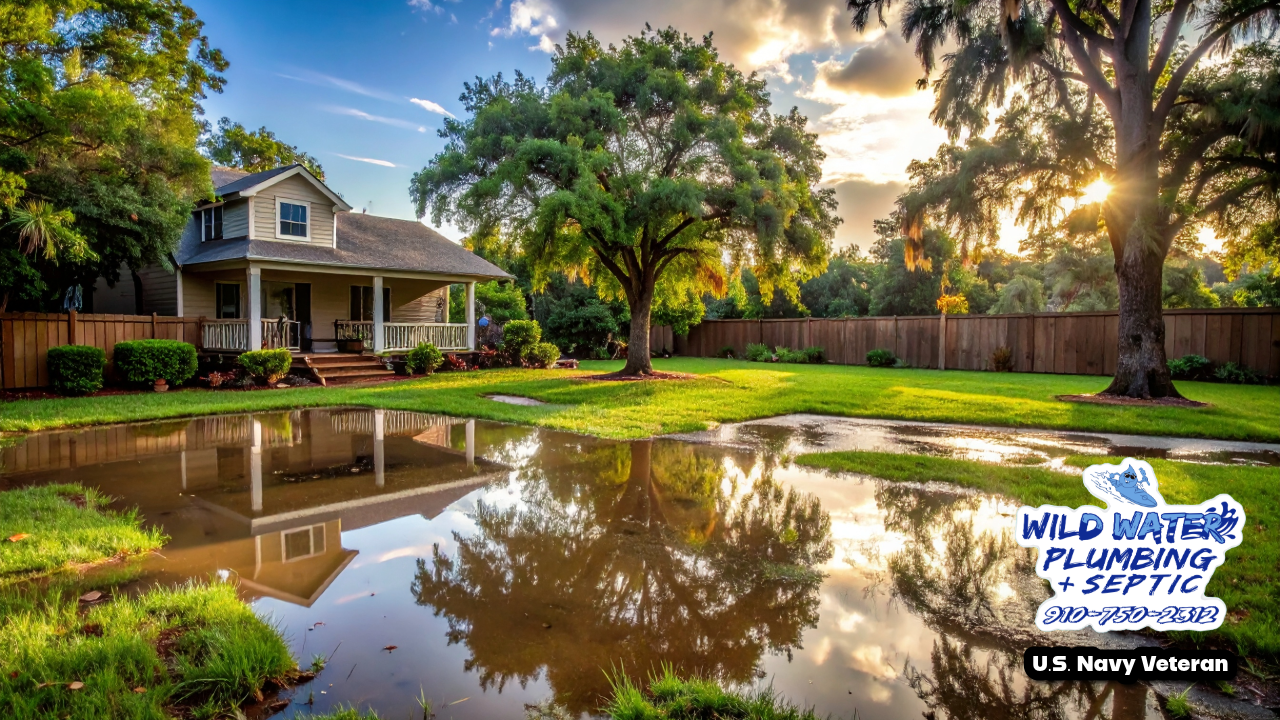
Standing water after storms
Puddles that linger near the home or over the septic area mean the soil can no longer absorb the runoff.
Soft, mushy ground
Ground that stays spongy underfoot for days after rain is a yard that is not draining.
Septic smells in wet weather
Odors near the drain field after rain often mean the field is flooding and struggling to filter.
A musty crawl space
Water pooling against the foundation seeps into the crawl space, bringing mildew, rot, and damp air.
Erosion or dying grass
Channels cut by runoff and patches of dying lawn show water is moving across your yard uncontrolled.
Slow drains after storms
Indoor drains that slow after heavy rain, plus standing pools that breed mosquitoes, point to poor drainage.
What Standing Water Is Doing to Your Home
A flooded yard is rarely just a flooded yard. The damage spreads to the systems you cannot see.
Your Septic Drain Field
A drain field needs oxygen to filter wastewater. Saturated soil is starved of it, so every flood suffocates the field and shortens its life, leading to backups and early failure.
Your Foundation and Crawl Space
Water that collects against foundation walls seeps into the crawl space or basement, causing mildew, wood rot, and over time, real structural problems.
Your Lawn and Garden
Standing water drowns grass, erodes soil, and turns flower beds to mud, undoing the time and money you put into your yard.
Your Property Value
A failing drain field, a damp crawl space, and a yard that floods are red flags to buyers and inspectors, and they quietly chip away at what your home is worth.
Where Does the Water Actually Go?
This is the question that decides whether a French drain works, and it is the one most homeowner installs never answer. A French drain is not a hole that swallows water. It is a pipe with a destination. Every foot of it has to sit lower than the foot before, and the far end has to come out somewhere the water can actually leave.
A drain with somewhere to go
Continuous fall from the wet end of the yard to an outlet that daylights lower down. Water goes in one end and leaves at the other, storm after storm.
A drain with nowhere to go
Dug level, or ending in a buried pit. The gravel fills, the pit saturates, and you have spent a weekend building an underground puddle next to your house.
Check this before anyone digs. Walk from the wet spot to wherever the drain is meant to end and ask one question: is that spot lower, and can water leave it? If the answer is no, no amount of gravel fixes it, and the trench will need to run further or the water will need a pump. That is the conversation to have before the excavator arrives, not after. It is also why we work out where the water comes out before we plan the route, and why we run water through the finished system so you can watch it leave.
The other failures are the ordinary ones: pipe set too shallow, cheap gravel that silts up, no fabric so the surrounding soil washes into the stone, and drains laid right against septic components where they do the drain field more harm than good. Want the full background? Read our guide, If You Do Not Have a French Drain, You Must Read This.
Around here, the answer is usually the ditch.
Walk that question out on most lots in Onslow, Pender, or New Hanover and you end up at the grassed channel by the road. Which means your French drain is only ever as good as that ditch is. If the channel has silted flat, or the pipe under your driveway has filled in with dirt, a new drain empties into water that is already sitting there and you have moved the problem twenty feet. We look at the outlet before we plan the route, and if the ditch is what is holding everything up we will say so. See ditch and culvert cleaning →
Our Septic Safe Installation Process
We do not just dig a trench. We design drainage that protects your septic system instead of putting it at risk.
Evaluate the Yard
We walk the property, locate your septic tank and drain field boundaries, and test how the soil absorbs water.
Plan the Route
We map the run and set the pitch with laser levels, and we work out where the water is going to come out before we dig anything.
Excavate and Install
We dig the trench, lay the perforated pipe at the right depth and continuous fall, and surround it with clean gravel and fabric.
Restore and Test
We restore the yard and run water through the system so you can see for yourself where it comes out.
Tired of Watching Your Yard Turn Into a Pond?
We will come out, evaluate your yard, inspect your septic layout, and give you a clear plan to stop the flooding for good.
Call 910.750.2312 Book a Free EvaluationYard Drainage for Onslow, Pender, and New Hanover Counties
Wild Water Plumbing Reviews
Google reviews from homeowners across Greater Jacksonville, North Carolina.
Schedule Your Free Drainage Evaluation
Fill out the form below and we will get right back to you. Prefer to talk? Call 910.750.2312.
French Drain FAQs
What is a French drain?
A French drain is a gravel lined trench containing a perforated pipe. Its job is to collect groundwater and surface water and redirect it away from sensitive areas like your septic tank, drain field, and foundation.
How does a French drain protect my septic system?
By keeping groundwater away from the drain field, a French drain gives the soil the oxygen it needs to filter wastewater. This prevents oversaturation, protects the field from sludge movement, and helps the whole septic system last longer.
How do I know if I need a French drain?
If you see standing water after storms, feel soft ground underfoot, notice septic smells in wet weather, or see water puddling near the drain field, those are strong signs your drainage has failed. A professional evaluation will confirm the best solution.
Why do so many DIY French drains fail?
Most DIY drains are installed incorrectly, with the wrong slope, wrong gravel, wrong depth, poor fabric protection, or water discharged in the wrong location. Some are placed too close to the drain field, which can actually damage the septic system.
Why does a French drain also help my foundation?
Water that collects near foundation walls can seep into the crawl space or basement, causing mildew, rot, and structural problems. A French drain stops water from pooling around the foundation and directs it to a safer location.
Why are coastal North Carolina yards so prone to flooding?
A shallow water table, sandy or clay bound soil, and heavy storm rainfall mean many properties saturate faster than homeowners expect. Here the water table responds to rain within hours rather than days, so yards flood quickly.
How soon will I see results after installing a French drain?
Most homeowners see a noticeable improvement after the very next rainfall. Areas that used to pool with water will drain faster, and the ground will dry more evenly.
Do you serve my county?
Yes. We install French drains for homeowners across Onslow, Pender, and New Hanover Counties, including Greater Jacksonville, North Carolina and the surrounding coastal communities. In Carteret County we serve Cedar Point.
Related Guides and Services
Septic Systems • Sump Pumps • Drain Cleaning • Ditch & Culvert Cleaning • Service Areas
Let Us Get Your Yard Draining Again
We work out where the water is going before we dig, keep the trench clear of your septic field, and run water through the finished system so you can watch it leave.
Call 910.750.2312 Schedule ServiceWild Water Plumbing + Septic • U.S. Navy Veteran Owned and Operated by Justin Wilder • Serving Onslow, Pender, and New Hanover Counties, plus Cedar Point, North Carolina Licensed and insured. • 200 Valencia Dr Unit 313, Jacksonville, NC 28546
Veteran Owned Plumbing Repair, Inspection, & Installation Services.
Plumbing Services
Additional Services
Plumbing Tips



PENDER, CARTERET, NEW HANOVER & ONSLOW COUNTIESAffordable Plumbing Services For Greater Jacksonville, North Carolina
