
Bottom Line Up Front
When temperatures drop below freezing in Onslow, Pender, Carteret, and New Hanover Counties, septic systems are at real risk due to shallow installations, sandy soils, and high water tables. The most common winter failures I see are frozen inlet and outlet pipes, iced over drain fields, frozen tank components, and flow blockages caused by low water use. These issues often lead to slow drains, sewage backups, yard saturation, and emergency service calls. The key takeaway is simple: freezing septic problems are predictable, preventable, and far easier to address early than after a full system failure.
By Justin Wilder, Owner of Wild Water Plumbing | Septic System Inspections
What I See When Temperatures Drop Below Freezing
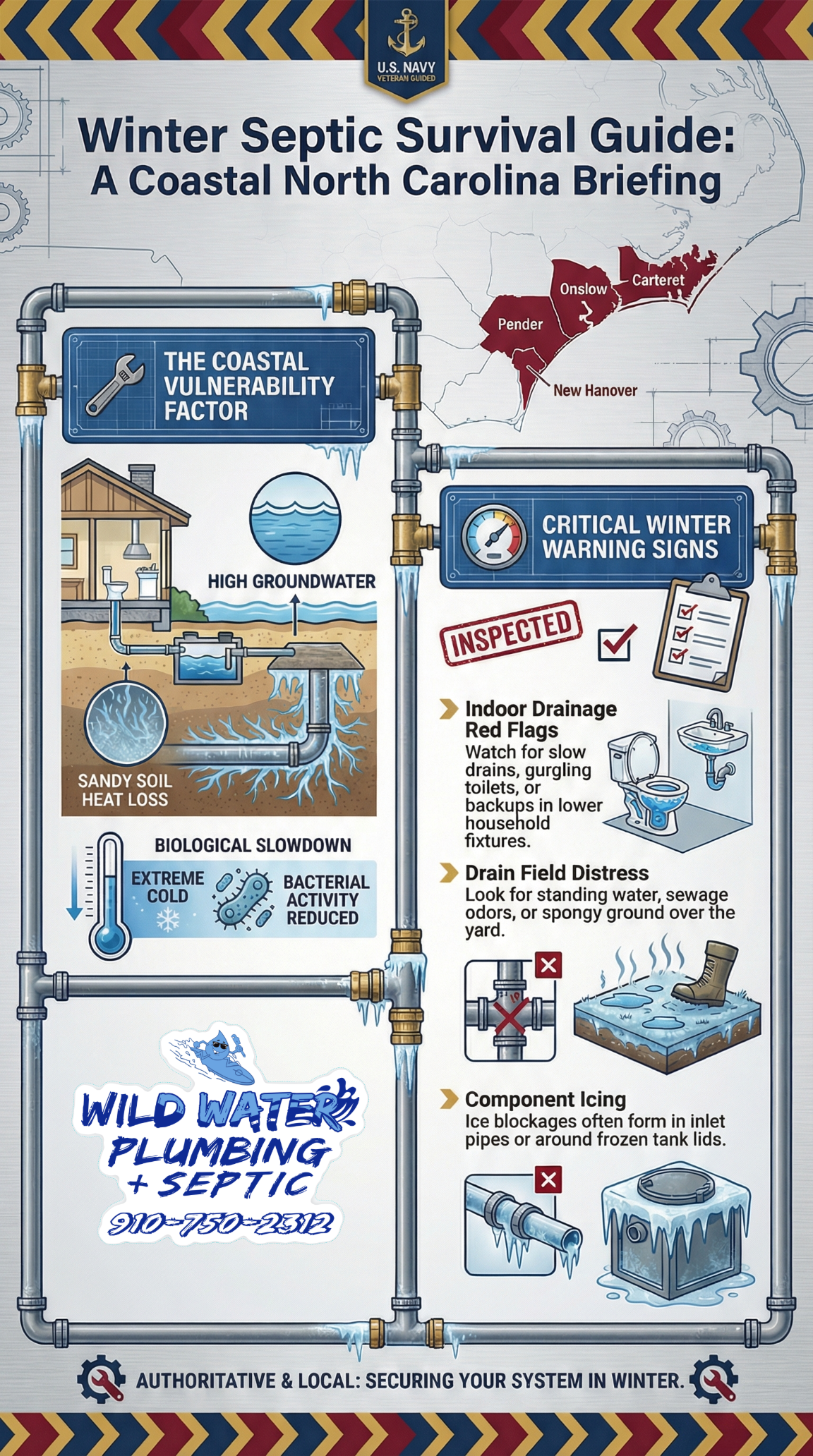
Living and working in coastal North Carolina, I receive many calls when temperatures dip below freezing. Homeowners in Onslow, Pender, Carteret, and New Hanover Counties are often surprised that cold weather can cause septic issues here. We are not dealing with mountain winters, but our shallow water tables, sandy soils, and older systems make freezing a real risk.
I have seen firsthand how one cold snap can turn a working septic system into a serious problem. This article breaks down the most common septic issues I see during freezing temperatures, why they happen in our region, and what homeowners should understand before things back up.
Why Coastal Septic Systems Are Vulnerable to Freezing
Shallow Installations and High Water Tables
In coastal counties, septic systems are often installed at higher elevations due to groundwater levels. That means pipes and drain fields sit closer to the surface where cold air can penetrate faster.
Sandy Soil Loses Heat Quickly
Sand drains well, but it does not hold heat. Once temperatures drop, frost can travel deeper than many homeowners expect, especially when insulation from grass or snow is disturbed.
Older Systems and Aging Pipes
Many homes in Jacksonville, Hampstead, Sneads Ferry, Swansboro, and Wilmington are running on older septic designs. These systems were not built with today’s winter risk awareness in mind.
Frozen Septic Pipes
Frozen Inlet Pipes from the Home
The inlet pipe carrying waste from your house to the septic tank is one of the most common freeze points. When this pipe freezes, wastewater cannot reach the tank.
What homeowners notice
- Slow draining sinks and tubs
- Gurgling sounds in toilets
- Sewage backing up into lower fixtures
This often happens during periods of low water use or after extended cold nights.
Frozen Outlet Pipes to the Drain Field
When the pipe leaving the tank freezes, wastewater has nowhere to go. The tank may fill faster than normal and push waste back toward the house.
Frozen Drain Field Lines
Ice in Perforated Distribution Lines
Drain field lines are designed to slowly release treated wastewater into the soil. When frost reaches these lines, effluent cannot disperse.
Common signs
- Standing water or sewage odors in the yard
- Wet or spongy ground over the drain field
- Backups inside the home even with an empty tank
In Carteret and Pender Counties, I see this more often in systems installed on open lots exposed to wind.
Surface Freezing Due to Compaction
Driving, parking, or heavy foot traffic over the drain field compresses soil and snow. This removes natural insulation and allows frost to penetrate deeper.
Frozen Septic Tank Components
Frozen Lids and Risers
Septic tank lids and risers can freeze solid, especially when snow is cleared away. This creates a major issue if emergency pumping or inspection is needed.
Frozen Effluent Filters
Many modern systems include effluent filters at the tank outlet. These can ice up in extreme cold, restricting flow even when the tank itself is functioning.
Ice Blockages from Low Water Use
Vacant Homes and Reduced Usage
Homes that are vacant or lightly used are at higher risk. Small volumes of wastewater cool and freeze before reaching the tank, slowly forming ice plugs inside pipes.
I see this often in seasonal properties near the coast or homes where owners are traveling during winter.
Biological Slowdown Inside the Septic Tank
Cold Temperatures Reduce Bacterial Activity
Septic tanks rely on bacteria to break down waste. Extreme cold can slow this process, causing solids to accumulate faster than normal.
While tanks rarely freeze solid, reduced biological action adds stress to the system during winter.
Freeze and Thaw Damage After Cold Spells
Cracked Pipes and Fittings
Repeated freezing and thawing can crack pipes, joints, or fittings. These problems often do not show up until late winter or early spring.
Signs after thaw
- Persistent odors
- Unexplained wet spots in the yard
- Sudden drops in system performance
What Homeowners Should Take Away
Freezing septic issues in Onslow, Pender, Carteret, and New Hanover Counties are not rare. They are predictable based on soil conditions, system design, and winter usage patterns.
Most winter septic emergencies I respond to could have been prevented with early awareness and proper winter preparation.
If your drains slow down, your yard smells off, or something does not feel right during cold weather, do not wait. Septic problems get worse fast when ice is involved.
If you want, I can also walk you through winter prevention steps, warning signs that mean you should call immediately, or what to do if you suspect your septic system is already frozen.
Stay safe and prepared, Jacksonville.
– Justin Wilder, Owner
📞 Call or text me directly at (910) 750-2312 to schedule your storm check today.
Wild Water Plumbing—Local, Veteran-Owned, and Always Ready.
—