
Bottom Line Up Front
If your well pump is acting up anywhere in Onslow County, you’re probably already feeling the effects in your daily life. No water, weak pressure, unexpected noises, dirty water, air in the lines, or rising electric bills are not random annoyances—they are warning signs that something in your well system is struggling. Local soil conditions, fluctuating groundwater, older systems, and common mechanical issues make these problems more frequent here and knowing what to look for can help you catch issues early and avoid emergency failures.
If you are asking questions like these…
Are you suddenly getting low pressure or no water at all?
Is your water cloudy, discolored or smelling weird?
Are strange noises coming from your pump or plumbing?
Is your pump cycling constantly or running nonstop?
Are you seeing your electric bills spike with no obvious cause?
…this article is written for you:
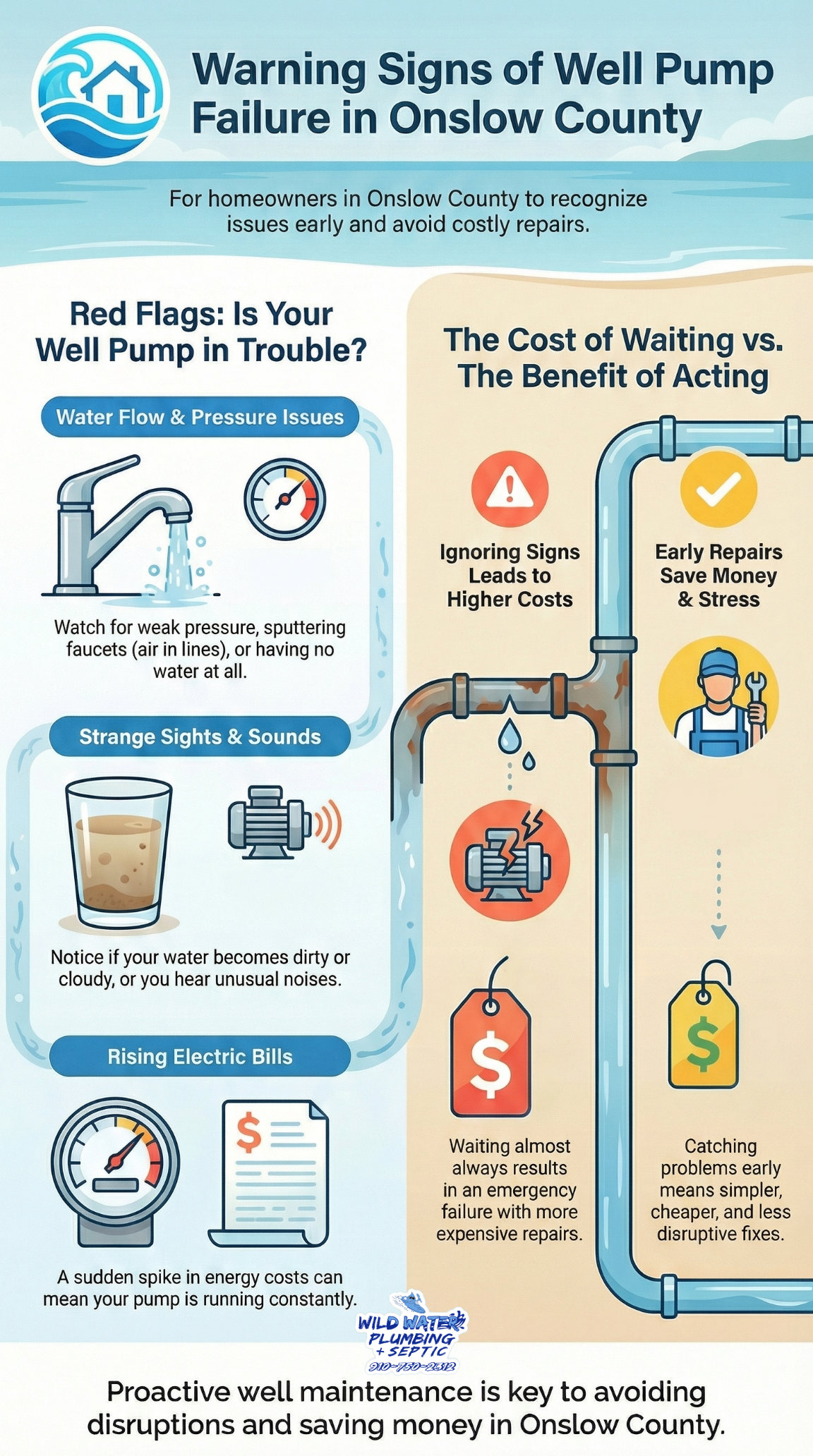
Table of Contents
- Introduction: Why This Guide Matters for Onslow County Homeowners
- Chapter 1: No Water at All – Why Homes in Jacksonville Can Lose Water Without Warning
- Chapter 2: Low Water Pressure – Why Homes in Richlands Suddenly Lose Pressure
- Chapter 3: Dirty or Brown Water – Why Homes in Piney Green Start Seeing Sediment
- Chapter 4: Short Cycling Pumps – Why Pumps in Midway Park Turn On and Off Constantly
- Chapter 5: Constantly Running Pumps – Why Pumps in Hubert Never Seem to Shut Off
- Chapter 6: Air Spurts From Faucets – Why Homes in Sneads Ferry Get Air in Water Lines
- Chapter 7: Strange or Loud Pump Noises – What Grinding Pumps in Holly Ridge Are Telling You
- Chapter 8: High Electric Bills – Why Pumps in Swansboro Can Drive Up Power Costs
- Chapter 9: Sudden Water Quality Changes – Taste, Smell, and Color Problems in Rural Homes
- Chapter 10: Repair or Replace – Knowing When a Well Pump Is Reaching the End
- Summary: How Early Action Protects Your Water Supply
Why This Guide Matters for Onslow County Homeowners
If your home relies on a well, your water system is not something you can afford to take for granted. Unlike city water, there is no utility monitoring pressure, quality, or performance for you. When something goes wrong, the responsibility and the consequences land entirely on the homeowner. In Onslow County, that reality is especially important because local soil conditions, groundwater behavior, and aging infrastructure place unique demands on well systems.
Many homes across the county sit on sandy or clay heavy soil, experience fluctuating water tables, and rely on wells that were installed decades ago. Add in coastal moisture, storm activity, and seasonal water use, and well pumps are often working harder than homeowners realize. The problem is that most well system failures do not announce themselves clearly. They start with subtle changes—weaker pressure, cloudy water, longer pump run times, or unusual sounds, that are easy to dismiss.
This guide exists to close that knowledge gap.
Homeowners frequently search online for symptoms without understanding how those symptoms connect. A sputtering faucet, a high electric bill, or brown water can feel like separate issues when they are often tied to the same underlying problem. Without clear information, people either ignore the warning signs or attempt quick fixes that mask the real issue and make it worse.
This guide explains the most common well pump and system problems homeowners experience in each town across Onslow County and breaks down what those symptoms actually mean. More importantly, it explains why they happen here, not just in theory. Local conditions matter, and understanding them helps homeowners make smarter decisions before problems become emergencies.
Reliable water is not a luxury. It is a basic requirement for daily life. Knowing how your well system communicates trouble gives you control instead of surprise. This guide is designed to help you recognize the warning signs early, understand what is happening underground, and take action before your water supply is disrupted.
Chapter 1
No Water at All
Why Homes in Jacksonville Can Lose Water Without Warning
When the pump acts up, so does your entire water supply. I see this every week across Onslow County. One minute everything is fine. The next, you turn the faucet and nothing comes out. No pressure. No drip. No warning.
As the owner of Wild Water Plumbing + Septic, I can tell you this is one of the most stressful calls homeowners make. No water stops everything cooking, cleaning, bathing, laundry, even flushing the toilet. And in Jacksonville, many homes rely entirely on well systems, especially outside city water zones and in older developments.
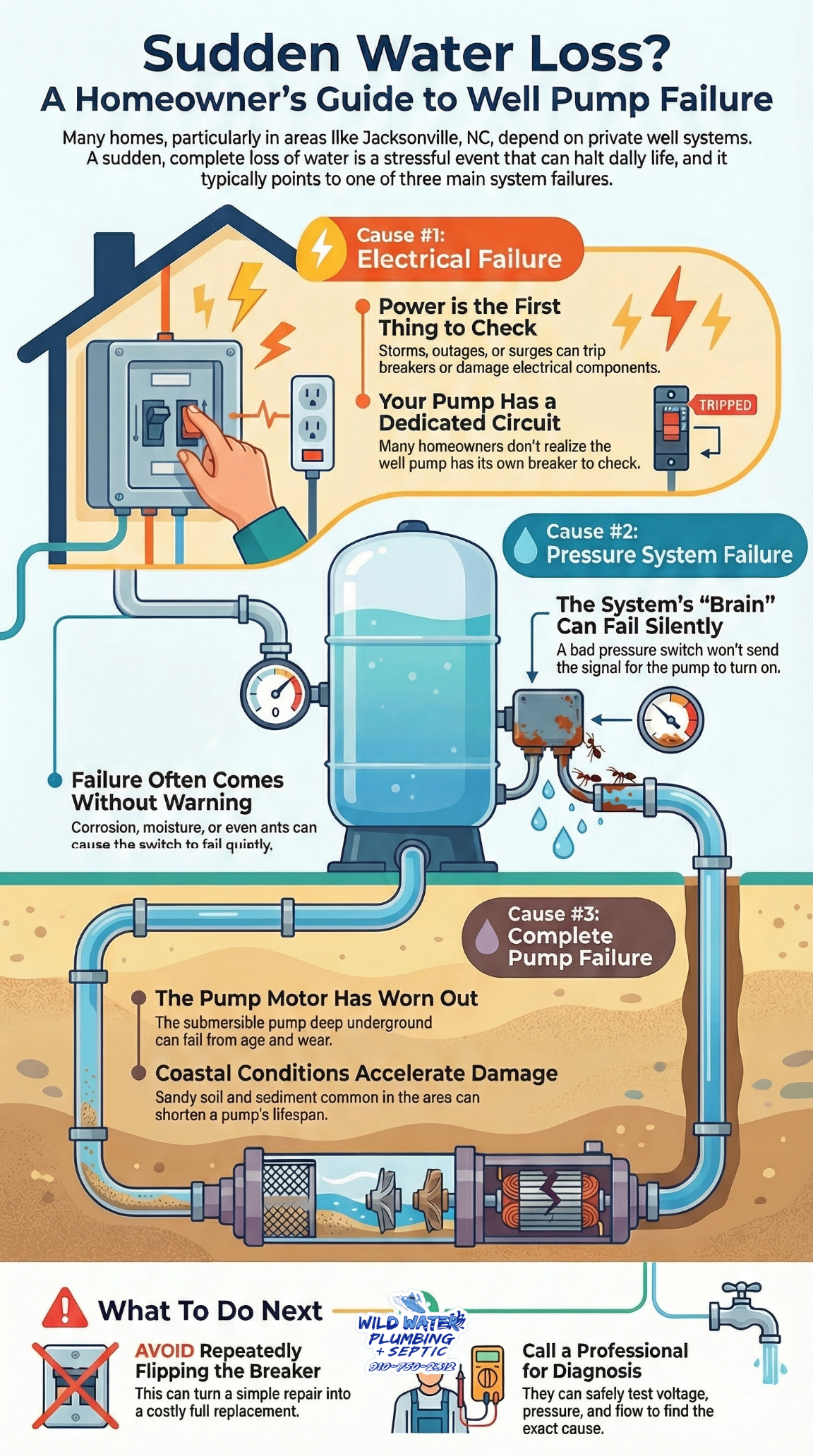
When there is absolutely no water, the problem usually falls into one of three categories: electrical failure, pressure system failure, or complete pump failure.
The first thing we check is power. Well pumps depend on electricity, and storms, outages, or even minor surges can trip breakers or damage components. A tripped breaker is the best case scenario. A burned pressure switch or damaged control box is more serious but still repairable. Many homeowners do not realize their well pump is on a dedicated circuit, so they never think to check it until the water is already gone.
If power is reaching the system, the next suspect is the pressure system. The pressure switch tells the pump when to turn on and off. When it fails, the pump may never receive the signal to run. In Jacksonville homes with older pressure tanks, corrosion, ants, moisture, and wear can all cause switches to fail quietly. The system does not always make noise or show warning signs before water stops completely.
The most serious cause is pump failure itself. Submersible well pumps operate deep underground, often hundreds of feet below the surface. Over time, motors wear out, bearings fail, and internal components break down. Coastal conditions, sandy soils, and sediment common in this area can shorten pump life. Once the pump fails, water stops instantly.
I also see no water issues tied to storm recovery. After power is restored, voltage fluctuations can damage pumps that were already stressed. Homeowners often assume the outage caused the problem, but in reality the pump was already near the end of its lifespan.
One mistake I want homeowners to avoid is repeatedly cycling breakers or switches hoping the water comes back. This can cause more damage and turn a repairable problem into a full replacement.
If you experience no water at all, the safest move is to stop troubleshooting and call a professional. We test voltage, pressure, amperage, and flow to pinpoint the exact failure before making recommendations.
At Wild Water Plumbing + Septic, we specialize in diagnosing and repairing well pump systems so your home has reliable water again quickly. No water is never something to wait on. The sooner it is addressed, the more options you usually have.
Chapter 2
Low Water Pressure
Why Homes in Richlands Suddenly Lose Pressure
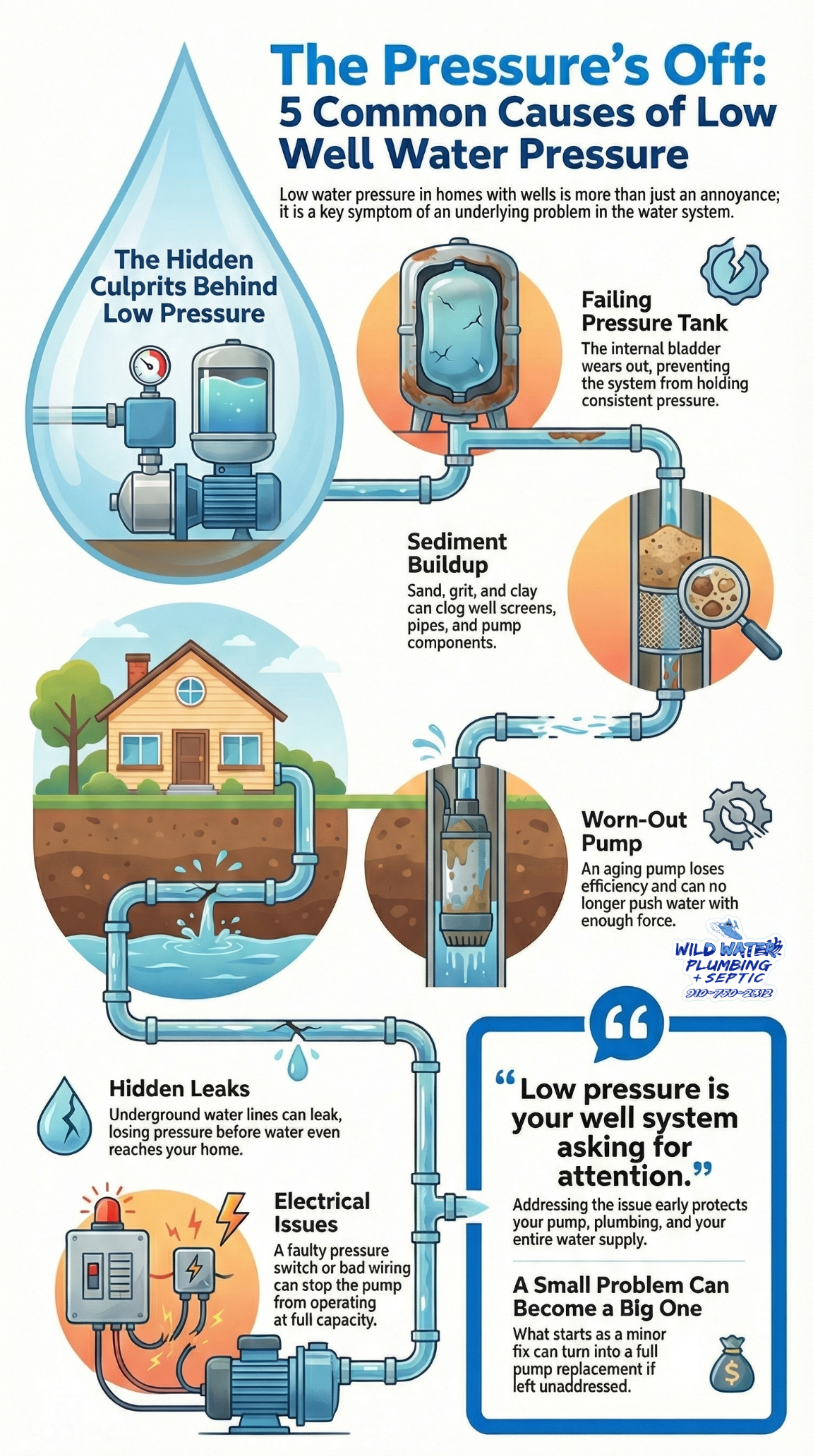
Low water pressure is one of the most common complaints I hear from homeowners across Onslow County, especially in Richlands and the surrounding rural areas. You turn on the shower expecting a steady stream, and instead you get a weak trickle. Faucets take longer to fill a sink. Washing machines struggle. Irrigation systems barely spray.
Low pressure is frustrating, but more importantly, it is almost always a warning sign that something in the well system is failing.
In many Richlands homes, the pressure tank is the first place we look. The pressure tank stores water and maintains consistent pressure throughout the house. Inside that tank is a bladder that separates air from water. When that bladder fails or becomes waterlogged, the system cannot hold pressure properly. The pump is forced to work harder and longer, and pressure drops become more noticeable at fixtures.
Another major cause in this area is sediment buildup. Richlands has heavy clay soils and groundwater that often carries sand, grit, and fine particles. Over time, sediment can clog the well screen, restrict water lines, or wear down pump components. Even small restrictions can dramatically reduce pressure, especially during peak water use like showers or laundry.
A pump that is wearing out will also show itself through pressure loss. As pumps age, they lose efficiency. The motor may still run, but it cannot push water with the same force it once did. Homeowners often assume pressure issues are minor or temporary, but a weakening pump rarely recovers on its own. It usually continues to decline until failure.
Leaks are another hidden cause. Underground water lines running from the well to the house can develop leaks that bleed off pressure before water ever reaches your fixtures. Because these lines are buried, homeowners often do not see obvious signs like pooling water. Instead, the only symptom is low pressure and a pump that runs more often than it should.
Electrical issues can also contribute. A failing pressure switch, damaged wiring, or improper voltage can prevent the pump from operating at full capacity. In some cases, the pump turns on, but it cannot maintain consistent pressure under load.
One thing I always stress is that low pressure is not something to ignore. Many homeowners adapt to it slowly, turning faucets more or spacing out water use. Unfortunately, this usually allows the underlying problem to get worse. What could have been a pressure tank replacement or minor repair can turn into a full pump replacement if left unaddressed.
At Wild Water Plumbing + Septic, we test pressure, inspect tanks, measure pump performance, and check for line restrictions to find the real cause. Restoring proper pressure is not about guessing. It is about understanding how the entire well system works together.
If your Richlands home is losing pressure, it is your well system asking for attention. Addressing it early protects your pump, your plumbing, and your water supply.
Chapter 3
Dirty or Brown Water
Why Homes in Piney Green Start Seeing Sediment in Their Well Water
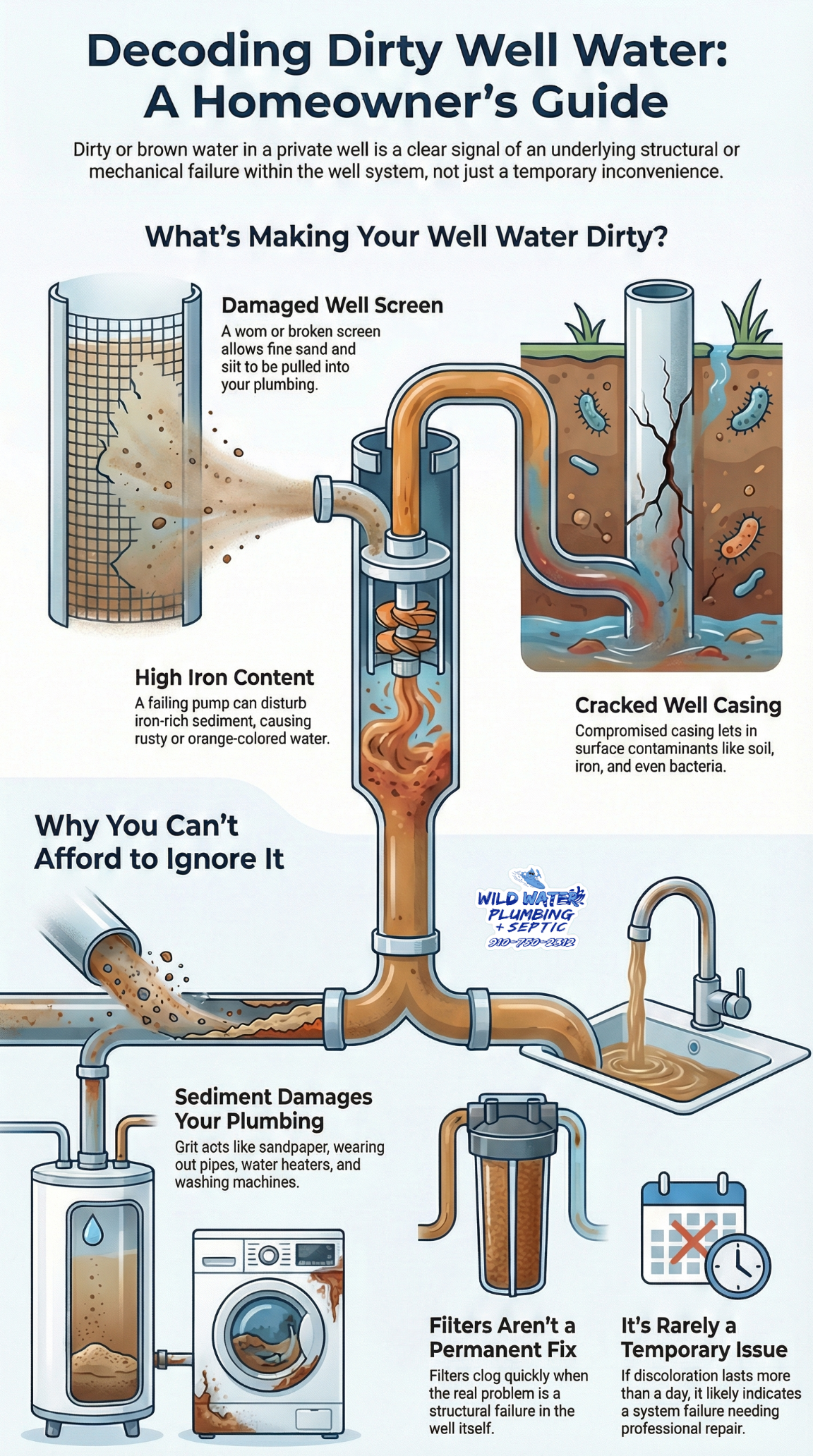
When homeowners in Piney Green call me about dirty or brown water, the concern is immediate and justified. Clean water should be clear, odor free, and safe to use. When it suddenly looks cloudy, rusty, or full of sediment, something inside the well system is no longer working the way it should.
Across Onslow County, this issue is more common than people realize, especially in areas with older wells or shallow groundwater sources.
One of the most frequent causes of dirty water is sediment intrusion. Piney Green sits in an area where sandy layers and fine silt are common below the surface. If the well screen becomes damaged or worn, it can allow sediment to be pulled into the system. Once that happens, every time the pump runs, it draws dirt directly into your plumbing.
Another serious cause is a cracked or compromised well casing. The casing is designed to keep surface contaminants, soil, and groundwater out of the well shaft. Over time, corrosion, shifting soil, or improper installation can create small cracks. These openings allow sediment, iron, and sometimes bacteria to enter the well. When this happens, the water may appear brown, yellow, or cloudy, especially after heavy rain.
Iron is another common issue in Piney Green wells. Iron rich groundwater can cause water to appear rusty or orange. While iron staining is not always dangerous, it is a sign that minerals are entering the system in higher concentrations than normal. A failing pump or damaged screen can worsen this problem by disturbing sediment layers at the bottom of the well.
It is important to understand that filtration alone does not always fix dirty water. Many homeowners install filters thinking the problem is solved, but if sediment is coming from a structural issue inside the well, filters clog quickly and pressure drops. The real problem continues to grow unseen.
Dirty water can also damage your plumbing system. Sediment acts like sandpaper inside pipes, valves, and appliances. Water heaters, washing machines, and fixtures wear out faster when sediment is present. Pumps themselves can also suffer damage as grit passes through internal components.
One mistake I see often is homeowners assuming dirty water is temporary after a storm. While short term discoloration can happen, ongoing sediment or brown water is not normal. If it lasts more than a day or two, it usually points to a mechanical or structural failure.
At Wild Water Plumbing + Septic, we inspect the entire system. That includes the pump, well screen, casing integrity, and water clarity under load. Our goal is not just to make the water look clear today, but to stop the source of contamination so it stays that way.
If your Piney Green home is showing dirty or brown well water, it is a sign your system needs professional attention. Clear water does not return by chance. It returns when the underlying problem is fixed correctly.
Chapter 4
Short Cycling Pumps
Why Well Pumps in Midway Park Turn On and Off Constantly
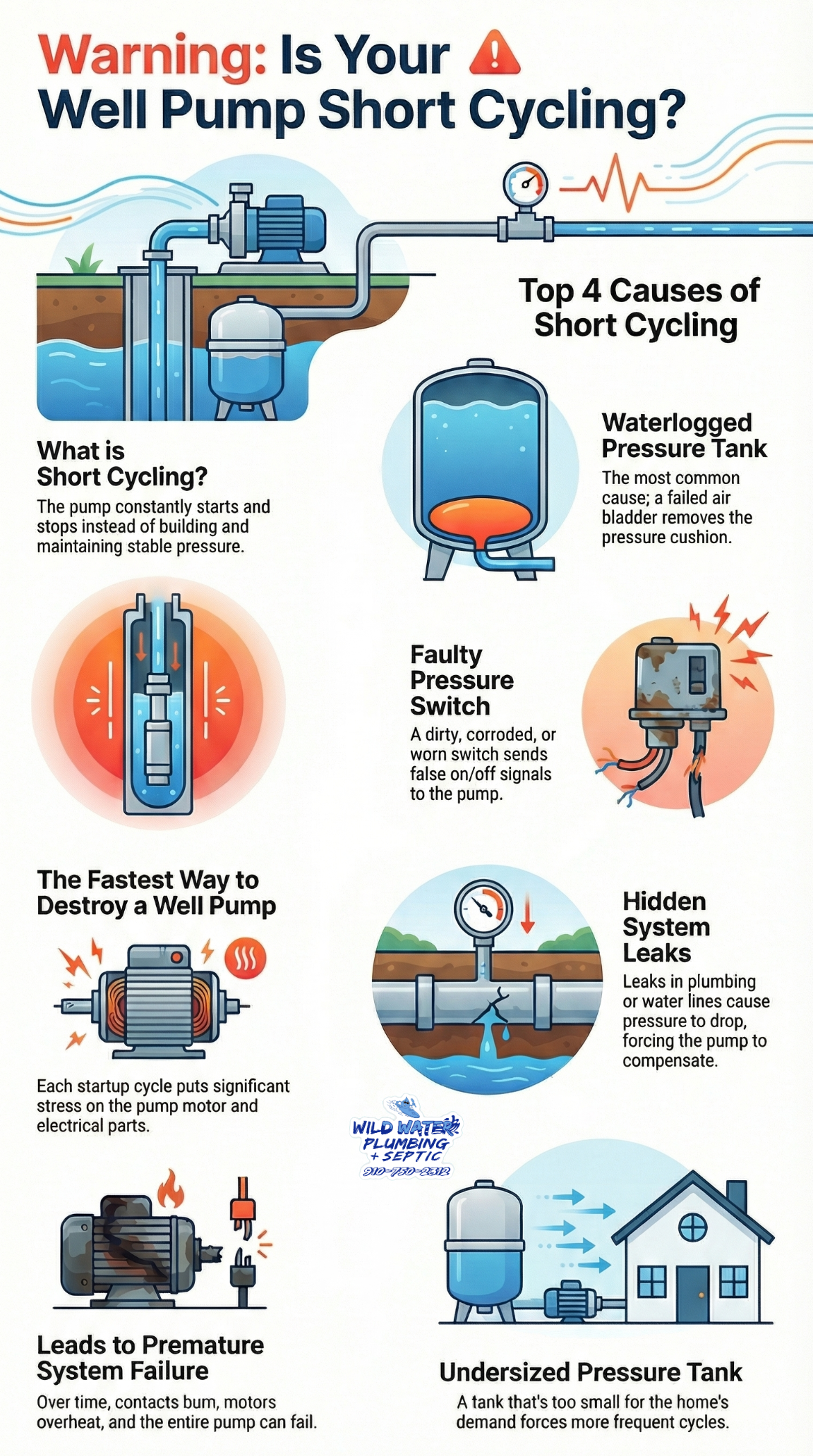
A well pump should not be turning on and off every few seconds. When homeowners in Midway Park notice their pump cycling constantly, it is more than just an annoyance. Short cycling is one of the fastest ways to destroy a well pump, and it is a problem I see often across Onslow County.
Short cycling happens when the pump cannot maintain stable pressure in the system. Instead of running long enough to build pressure and shut off normally, it repeatedly starts and stops. Each start up puts stress on the motor, electrical components, and pressure system.
The most common cause is a waterlogged pressure tank. Inside the tank is an air bladder that helps regulate pressure. When that bladder fails, water fills the tank completely, leaving no air cushion. The system loses its ability to store pressure, forcing the pump to react instantly to every small demand for water. Even turning on a faucet briefly can trigger a full pump cycle.
Pressure switch problems are another frequent culprit. The pressure switch controls when the pump turns on and off based on system pressure. If the switch is dirty, worn, or improperly adjusted, it can send false signals. In Midway Park homes with older well systems, I often find switches that have been exposed to moisture, corrosion, or insects, all of which interfere with proper operation.
Leaks in the system also contribute to short cycling. A small leak in the plumbing, pressure tank fittings, or underground water line can cause pressure to drop quickly. The pump responds by turning on repeatedly, trying to maintain pressure that keeps bleeding off. These leaks are not always visible, which makes professional testing important.
Short cycling is especially dangerous because it often goes unnoticed at first. Homeowners may only hear the pump clicking on and off in the background. Over time, electrical contacts burn, motors overheat, and the pump fails prematurely. What could have been a pressure tank replacement can turn into a full pump replacement if ignored.
Another issue tied to short cycling is incorrect tank sizing. Some homes in Midway Park have had system modifications over the years. When pressure tanks are undersized for household demand, the pump is forced to cycle more frequently than designed.
At Wild Water Plumbing + Septic, we diagnose short cycling by checking tank pressure, bladder condition, switch performance, and system integrity. We do not guess. We measure and test until the cause is clear.
If your well pump in Midway Park is short cycling, it is a warning sign you should not ignore. Fixing it early protects your pump, lowers electrical strain, and restores stable water pressure throughout your home.
Chapter 5
Constantly Running Pumps
Why Well Pumps in Hubert Never Seem to Shut Off
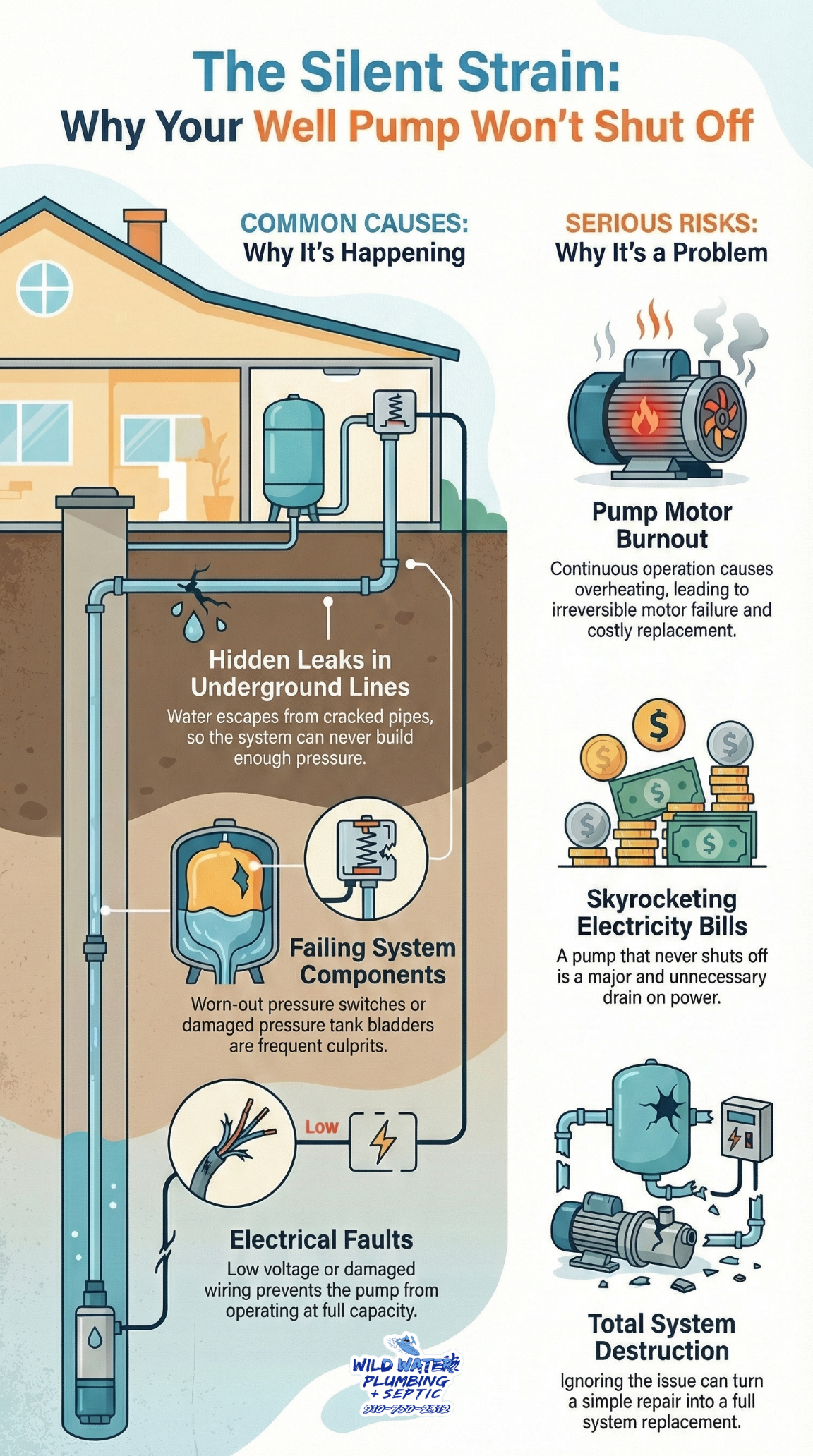
When a well pump runs nonstop, it is telling you something is wrong. Homeowners in Hubert often call me because they notice the pump humming constantly, even when no water is being used. This is not normal behavior, and across Onslow County, it is one of the clearest signs of a system under stress.
A pump should build pressure, shut off, and stay off until water is needed again. When it cannot reach its shut off pressure, it will continue running indefinitely. This leads to overheating, excessive wear, and eventual failure.
One of the most common causes is a failing pressure switch. If the switch does not sense pressure correctly, it never tells the pump to stop. In Hubert homes with older well systems, switches often wear out due to moisture, corrosion, or simple age. When this happens, the pump keeps running even though pressure may already be high enough.
Leaks are another major reason pumps run constantly. Underground lines between the well and the house can develop cracks or separations over time. Water escapes into the soil instead of reaching your home, preventing pressure from building. Because these leaks are buried, homeowners usually do not see any surface evidence. The only symptom is a pump that will not shut off.
Pressure tank failure can also contribute. If the tank bladder is damaged, the system cannot store pressure properly. The pump works harder and longer trying to maintain pressure, often without success. This continuous operation strains the motor and shortens its lifespan.
In rural areas like Hubert, well depth and water yield also matter. If a pump is not properly matched to the well’s depth or recovery rate, it may struggle to keep up with demand. As water levels fluctuate seasonally, especially during dry periods, the pump may run longer to pull enough water, increasing wear.
Electrical issues should not be overlooked either. Low voltage, damaged wiring, or failing control boxes can prevent the pump from operating efficiently. The motor runs, but it cannot perform at full capacity, leading to extended run times.
One of the biggest risks of a constantly running pump is burnout. Pumps are designed for intermittent operation. When they run continuously, internal components overheat, seals fail, and motors burn out. Once that happens, replacement is usually the only option.
At Wild Water Plumbing + Septic, we identify why a pump cannot shut off by testing pressure, inspecting tanks, checking switches, and evaluating line integrity. The goal is to stop the damage before it becomes irreversible.
If your Hubert home has a pump that never shuts off, it is not just wasting electricity. It is actively destroying your well system. Addressing it quickly can mean the difference between a repair and a full replacement.
Chapter 6
Air Spurts From Faucets
Why Homes in Sneads Ferry Get Air in Their Well Water Lines
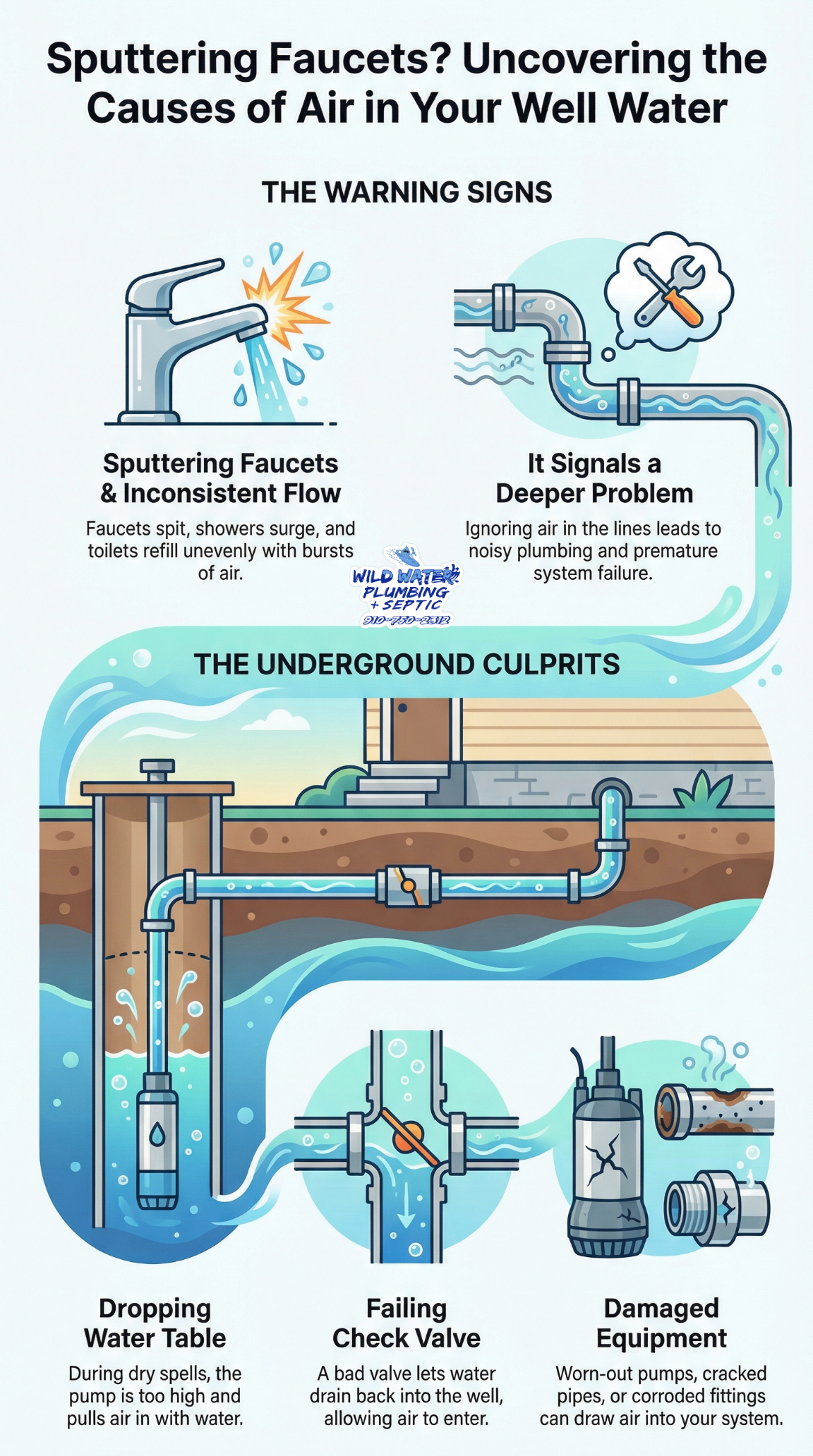
When water sputters out of the faucet mixed with bursts of air, it catches homeowners off guard. In Sneads Ferry, I get these calls often. People describe faucets spitting, toilets refilling unevenly, or showers surging between air and water. While it may seem minor at first, air in your well system is a clear warning sign that something below ground is not right.
Across Onslow County, air spurts are especially common in coastal and near coastal areas where groundwater levels can fluctuate more dramatically throughout the year.
One of the most common causes is a dropping water table. When the water level in the well falls too low, the pump can begin pulling in air along with water. This is especially common during dry seasons or periods of heavy water use. Once air enters the system, it travels through your plumbing and exits at fixtures, creating sputtering and inconsistent flow.
A failing check valve is another frequent issue. The check valve keeps water from flowing backward into the well when the pump shuts off. When it fails, water drains back down the well line, allowing air to enter the system. The next time the pump turns on, that trapped air gets pushed into your home’s plumbing.
Pump damage can also cause air problems. When pumps begin to fail, internal wear can create cavitation. Cavitation occurs when pressure drops inside the pump, causing air bubbles to form and collapse. This not only introduces air into the system but also damages the pump from the inside. Once cavitation starts, pump failure usually follows.
In Sneads Ferry, salt air and coastal moisture can accelerate wear on well components. Corrosion on fittings, valves, or connections can allow small amounts of air to enter the system even when water pressure appears normal. These small air leaks often go unnoticed until sputtering becomes frequent.
Air in the system can also point to pipe issues. Underground well lines that develop cracks or loose fittings may not always leak water outward. Instead, they can draw air inward when the pump runs. This is why air spurts sometimes appear without visible water loss.
Many homeowners assume air in the lines is harmless or temporary. Unfortunately, that is rarely the case. Air introduces pressure instability, causes noisy plumbing, and increases wear on pumps, pressure switches, and fixtures. Over time, it can lead to premature system failure.
At Wild Water Plumbing + Septic, we diagnose air issues by checking water levels, inspecting check valves, pressure systems, and line integrity. We also evaluate pump performance to determine whether cavitation or internal damage is occurring.
If your Sneads Ferry home is experiencing air spurts from faucets, it is your well system signaling stress. Addressing it early helps protect your pump, stabilize pressure, and keep your water supply reliable.
Chapter 7
Strange or Loud Pump Noises
What Grinding and Groaning Pumps in Holly Ridge Are Trying to Tell You
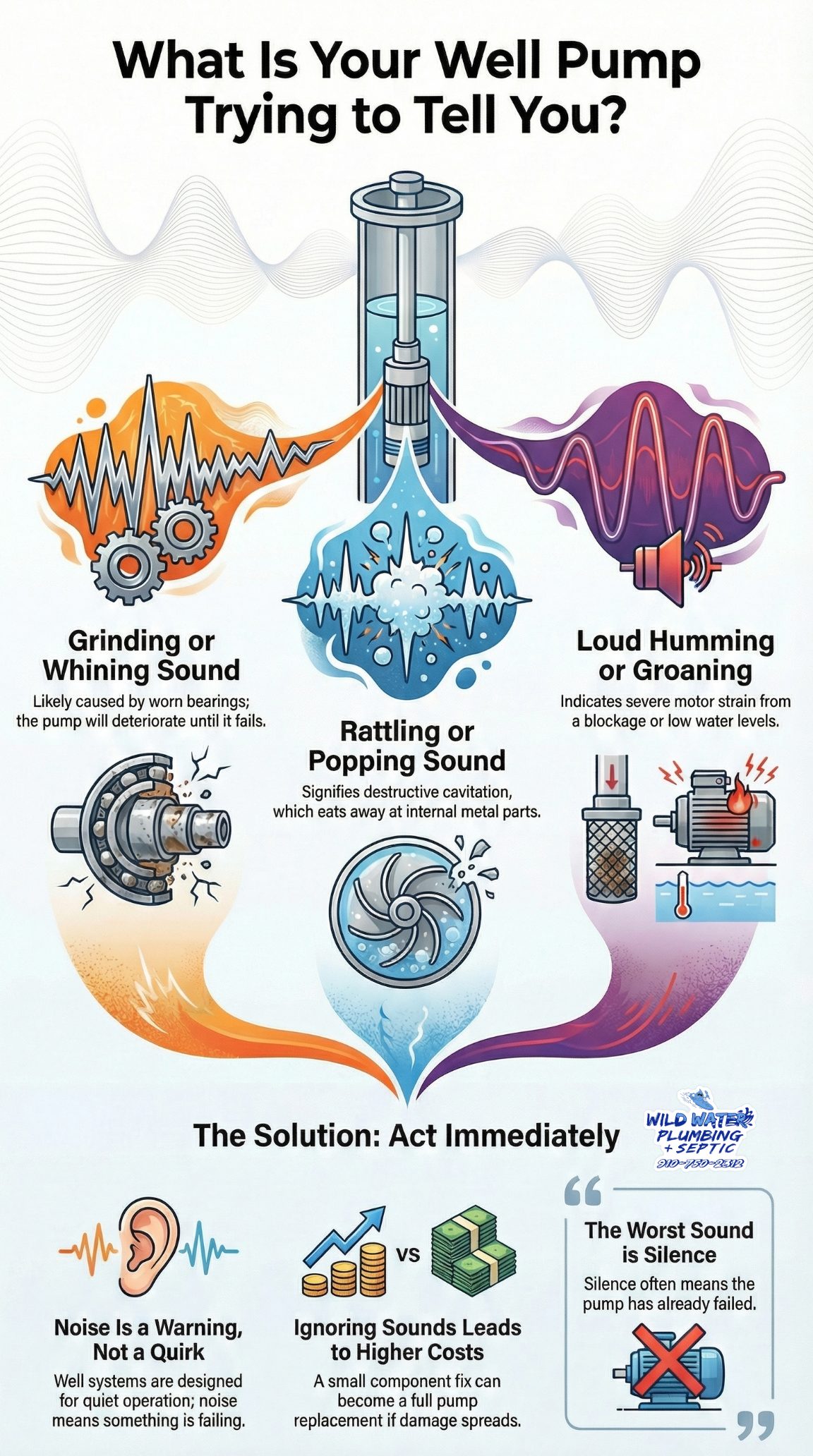
A well pump should be quiet. A low hum when it runs is normal. Grinding, groaning, screeching, or knocking noises are not. When homeowners in Holly Ridge tell me they can hear their pump making unusual sounds, I take it seriously. Those noises are almost always a warning that mechanical damage is already happening.
Across Onslow County, strange pump noises are one of the clearest indicators that a system is nearing failure.
One common cause is worn bearings inside the pump motor. Bearings are designed to allow smooth rotation. Over time, especially in sandy or sediment heavy wells, those bearings wear down. As they fail, friction increases, and the pump begins to make grinding or whining noises. Once bearing damage starts, it does not stop on its own. The pump will continue to deteriorate until it locks up or burns out.
Another frequent issue is motor strain. When a pump struggles to move water due to blockages, sediment buildup, or low water levels, the motor works harder than designed. This strain often produces a loud humming or groaning sound. In Holly Ridge, where coastal conditions can influence groundwater levels, pumps sometimes run under stress during dry periods, increasing wear.
Cavitation is another serious cause of noise. Cavitation occurs when pressure inside the pump drops too low, allowing air bubbles to form and collapse violently. This creates a rattling or popping sound and causes internal damage to the pump impeller. Cavitation is especially destructive because it eats away at metal components from the inside. Once cavitation begins, pump failure is usually not far behind.
Loose or failing components can also create noise. Mounting brackets, pressure tank fittings, or worn check valves can vibrate or bang when the pump runs. While these issues may seem less severe, they still indicate system instability and should be addressed before they cause further damage.
In coastal areas like Holly Ridge, corrosion plays a role as well. Salt air and moisture accelerate rust on exposed components. Corroded fittings, electrical connections, and pump housings weaken over time, leading to vibration and noise during operation.
One mistake homeowners make is assuming noise is just part of owning a well. It is not. Well systems are designed to operate quietly. When they start making noise, it means something is failing.
Ignoring strange sounds almost always leads to more expensive repairs. What could have been addressed by replacing worn components can turn into a full pump replacement if damage spreads.
At Wild Water Plumbing + Septic, we listen carefully to what your system is doing. Noise tells a story. By inspecting the pump, pressure system, and electrical components, we can identify the source and stop the damage before water service is lost.
If your Holly Ridge home has a well pump making unusual noises, do not wait for silence. Silence often means the pump has already failed.
Chapter 8
High Electric Bills
Why Well Pumps in Swansboro Can Quietly Drive Up Your Power Costs
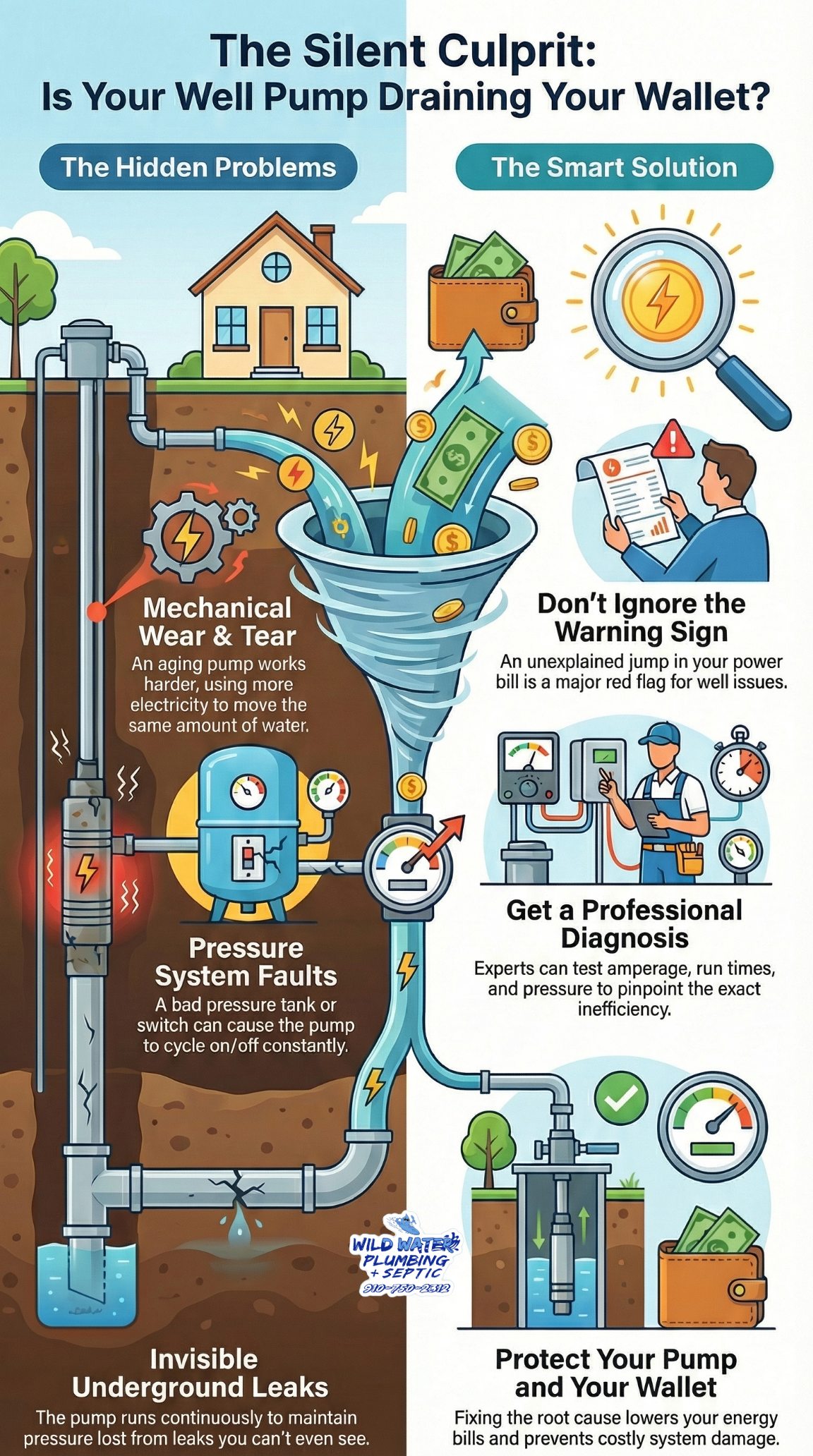
When a homeowner in Swansboro calls me about a sudden jump in their electric bill, the well pump is often the last thing they suspect. Lights look normal. Appliances seem fine. Nothing obvious has changed. Yet the bill keeps climbing. In many cases, the well pump is the hidden cause.
Across Onslow County, inefficient or failing well pumps are a common source of unexpected energy use.
A healthy well pump runs only when water is needed. When something goes wrong, the pump can begin running longer, more often, or less efficiently. Each of those conditions increases electrical consumption without the homeowner realizing it.
One major cause is mechanical wear. As pumps age, motors lose efficiency. Bearings wear down. Impellers become damaged by sediment. The pump still moves water, but it takes more electricity to do the same job. This added strain shows up directly on your electric bill.
Pressure system problems also play a role. When a pressure tank bladder fails or a pressure switch malfunctions, the pump may cycle excessively or run longer than necessary. Even if water pressure seems acceptable, the pump could be turning on far more often than it should.
Hidden leaks are another silent energy drain. A small underground leak allows pressure to bleed off continuously. The pump responds by running repeatedly to maintain pressure. Because the water never reaches your home, you do not see obvious signs like dripping faucets or wet spots. You only see the electric bill rising month after month.
Electrical issues themselves can also increase power usage. Loose connections, failing control boxes, or low voltage supply cause motors to draw more current. This not only wastes electricity but also accelerates motor damage.
In Swansboro, I also see seasonal factors contribute. Vacation homes or part time residences can mask problems. A pump may run inefficiently for weeks without anyone noticing, racking up energy costs before the issue is discovered.
Many homeowners focus on appliances when trying to lower electric bills. While that makes sense, ignoring the well system can be costly. A failing pump can consume more power than several household appliances combined.
At Wild Water Plumbing + Septic, we evaluate pump amperage, run times, pressure performance, and electrical supply to identify inefficiencies. By addressing the root cause, we not only restore proper water service but also reduce unnecessary energy use.
If your Swansboro home has unexplained increases in electric bills, your well pump may be working harder than it should. Fixing the problem early protects both your water system and your wallet.
Chapter 9
Sudden Water Quality Changes
Why Rural Homes Across Onslow County Experience Taste Smell and Color Problems

When homeowners tell me their well water suddenly tastes metallic, smells like sulfur, or changes color without warning, I know something in the system has shifted. These changes are not cosmetic. They are signals that the well environment, pump operation, or system integrity has been compromised.
In the rural parts of Onslow County, wells are often deeper, older, and more exposed to changing groundwater conditions than people realize. Many homes sit on land that was once farmland or undeveloped property, and those underground conditions directly affect water quality.
One of the most common causes of sudden water quality changes is sediment disturbance. When a pump begins to fail or loses efficiency, it can disturb sediment layers at the bottom of the well. Iron, manganese, and fine particles get pulled into the system, changing water color and taste. What was once clear water may suddenly look yellow, brown, or cloudy.
Iron is especially common in rural Onslow County wells. Metallic taste, orange staining, and rust colored water often point to increased iron levels. While iron itself is not always dangerous, a sudden increase usually means the well screen or pump is no longer operating smoothly. It can also signal casing deterioration that allows mineral rich groundwater to enter the well.
Sulfur smells are another frequent complaint. That rotten egg odor comes from hydrogen sulfide gas, which can appear when groundwater conditions change or bacteria interact with sulfur in the soil. A failing pump that stirs stagnant water zones can trigger this smell seemingly overnight.
Well casing integrity plays a major role in water quality. Over time, casing joints can weaken or crack. When that happens, surface water, organic material, and contaminants can seep into the well. After heavy rain, homeowners may notice sudden discoloration or odor changes. These are not random events. They are signs the protective barrier around the well is compromised.
Water quality changes can also be tied to pressure and flow issues. When pumps short cycle, cavitate, or struggle to maintain pressure, water movement inside the well becomes unstable. This instability pulls in material that normally stays settled, affecting clarity and taste.
A common mistake homeowners make is relying solely on water filters to fix the problem. Filters can help temporarily, but they do not address the source. In many cases, filters clog quickly, pressure drops, and the real issue continues underground.
Ignoring water quality changes can lead to bigger problems. Sediment and minerals damage fixtures, stain laundry, clog appliances, and wear down pumps faster. More importantly, changes in taste and smell can signal contamination risks that should not be overlooked.
At Wild Water Plumbing + Septic, we look beyond the symptoms. We evaluate pump performance, well depth, casing condition, and system stability to determine why water quality changed. Our goal is to correct the cause, not just mask the effects.
If your rural Onslow County home experiences sudden changes in well water taste, smell, or color, your system is asking for attention. Addressing it early protects your water supply, your equipment, and your peace of mind.
Chapter 10
Repair or Replace
How Homeowners in Onslow County Know When a Well Pump Is Reaching the End
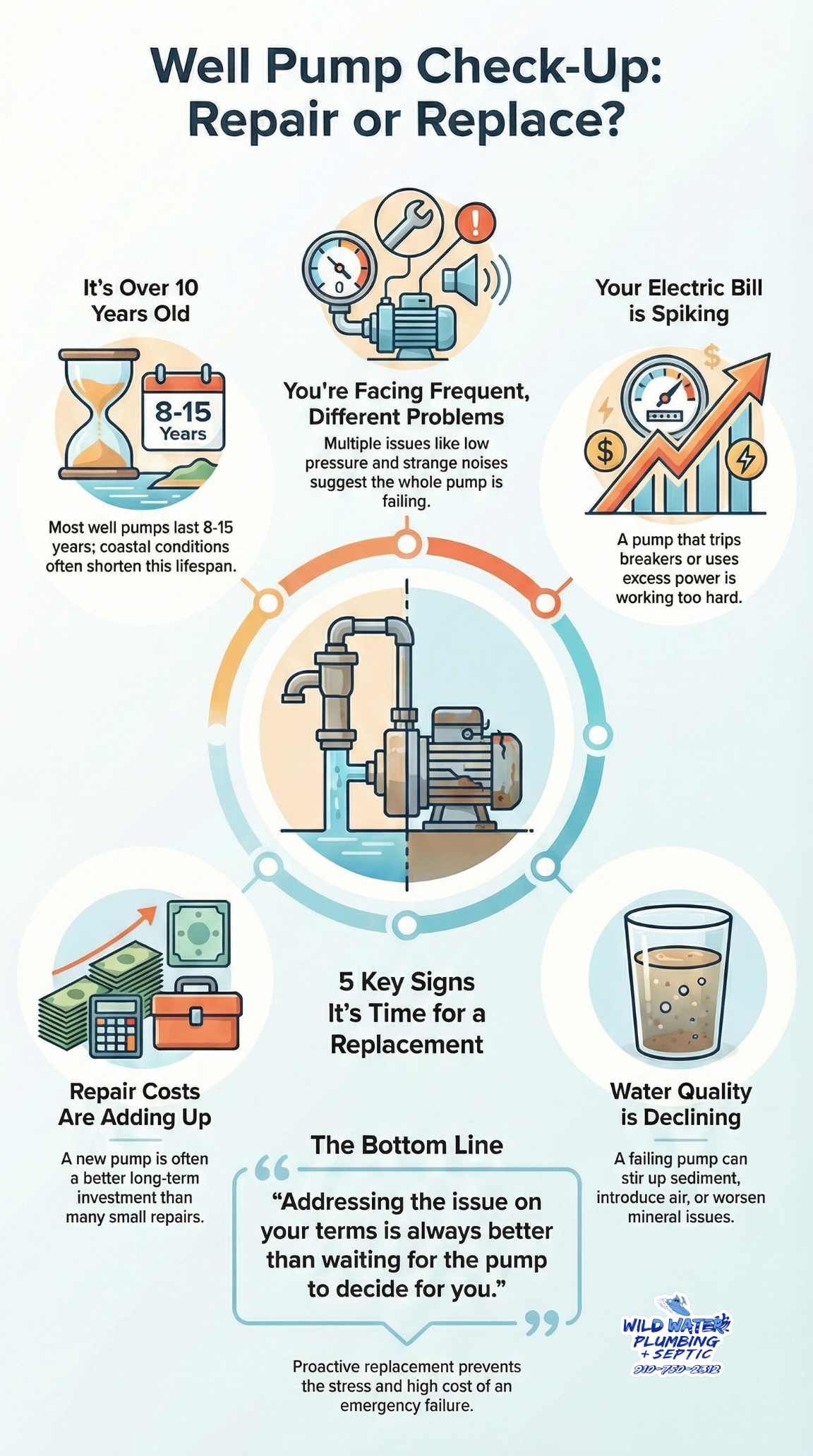
One of the most common questions I get from homeowners is simple but important: should I repair my well pump, or is it time to replace it? Across Onslow County, this decision comes up when water issues stop being occasional and start becoming frequent. Knowing when to repair and when to replace can save you money, stress, and unexpected loss of water.
The first factor we look at is age. Most residential well pumps last anywhere from eight to fifteen years, depending on usage, water quality, and installation. In coastal and sandy soil areas like Onslow County, pumps often fall on the shorter end of that range. Sediment, iron, and fluctuating water tables all accelerate wear. If your pump is already past ten years old and showing problems, replacement often makes more sense than repeated repairs.
The second factor is symptom frequency. A single issue, such as a failed pressure switch or pressure tank, can usually be repaired cost effectively. But when problems stack up low pressure one month, short cycling the next, strange noises after that it is a sign the pump itself is wearing out. Replacing individual components around a failing pump only delays the inevitable.
Electrical strain is another key indicator. Pumps that draw excessive amperage, trip breakers, or cause rising electric bills are often nearing the end of their service life. Even if the pump still runs, inefficiency means it is working harder than designed. That extra strain shortens its remaining lifespan and increases the risk of sudden failure.
Water quality changes also influence the repair versus replace decision. Pumps that stir sediment, introduce air, or worsen iron and sulfur problems may be damaging the well environment itself. In these cases, replacement with a properly matched pump can restore stable flow and protect the well structure.
Emergency risk matters too. Many homeowners wait until a pump fails completely. Unfortunately, total failure often happens at the worst possible time during a holiday, a storm, or extreme heat. Planning a replacement before failure allows for proper sizing, scheduling, and system upgrades without the stress of no water.
Cost comparison is important, but it should be realistic. Multiple service calls, temporary fixes, and rising power bills add up quickly. In many cases, investing in a new pump with updated components provides better long term value than chasing repeated repairs.
At Wild Water Plumbing + Septic, we do not push replacements unnecessarily. We evaluate pump performance, age, system condition, and water demand to give honest recommendations. If a repair makes sense, we explain why. If replacement is the smarter move, we show you the data behind that decision.
For homeowners in Onslow County, a well pump is not just equipment. It is your home’s water supply. Knowing when to repair and when to replace protects that supply and prevents unexpected disruption.
If your well system is showing repeated warning signs, the best decision is an informed one. Addressing the issue on your terms is always better than waiting for the pump to decide for you.
Summary
Well pump problems rarely start all at once. They build slowly through pressure changes, water quality issues, unusual noises, air in the lines, and rising energy costs. Across Onslow County, local conditions like sandy soils, clay layers, coastal moisture, and fluctuating water tables put added strain on well systems, especially older installations. What may feel like a small inconvenience is often an early warning that the pump, pressure tank, or well structure is beginning to fail.
This guide breaks down the most common well pump and system issues homeowners search for in each town and explains what those symptoms really mean. From no water emergencies to declining pressure and sudden water quality changes, each problem points to a specific failure pattern that should not be ignored. Addressing these issues early can prevent pump burnout, protect plumbing and appliances, and avoid costly emergency replacements.
Wild Water Plumbing + Septic specializes in diagnosing well systems correctly, not guessing. By testing performance, pressure, electrical draw, and system integrity, problems are identified at the source. For Onslow County homeowners, understanding these warning signs makes the difference between a manageable repair and a sudden loss of water.
Reliable water starts with a healthy well system, and early action keeps it that way.
Need help with your well pump system? Book online below.