Wrightsville Beach is separated from the mainland by a narrow stretch of the Intracoastal Waterway, and the tidal water that makes this barrier island one of the most beautiful addresses in New Hanover County is the same water that rises and falls twice every day against the soil beneath its residential properties. Most homeowners on the island think about tidal water in terms of what they can see. Very few think about what that same water is doing underground to the drain fields that their septic systems depend on.
How Tidal Water Undermines a Drain Field Over Time
A septic drain field works by releasing effluent into permeable soil where bacteria treat the remaining contaminants before the water reaches the groundwater table. On a barrier island like Wrightsville Beach, the water table does not behave the way it does on the mainland. It rises with the tide twice a day, every day, year-round. The separation between the drain field pipes and the saturated zone beneath them can effectively disappear during high water events.
The Twice-Daily Stress Cycle
What makes Wrightsville Beach uniquely challenging is the regularity of the tidal cycle. A drain field in a riverside community might experience water table pressure during flood events. A Wrightsville Beach drain field experiences it on a predictable, twice-daily schedule. This causes the soil in the absorption zone to undergo repeated wetting and partial drying cycles that accelerate the physical changes reducing permeability over time.
Storm Surge Events That Cause Sudden Deterioration
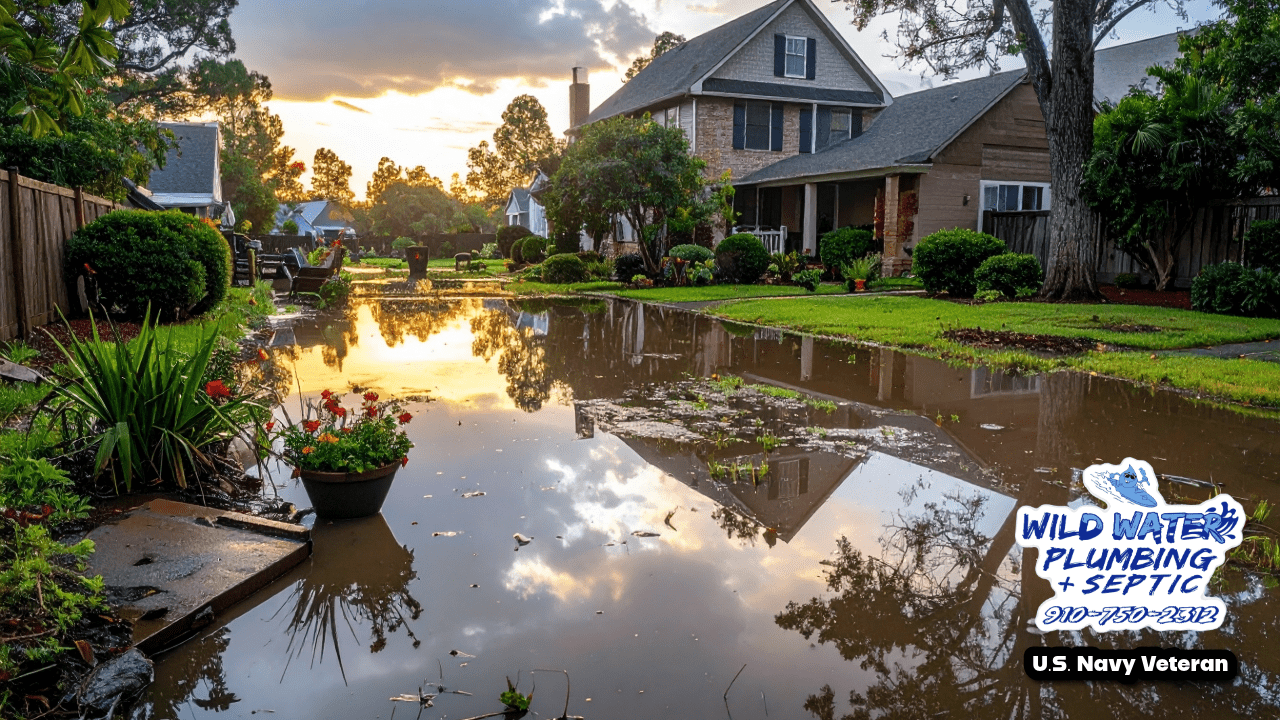
Beyond the daily tidal cycle, Wrightsville Beach periodically experiences storm surge events. A significant surge that inundates a drain field area can deliver a level of soil saturation and physical disruption that accelerates deterioration dramatically. After a major surge event, drain fields that were functioning adequately before the storm sometimes do not recover to their previous performance level. Our article on what it means when sewage surfaces in a coastal yard covers what post-storm failure looks like.
The Lot Size Reality on Wrightsville Beach
Wrightsville Beach is among the most densely developed barrier islands in coastal North Carolina. Lot sizes are small, the island is narrow, and the available area for drain field placement is genuinely constrained. Alternative system designs, including aerobic treatment units and engineered mound systems, are sometimes the only viable path forward, and the planning for them needs to begin before the existing system reaches complete failure.
What Wrightsville Beach Homeowners Should Be Doing Now
Schedule a professional evaluation if your system has not been assessed in the last two to three years. Keep tank solids levels low with annual pump-outs, particularly for rental properties that see high summer occupancy. Following any significant coastal storm, check drain performance before resuming normal household water use. For what a pre-purchase evaluation of a Wrightsville Beach property should cover, our article on what a septic inspection reveals for coastal New Hanover County buyers covers the key questions in full.
Tidal drain field failure at Wrightsville Beach follows a predictable warning sequence covered in depth in our comprehensive guide: 8 Signs Your Septic System Is Failing — Onslow, Pender, New Hanover, and Carteret Counties.
Frequently Asked Questions
In many cases yes, though the options may require an alternative system design rather than a conventional replacement field. A licensed soil evaluator must assess the specific property to determine what is feasible within setback requirements and available space.
Tidal-related stress correlates with tide cycles and worsens during high tide periods and wet seasons. System overloading shows more consistent symptoms regardless of tide and weather. In practice, many Wrightsville Beach failures involve both factors simultaneously, requiring a professional evaluation to distinguish them.
Yes. New Hanover County Environmental Health applies more restrictive setbacks from tidal water and requires system designs that can function in high water table conditions. Permits for all septic work on Wrightsville Beach must be obtained through New Hanover County Environmental Health.
Annual pump-outs are appropriate for most Wrightsville Beach properties, particularly those in the rental inventory. The twice-daily tidal stress on the drain field means keeping tank solids levels low is more important here than in less challenging environments.
Yes. Storm surge introduces salt water and sediment into drain field trenches, disrupting the microbial community and permanently reducing soil permeability. A drain field covered by significant storm surge should be professionally evaluated before the property returns to normal occupancy.
When the water table rises during high tide, the soil below your drain field becomes temporarily saturated. Incoming effluent has reduced absorption capacity, causing the system to slow or back up. If this pattern is consistent with tide cycles, your drain field is operating at or near its capacity boundary.
Wrightsville Beach Drain Field Concerns? Get a Real Assessment.
Wild Water Plumbing + Septic understands the tidal dynamics and site constraints that define septic system performance on Wrightsville Beach. We evaluate what you have and give you honest options for what comes next.