
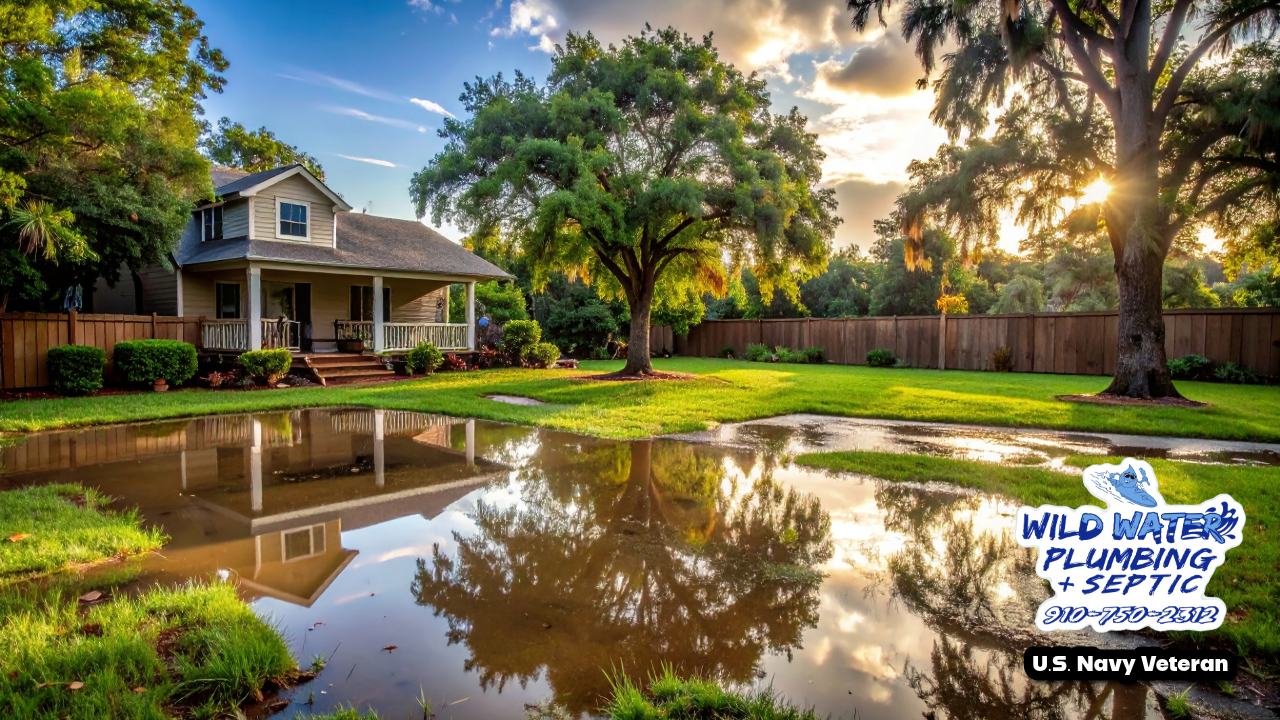
The storm passes. The water recedes. Most Carolina Beach homeowners do a quick walk-around to check for visible damage and then go back inside. What they rarely check is the septic system, and that oversight has a way of announcing itself within twenty-four to forty-eight hours through slow drains, backed-up toilets, or the unmistakable appearance of sewage in the yard.
Understanding that pattern means Carolina Beach homeowners can stop being surprised by these events and start being prepared for them.
What a Major Storm Does to a Septic System at Carolina Beach
Rapid Water Table Saturation
When a significant storm system moves through, the water table beneath Carolina Beach can rise to the surface within hours. A drain field that had acceptable separation before the storm suddenly has no separation at all.
Inundation That Physically Disrupts the Drain Field
Storm surge inundation introduces salt water, suspended sediment, and organic material into the drain field trenches. Salt water disrupts the microbial community in the soil responsible for treating effluent. Sediment can fill pore spaces permanently, reducing permeability.
Pressure on Tank Seals and Lids
Hydrostatic pressure from saturated soil can push against concrete tank walls and lids from outside. Tanks that are not fully sealed can allow groundwater infiltration, pushing extra volume into the drain field at exactly the moment when the field is least able to accept it.
The Post-Storm System Recovery Window
After a storm, some Carolina Beach homeowners find their system appears to improve over several days. What often actually happened is that the system is now functioning at reduced capacity. A professional evaluation after any significant storm event gives an accurate picture of what changed.
What to Do in the 24 Hours After a Major Storm
Do Not Immediately Resume Normal Water Use
The water table at Carolina Beach may still be elevated for several days after a significant storm. Reduce water use for at least 24 to 48 hours until you have confirmed the system is responding normally.
Check Drain Performance Before Assuming Everything Is Fine
Run a sink and observe the drain rate. Flush a toilet and watch the water level. If drains are slower than normal, the septic system is still under stress.
Look at the Drain Field Area
Walk the area of your yard above the drain field after the storm passes. Persistent standing water, soft or spongy soil, or visible surfacing sewage are all indicators that the drain field experienced damage. Our article on what to do when sewage surfaces in a coastal yard covers the immediate steps and regulatory context.
The Pre-Season Preparation That Changes the Outcome
The most effective storm preparation for a Carolina Beach septic system happens before hurricane season, not during it. A tank pumped and inspected in late spring enters the high-risk summer and fall months with maximum capacity buffer.
Storm-related septic failures follow a predictable pattern across all four coastal counties. Read the full guide covering every warning sign, every county, and every repair option: 8 Signs Your Septic System Is Failing — Onslow, Pender, New Hanover, and Carteret Counties.
Frequently Asked Questions
Standard NFIP flood insurance generally covers direct structural flood damage but has limited coverage for septic system failure from flooding. Most homeowners policies also exclude septic failures. Review your specific policy and document your system’s condition before and after storm events.
Temporary saturation resolves within days as the water table drops. Permanent damage shows as persistently reduced drain performance, soft ground above the field that does not firm up, or recurring backup events after storms that were not a problem before.
Yes. If sewage is backing up into the home or surfacing in the yard, stop all plumbing use immediately and call Wild Water Plumbing + Septic at 910.750.2312.
Minor repairs can be completed within days. Significant drain field damage requiring permitting and installation takes four to eight weeks. Emergency permits through New Hanover County Environmental Health can sometimes accelerate this.
Late April through May is the ideal window. This allows a pump-out and inspection to be completed before peak rental occupancy and before the June through November hurricane season begins.
Carolina Beach Septic Emergency After a Storm? Call Us Now.
Wild Water Plumbing + Septic responds to post-storm septic failures across Carolina Beach and all of New Hanover County. We assess, stabilize, and repair systems quickly and handle the permit process so you can focus on getting back to normal.