WRIGHTSVILLE BEACH WELL ISSUE?
The harshest salt environment in coastal NC needs the right equipment. Call 910.750.2312 for island specific well service.
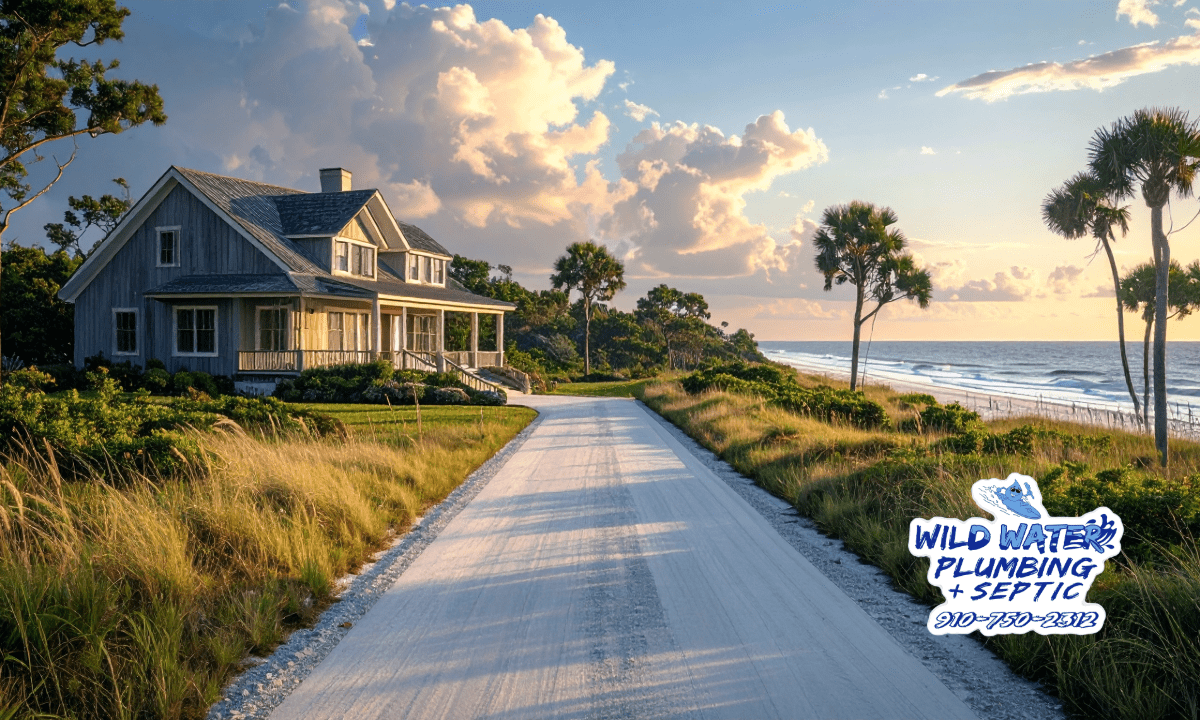
Wrightsville Beach is one of the most exposed environments for mechanical equipment in coastal North Carolina. The Atlantic Ocean sits a few hundred feet from most properties. Salt spray rolls in from the sea 24 hours a day. The barrier island geography compresses the freshwater lens to a thin layer between saltwater above and saltwater below. Hurricane storm surge events flood the wellhead with chloride-heavy seawater. The premium property prices on the island reflect the location’s desirability, but they do not address the engineering challenges of installing and maintaining a private well on a sand bar between the ocean and the sound.
I run Wild Water Plumbing and Septic. Wrightsville Beach is part of my regular service area. Here is what every island well owner needs to understand about working with the harshest salt environment in coastal NC.
Where private wells still exist
Most of Wrightsville Beach is on CFPUA municipal water through lines that cross the Intracoastal from the mainland. Some older properties still have private wells, and many homes that were connected to city water years ago kept the well for irrigation. Pure private well drinking water is uncommon on the island itself, but irrigation wells are widespread and still need full maintenance attention, given the corrosive environment.
Mainland adjacent properties (those right at the foot of Wrightsville Avenue or in the older neighborhoods just across the Intracoastal) are more likely to have functional drinking water wells. Those properties receive the same salt-air exposure as the island itself.
The salt air problem at maximum intensity
Salt spray from breaking waves carries dissolved sodium chloride into the air, where wind moves it inland and deposits it on every exposed surface. On the mainland miles from the coast, the effect is mild. On Wrightsville Beach, with the ocean a few hundred feet away, the effect is constant and severe. Brass turns green within months. Standard galvanized fittings show rust within a year. Pressure switch contacts pit and corrode much faster than inland equivalents. Standard steel pump motor casings just below the wellhead degrade noticeably in 3 to 5 years where they would last 15 years inland.
The only practical answer is to upgrade the materials. Stainless steel pump motor housings, stainless steel pump fittings, marine-grade pressure switches, sealed wellhead caps that exclude salt air, and corrosion-resistant control wiring all significantly extend equipment life in this environment.
The narrow lot reality
Wrightsville Beach lots tend to be narrow and dense. Some are 40 feet wide. Many have setback constraints that make the placement of new wells challenging. State code requires a minimum separation of 100 feet between a well and a septic system, which can be difficult to meet on a small barrier island lot. Many older Wrightsville Beach wells were drilled before current standards and may not meet current spacing requirements.
For properties failing current standards, the options are limited. Drilling a compliant new well may not be possible. Switching to CFPUA is usually the cleanest answer for properties that have not done so already.
Storm surge and hurricane prep
Wrightsville Beach gets storm surge during major hurricanes. Surge heights can exceed 6 to 10 feet during a strong storm. Any wellhead at low elevation is at risk of full submersion in saltwater. After any storm event where the wellhead was underwater, the well must not be used until inspection, shock chlorination, and follow-up water testing confirm safety.
Pre-season prep for Wrightsville Beach wells should include: confirming the wellhead extends above current FEMA base flood elevation, sealing the cap to current sanitary standards, photographing the installation for any insurance needs after the storm, installing or testing backup power for the pump, and taking a baseline water sample to compare against post-storm test results.
What I install on Wrightsville Beach wells
Stainless steel is everything that can be stainless. Marine-grade pressure switches. Sanitary wellhead caps with sealed gaskets. Electrical components rated for use in a salt environment. Pressure tanks sized for the property’s actual usage patterns rather than generic family-of-four assumptions.
For a typical Wrightsville Beach pump and pressure tank replacement with all the salt environment upgrades, expect $3,500 to $5,500 installed. That is 20 to 30 percent above mainland pricing. The longer lifespan and reduced service callbacks justify the premium for any installation expected to last more than 5 years. (all numbers are estimated)
📖 Wrightsville Beach is the most extreme salt environment in coastal NC.
For the full picture on every coastal NC well water issue including salt corrosion, water quality, and storm preparation, read my Complete Coastal NC Well Water Homeowner Guide.
Frequently Asked Questions
Are there private wells on Wrightsville Beach?
Most Wrightsville Beach properties are on CFPUA municipal water. Some older homes and a small number of mainland-adjacent properties still have private wells, often used for irrigation while indoor water comes from the city line. Pure private well drinking water is uncommon on the island itself but does exist in pockets.
How fast does salt air destroy well equipment on Wrightsville Beach?
Faster than any other location in coastal NC. Standard brass and copper components show visible corrosion within months. Pressure switches develop pitted contacts within 1 to 2 years. Standard steel pump components installed in oceanfront properties often need replacement at half the typical lifespan. Stainless steel components are essentially required for any installation expected to last.
Why are Wrightsville Beach well installations more expensive?
Three reasons. Premium location requires premium materials: stainless steel pumps, fittings, and switches all cost 15 to 25 percent above standard. Narrow lots and dense neighborhoods make equipment access harder. The salt air environment requires more frequent maintenance, which raises the long term operating cost. Expect installation budgets 20 to 30 percent above mainland equivalents.
Does Wrightsville Beach have saltwater intrusion risk?
Yes, the risk is real on a barrier island this narrow. The freshwater lens beneath Wrightsville Beach is thin compared to mainland aquifers. Storm surge events can push saltwater directly into wellheads. Heavy pumping accelerates intrusion of saltwater toward the well. Chloride testing every two years is the recommended monitoring frequency.
What should Wrightsville Beach well owners do before hurricane season?
Pre-season checklist: inspect and tighten the wellhead cap, verify the casing extends above current flood elevation, test backup power and transfer switches, take a baseline water sample for after-storm comparison, stash drinking water for 3 to 5 days, and document the wellhead condition photographically for any insurance needs after the storm.
Wrightsville Beach well service done right
I bring the right materials, the right expertise, and the right attention to detail for one of the toughest installation environments on the coast.