By Justin Wilder, Owner of Wild Water Plumbing | Septic Systems
Septic Installation Best Practices for Coastal North Carolina
Coastal North Carolina’s septic systems fail early mainly because of high water tables, saturated soils, saltwater intrusion, and improper system selection. The best way to ensure long-lasting, low-maintenance systems in Onslow, Pender, New Hanover, and Carteret Counties is to perform thorough soil evaluations, use elevated or low-pressure systems when needed, install durable components, and educate homeowners on proper maintenance.
Understanding Local Challenges
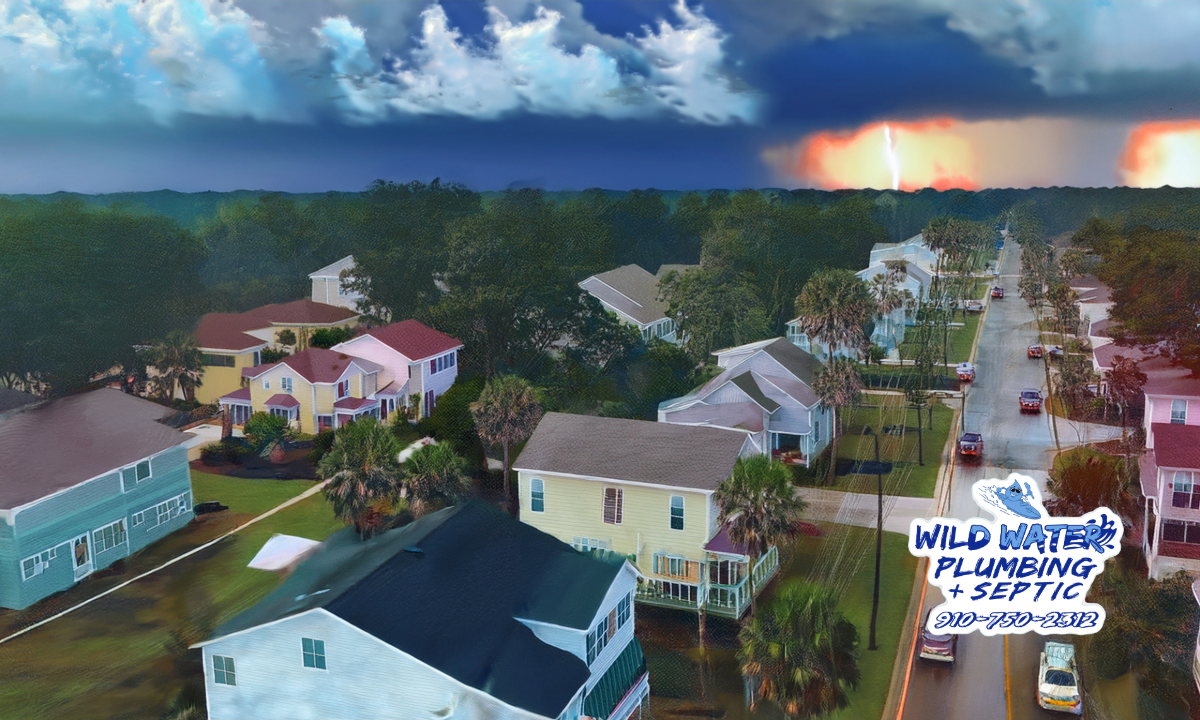
High water tables are a constant issue — in many coastal neighborhoods, groundwater sits just a few feet below the surface year-round. Frequent heavy rainfall and hurricanes further saturate the ground, and storm surges can push saltwater inland and inundate drain fields. Soil extremes add to the difficulty: some areas have fast-draining sandy soils, while others like parts of Pender County have dense clays. Finally, high usage patterns from vacation rentals and multi-family homes common in beach communities put extra strain on systems not designed for that volume.
Essential Do’s During Installation
Always conduct a thorough soil profile evaluation and determine the seasonal high water table before finalizing the design. Follow or exceed separation requirements — design for at least 24 inches of unsaturated soil above the water table. Match the system to site conditions: for sandy or variably wet soils, gravelless chamber or EZflow drain fields handle moisture better, resist compaction, and last longer. Oversize critical components where possible. Include effluent filters on the tank outlet to catch solids and protect the drain field. Use durable, corrosion-resistant materials — PVC or HDPE piping, stainless hardware, and high-quality concrete or plastic tanks. Divert roof gutters, driveways, and surface runoff away from the drain field area. Always obtain proper permits and inspections through the county health department.
Essential Don’ts During Installation
Do not install in poorly chosen locations — avoid placing drain fields in low spots that obviously flood or near tidal marsh boundaries without sufficient elevation. Do not ignore soil clues: gray mottling, standing water in test pits, or clay that stays wet for days are red flags requiring an alternative design. Do not undersize the drain field to save cost. Do not plant trees or allow deep roots near the field. Do not connect stormwater drains, sump pumps, or gutter downspouts to the septic system. Do not bury components without easy riser access — every system will need maintenance over its decades-long life.
Recommended System Types for Longevity
For sites with adequate separation and good soil: conventional gravity systems with gravelless chambers and effluent filters. For high water table sites: elevated sand mound systems that place the drain field in engineered sand fill above the natural grade. For slowly permeable soils like Pender County clay: low-pressure pipe systems that dose effluent in controlled amounts. For the most challenging sites near tidal water or barrier islands: aerobic treatment units with drip dispersal that produce higher-quality effluent requiring less soil treatment.
Maintenance Advice to Share With Homeowners
Regular pumping every three to five years, or more frequently in coastal areas. Spread out high-water-use activities and avoid concentrated laundry loads. Never pour grease down drains and never flush wipes, hygiene products, or harsh chemicals. Protect the drain field from vehicles, heavy equipment, and deep-rooted plants. Watch for warning signs: gurgling sounds, slow draining fixtures, sewage odors in the yard, and unusually green grass over the field area. Prepare for storms by ensuring tank lids and risers are watertight and by limiting water use after any major flooding event.
Proper installation practices prevent failure — but homeowners and contractors alike should know every warning sign that an existing system is approaching failure. Read the complete guide: 8 Signs Your Septic System Is Failing — Onslow, Pender, New Hanover, and Carteret Counties.
Stay safe and prepared, Jacksonville.
– Justin Wilder, Owner
📞 Call or text me directly at (910) 750-2312
Wild Water Plumbing + Septic—Local, Veteran-Owned, and Always Ready.