By Justin Wilder, Owner of Wild Water Plumbing | Septic Tank System
Why Surf City’s Shifting Sand and Storm Tides Are Destroying Septic Drain Fields Faster Than Ever
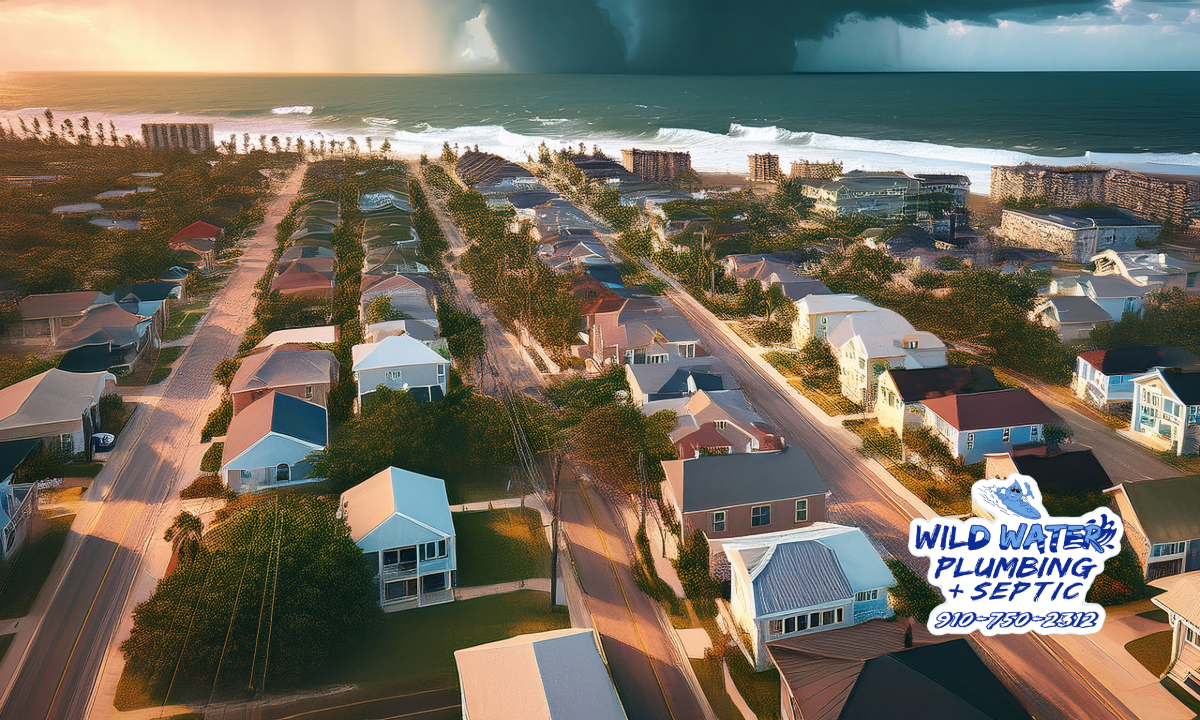
Surf City’s constantly shifting sand, rising tides, and frequent storm overwash events are destroying septic drain fields faster than ever before. The soil instability on Topsail Island means that drain field pipes that were installed with proper slope and gravel support can shift, crack, and lose their distribution pattern within years of installation — not decades.
What Shifting Sand Does to a Drain Field
Fine coastal sand lacks the structural stability of clay or loam. When storm surge or heavy tidal events move sand beneath drain field pipes, the pipes lose their bedding support and sag. A sagged pipe creates a belly where effluent pools rather than distributing along the full length of the trench. Pooling effluent concentrates the bio-mat load on a small section of soil rather than distributing it, and that concentrated section fails first while the rest of the trench sits underutilized.
How Storm Overwash Accelerates the Timeline
Overwash events that carry salt water and fine sediment across the low-lying sections of Topsail Island deposit material directly into drain field trenches when they reach the surface. That sediment fills the gravel void space that allows effluent to contact the soil. Once the gravel is silted, the field’s absorption capacity drops permanently. The salt water carried by the overwash disrupts the soil biology simultaneously. After a significant overwash event, a drain field that had been functioning marginally often fails completely within weeks.
Surf City’s shifting sand and storm tide failures are part of a regional story covered in full in our comprehensive guide: 8 Signs Your Septic System Is Failing — Onslow, Pender, New Hanover, and Carteret Counties.
Stay safe and prepared.
– Justin Wilder, Owner
📞 Call or text me directly at (910) 750-2312
Wild Water Plumbing—Local, Veteran-Owned, and Always Ready.