THE SHORT VERSION
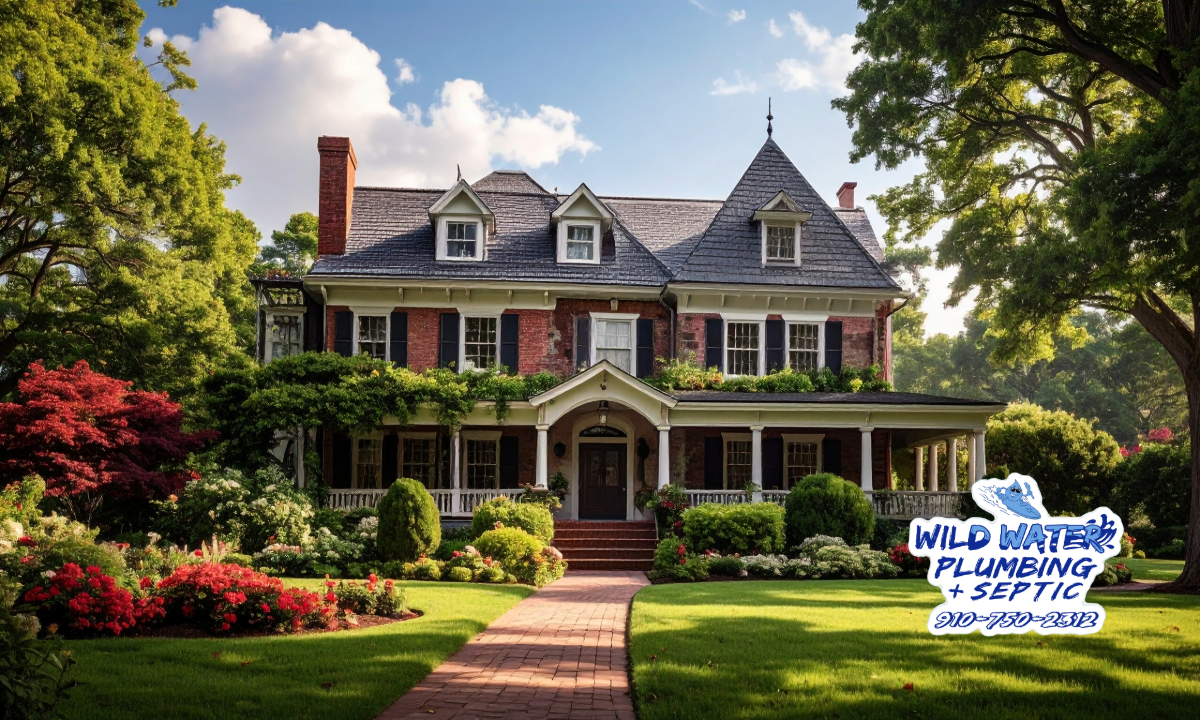
Jacksonville’s older residential corridors (Henderson Drive, Bayshore, Northwoods, and the streets around the original city core) were built across the 1950s through 1970s when the surrounding area absorbed most of its own runoff and the original lot grading worked because not much was changing around it. The city around these properties has changed dramatically since. Original drainage ditches have been paved, surrounding lots have built up impervious surface, runoff patterns have shifted, and the clay subsoil beneath the residential corridor has compacted over decades of use. Older Jacksonville yards that drained fine for 40 years now stay wet for days after rain, push water against foundations, and saturate crawl spaces that were dry when the house was new.
What the Surrounding City Has Done to Older Jacksonville Yards
A mid-century Jacksonville home was built when the area around it was less paved, less dense, and less developed. The original grading and downspout routing assumed that the surrounding land would absorb its share of rainfall and that the property would only have to handle the water that fell directly on it. Decades of development have completely changed that equation. The neighbor’s lot has more rooftop and less yard than it did. The street has more pavement and less swale than it did. The vacant lot down the road is now a subdivision, sending water in directions that did not exist before. The original property may not have changed at all, but the city around it changed everything about how water reaches it.
Most of Jacksonville’s older residential neighborhoods sit on a sandy or sandy-loam topsoil over a denser clay subsoil that begins within the first foot or two of grade. Water moves quickly through the sandy top layer, hits the clay, and either pools at that horizon or moves laterally. On a Jacksonville lot with this profile, the surface can look dry an hour after the rain stops, while the soil below grade remains saturated. The drainage problem is what is happening beneath the surface, not what is visible on top.
Three Drainage Patterns That Show Up Most Often in Mid-Century Jacksonville
Settled Grading That Now Slopes Toward the House
Original grading on a mid-century lot was set to slope away from the foundation. Decades of soil settling, freeze-thaw cycles, landscaping additions, foot traffic, and minor regrading by successive owners have all contributed to changing those contours. The result on many older Jacksonville properties is a yard surface that now directs water toward the foundation instead of away from it. The fix involves regrading the immediate perimeter to restore positive slope and often adding a perimeter drain to capture water before it reaches the wall.
Downspouts Discharging Against the Foundation
Original downspout terminations on most mid-century Jacksonville homes ended at grade level next to the foundation. The intention was for the original grading to carry the water away from there. As grading has changed, those discharge points now deliver water directly to the foundation. Extending downspouts at least 10 feet away from the foundation, ideally to a daylight outlet or tied into a yard drainage system, is the single most impactful drainage improvement on most older Jacksonville properties.
Crawl Space Moisture That Has Built Up Over Years
Mid-century Jacksonville crawl spaces commonly developed moisture problems gradually as the surrounding drainage degraded. By the time the homeowner notices musty smell, soft floors, or visible mold, the moisture has been accumulating for one or more wet seasons. The fix combines drainage correction (so new water stops arriving) with crawl space remediation (so existing moisture is removed) and ongoing moisture control (vapor barrier, sump pump if needed, sealed or ventilated approach depending on the property).
Many older Jacksonville properties operate on individual septic systems whose drainfields sit in the same clay subsoil that produces the yard drainage problems. When yard drainage fails and the soil around the drainfield stays saturated, the drainfield loses absorption capacity, and the homeowner sees backups or surfacing in the yard. The solution is often drainage protection rather than drainfield replacement. The full picture is in our coastal NC septic failure guide.
French Drain Strategies for Older Jacksonville Properties
French drain installations on mid-century Jacksonville lots typically focus on three placements: a perimeter foundation drain that intercepts water before it reaches the structure, a curtain drain on the uphill side of the property to capture runoff from neighboring areas, and a yard drain at the low point where water concentrates after rain. Each one solves a different part of the overall problem, and the right combination depends on the specific water flow pattern on the property. A site evaluation during or after rain, when possible, determines which combination actually addresses the conditions.
The Sewer Line Story on Mid-Century Jacksonville Homes
Homes built across the 1950s through 1970s commonly have sewer lines made of clay tile (the dominant material before PVC became standard), orangeburg (used on some properties in the era), or cast iron (for higher-end construction). All three materials fail in characteristic ways that become more frequent as the lines age past 50 years. A camera inspection identifies the current condition and locates any specific defects. Both buyers and sellers benefit from camera inspections of properties of this era because surface inspections cannot reveal what is happening underground.
Our French drain and yard drainage services in Jacksonville include full property drainage evaluations, perimeter foundation drains, surface drain systems, downspout integration, crawl space sump systems, and curtain drains for septic drainfield protection. Our sewer line camera inspection and repair services cover the older pipe materials common in mid-century neighborhoods.
📖 Jacksonville’s mid-century drainage pattern is one of several coastal NC drainage situations that vary dramatically by town, age, and soil profile. The complete coastal NC drainage cornerstone covers the eight warning signs and county-by-county breakdown: Why Coastal NC Yards Flood: The Complete French Drain and Yard Drainage Guide.
Wild Water Plumbing and Septic designs drainage solutions for mid-century Jacksonville properties and the surrounding Onslow County neighborhoods.Call 910.750.2312 or request a drainage evaluation online.
Frequently Asked Questions
Why do older Jacksonville neighborhoods have so many drainage problems?
Jacksonville’s older residential neighborhoods (Henderson Drive, Bayshore, Northwoods, and the streets around the original city core) were graded in the 1950s through 1970s when the surrounding area was less developed and natural drainage paths handled most stormwater. Decades of growth around these neighborhoods have changed where runoff goes, paved over original drainage ditches, and added impervious surface that did not exist when the homes were built. The original grading on most properties no longer matches the conditions the city around them produces.
What is the typical Jacksonville drainage problem on an older lot?
The typical pattern is a yard that drained adequately for 30 to 50 years and then started staying wet longer after rain, with water accumulating against the foundation and the crawl space getting damp. The change usually traces back to a combination of soil compaction over decades, original grading that has settled, downspouts that have shifted or now discharge into compacted soil, and surrounding runoff that has increased as the city built out around the property.
Can I fix Jacksonville drainage with grading alone?
Grading correction is often part of the fix but rarely the whole answer on a mid-century Jacksonville property. The clay subsoil layer that underlies most of the older Jacksonville residential corridor holds water in place once it gets through the surface, and surface regrading does not address that subsurface saturation. Most older Jacksonville properties benefit from a combination of grading improvements and a French drain that creates a route through the clay layer.
Are Jacksonville sewer line problems common in older homes?
Yes. Mid-century Jacksonville homes commonly have sewer lines made of clay tile, orangeburg, or cast iron, all of which fail in characteristic ways that no visual inspection can detect. A camera inspection identifies cracks, root intrusion, joint separations, and material problems before they become repairs. Both buyers and sellers benefit from camera inspections on properties of this era.
Does Wild Water Plumbing service Jacksonville NC?
Yes. Jacksonville is part of our core Onslow County service area. We provide drainage evaluation, French drain installation, sump pump systems, septic services, sewer line camera inspection, and full residential plumbing throughout Jacksonville’s neighborhoods, including the older mid-century corridors and newer developments.
Why does my Jacksonville crawl space stay damp even when it has not rained?
A damp crawl space in dry weather usually indicates one of three sources: groundwater rising through the soil floor (the water table is close to the surface), water vapor migrating up from the soil continuously, or condensation from humid outside air entering through vents and condensing on cool surfaces. Most Jacksonville crawl spaces face all three sources, and the fix involves a vapor barrier, possibly a sump pump for liquid water, and either sealed encapsulation or active dehumidification.
How does Jacksonville drainage cost compare to coastal Onslow drainage cost?
Jacksonville drainage installations generally cost less than tidal-influenced coastal Onslow projects because gravity discharge to a roadside ditch or downhill outlet is usually available, eliminating the need for sump pump systems. The labor of cutting through clay subsoil offsets some of that savings, but the overall project cost is typically lower than equivalent work in Sneads Ferry or coastal waterfront locations.
Will improving drainage help my Jacksonville foundation?
Yes. Water pressure against a foundation is the primary driver of crawl space moisture, wall cracks, and structural settlement over time. Properly designed drainage that intercepts water before it reaches the foundation eliminates the hydrostatic pressure that causes most of these problems. For mid-century Jacksonville homes, drainage improvements often produce dramatic and lasting benefits to the foundation and crawl space environment.
References
U.S. Department of Agriculture Natural Resources Conservation Service. (2020). Soil survey of Onslow County, North Carolina. USDA-NRCS Web Soil Survey. https://websoilsurvey.sc.egov.usda.gov
City of Jacksonville Engineering. (2023). Stormwater management and residential drainage standards. City of Jacksonville, NC. https://www.jacksonvillenc.gov
North Carolina Cooperative Extension. (2021). Yard drainage and grading for residential properties in the Coastal Plain. NC State Extension Publications. https://content.ces.ncsu.edu
Onslow County Planning and Development. (2023). Stormwater management ordinance and residential drainage requirements. Onslow County Government. https://www.onslowcountync.gov