THE SHORT VERSION
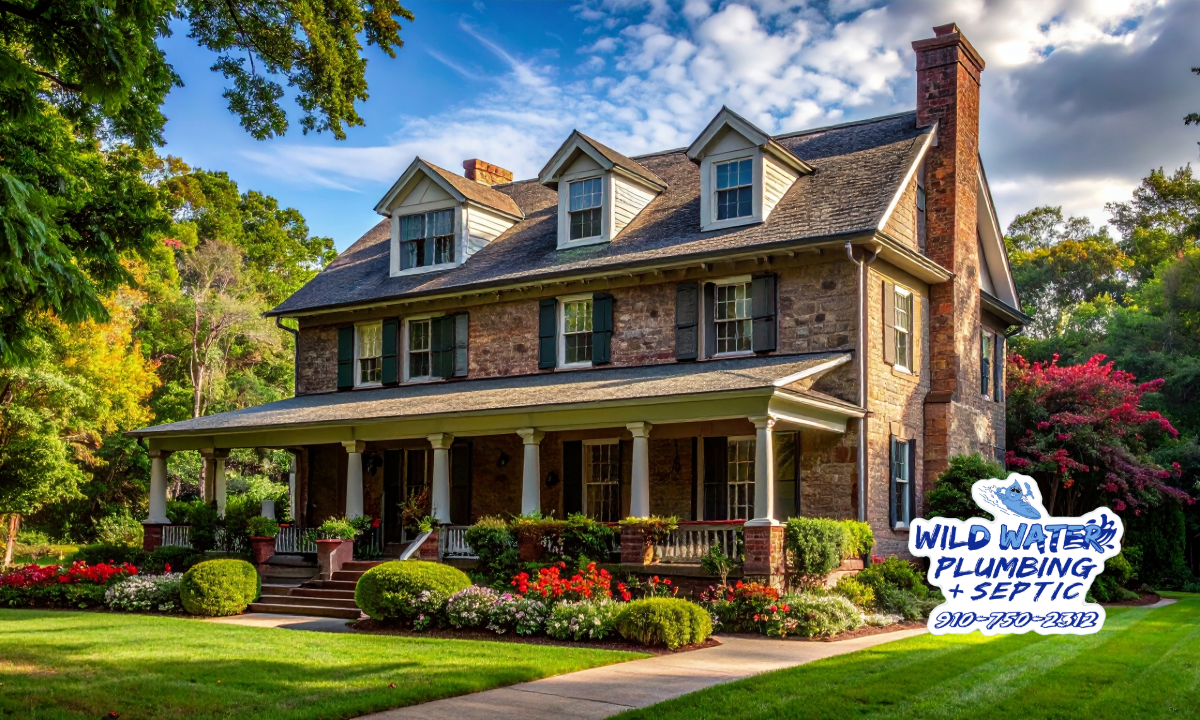
Wilmington’s historic neighborhoods sit on yards graded in the 1920s through the 1960s for a city that was smaller, less paved, and much less dense than it is today. The drainage logic baked into those properties (perimeter ditches, surface swales, downspouts running to grass) was designed for the city as it was then. Decades of growth, infill development, paving, regrading, and altered runoff patterns have changed where water goes on every block. Forest Hills, Sunset Park, Ardmore, and the surrounding historic neighborhoods now face drainage problems their original grading never anticipated, and the fix usually requires a combination of modern measures applied carefully to preserve the property’s historic character.
The Wilmington Historic Drainage Legacy
Forest Hills was developed primarily in the 1920s through the 1940s, with most of the original yard grading done before modern stormwater engineering existed. Sunset Park’s development ran roughly parallel, with similar grading practices and similar reliance on perimeter ditches for property drainage. Ardmore came slightly later, with mid-century construction methods that included more attention to grading but still predated current stormwater standards. Carolina Place sits at the older end of the spectrum, with some of the most original grading still in place. What unifies these neighborhoods is that the drainage systems installed when they were built are no longer adequate for the city around them.
The city has paved, expanded, and built up around the historic neighborhoods continuously since they were first developed. Roads that were dirt or gravel are now asphalt. Lots that were forested or vacant are now built. Drainage ditches that once carried stormwater have been filled, culverted, or paved over. The cumulative effect is that the historic properties receive significantly more runoff than they were designed for, and the drainage paths they were built around no longer exist in the same form. A property that drained adequately in 1955 may have a substantial drainage problem in 2026, even if nothing has changed on the property itself.
The Three Most Common Drainage Problems on Historic Wilmington Properties
Original Grading That Has Settled or Been Altered
Decades of settling, landscaping, and reshaping have changed the original surface contours on most historic Wilmington lots. Areas that used to slope away from the foundation may now slope toward it. Swales that used to carry surface water around the house may have been filled in to create lawn space. The cumulative effect is that water no longer follows the path the original design assumed, and the foundation receives water it was never supposed to.
Downspouts That Discharge Against the Foundation
Original downspout terminations on most historic homes ended at grade level next to the foundation, on the assumption that the original grading would carry water away. As that grading has changed, the discharge point now sits in a location that delivers water directly to the foundation rather than away from it. The single most impactful drainage improvement on most historic Wilmington properties is extending downspouts at least 10 feet away from the foundation, ideally to a daylight outlet or a yard drainage system.
Changed Surrounding Runoff Patterns
As the city has grown, runoff patterns on streets and neighboring properties have shifted. Water that used to flow to public drainage now flows toward private property. Curbs that were level have been replaced and now direct water differently. The result is that established historic properties receive runoff from sources that did not exist when the original drainage was designed.
Water pushing against the foundation of a historic Wilmington home produces hydrostatic pressure that drives moisture into crawl spaces, masonry basements, and the structural materials of the original construction. Over years, this pressure causes wall cracks, masonry deterioration, wood rot at sill plates, mold growth on floor framing, and air quality problems that move up through the floor system. The cost of correcting drainage on a historic property is a small fraction of the cost of repairing the structural damage that follows from leaving it alone.
French Drain Installation on Historic Wilmington Properties
French drain work on historic properties requires more care than work on new-construction lots. The trench has to be planned around mature trees, established gardens, hardscape features that contribute to the historic character, and underground utilities that may be in unexpected locations on older lots. The installation is hand-cut where necessary, root systems are preserved when possible, and landscape restoration is part of the project rather than an afterthought. The result is a drainage system that solves the water problem without destroying what makes the property worth protecting.
Where French Drains Help the Most on Historic Wilmington Lots
The highest-impact placements typically include: a perimeter foundation drain that intercepts water before it reaches the structure; an interception drain at the uphill property line where surrounding runoff arrives; surface drains at low points where pooling occurs; and downspout extensions tied into the drainage system rather than running to grade. The specific combination depends on the property layout, the immediate water flow patterns, and the available discharge options.
The Sewer Line Story on Historic Wilmington Homes
Homes built in Wilmington’s historic neighborhoods commonly have sewer lines made of materials that no longer meet current standards: orangeburg (a tar-impregnated wood fiber pipe used in mid-century construction), clay tile in older properties, or aging cast iron throughout. All three materials fail in characteristic ways, and the failures are often invisible from the surface. A sewer camera inspection is the only diagnostic that identifies the actual condition of these lines. Drainage problems on a historic property and sewer line problems are often connected, because saturated soil accelerates failure modes that affect older pipe materials. Our complete sewer inspection guide covers what an inspection reveals and why it matters for pre-purchase decisions, which is also discussed in our coastal NC septic and sewer work.
Our French drain and yard drainage services in historic Wilmington include full property drainage evaluations designed for older lots, French drain installation that preserves mature landscapes and historic character, downspout integration and surface drain systems, crawl space sump systems for older foundations, and sewer line camera inspection and repair for the older pipe materials common in these neighborhoods.
📖 Historic Wilmington drainage problems sit inside a broader coastal NC pattern that varies dramatically by neighborhood age and soil conditions. The complete coastal NC drainage cornerstone covers the eight warning signs, drainage solutions, and county-by-county breakdown: Why Coastal NC Yards Flood: The Complete French Drain and Yard Drainage Guide.
Wild Water Plumbing and Septic designs drainage solutions for older properties throughout Forest Hills, Sunset Park, Ardmore, Carolina Place, and the surrounding historic Wilmington neighborhoods.Call 910.750.2312 or request a drainage evaluation online.
Frequently Asked Questions
Why do Wilmington historic neighborhoods have so many drainage problems?
Wilmington’s historic neighborhoods were graded for a city that was smaller, less paved, and lower-density than what exists today. The original drainage relied on perimeter ditches, surface swales, and a city stormwater system designed for the early-to-mid twentieth century. Decades of paving, infill development, regrading, and altered downspout routing have changed where water goes on every block, and the original drainage logic no longer matches the current conditions. Forest Hills, Sunset Park, Ardmore, Carolina Place, and the neighborhoods adjacent to downtown all share this pattern in varying degrees.
What is the most common drainage problem in Forest Hills, Sunset Park, and Ardmore?
The most common pattern in these older neighborhoods is original yard grading that has settled or been altered, combined with downspouts that discharge against the foundation, plus surrounding runoff patterns that have changed as the city built out around the property. Each individual factor seems minor. Combined, they push water against foundations, into crawl spaces, and across yards in ways the original design never anticipated.
Can older Wilmington homes have French drains installed without damaging the landscape?
Yes. Modern French drain installation methods can work around mature trees, established gardens, and historic hardscape with minimal disruption when planned properly. The trench is hand-cut where necessary, root systems are preserved when possible, and landscape restoration is part of the project scope. The installation is more careful and slower than work on a new-construction lot, but the result is drainage that functions without destroying the historic character of the property.
Why does my historic Wilmington crawl space stay damp?
Historic Wilmington crawl spaces face the same humidity load every other coastal NC crawl space does, plus additional moisture sources specific to older homes: original masonry foundations that wick groundwater, downspouts that have moved over the years and now discharge near the foundation, and surrounding grading that has settled toward the house. The fix usually involves regrading the immediate perimeter, extending downspouts away from the foundation, installing a vapor barrier, and adding a sump pump if liquid water enters the space.
Does the City of Wilmington help with stormwater on historic properties?
The City of Wilmington’s stormwater program handles infrastructure in the public right-of-way and addresses drainage at the neighborhood level rather than the individual property level. Homeowners are responsible for managing stormwater on their own lots. The city can be a useful resource for understanding the broader drainage context of a neighborhood, but the specific solution for any given property requires evaluating the conditions on that property.
Are drainage problems worse in some historic Wilmington neighborhoods than others?
Yes. Forest Hills tends to have settlement issues from its 1920s-era grading. Sunset Park has lower elevation and faces more surface runoff from surrounding areas. Ardmore has the mixed soil conditions of mid-century development. Carolina Place has both age and tree canopy considerations. The specific issues vary block by block, and a drainage evaluation on a specific property identifies which combination applies there.
Should I get a sewer camera inspection before buying a historic Wilmington home?
Yes. Historic Wilmington homes commonly have sewer lines made of orangeburg, clay tile, or aging cast iron, all of which fail in characteristic ways that no surface inspection can detect. A camera inspection identifies cracks, root intrusion (these neighborhoods have substantial mature tree canopies), joint separations, and material problems before they become repairs. The inspection cost is small compared to the cost of discovering a failed sewer line after closing.
Does Wild Water Plumbing service Forest Hills, Sunset Park, and Ardmore?
Yes. Wild Water Plumbing and Septic serves all of New Hanover County, including Forest Hills, Sunset Park, Ardmore, Carolina Place, and the surrounding historic Wilmington neighborhoods. We provide drainage evaluation, French drain installation, sewer line camera inspection, crawl space sump systems, and full residential plumbing for older Wilmington properties.
References
City of Wilmington Stormwater Services. (2023). Residential stormwater management and drainage standards. City of Wilmington Engineering Department. https://www.wilmingtonnc.gov/stormwater
New Hanover County Engineering Department. (2022). Stormwater management for residential properties. New Hanover County Government. https://www.nhcgov.com/engineering
North Carolina Cooperative Extension. (2021). Yard drainage and grading for residential properties in the Coastal Plain. NC State Extension Publications. https://content.ces.ncsu.edu
American Society of Home Inspectors. (2020). Standards of practice for drainage and grading evaluation. ASHI. https://www.homeinspector.org