THE SHORT VERSION
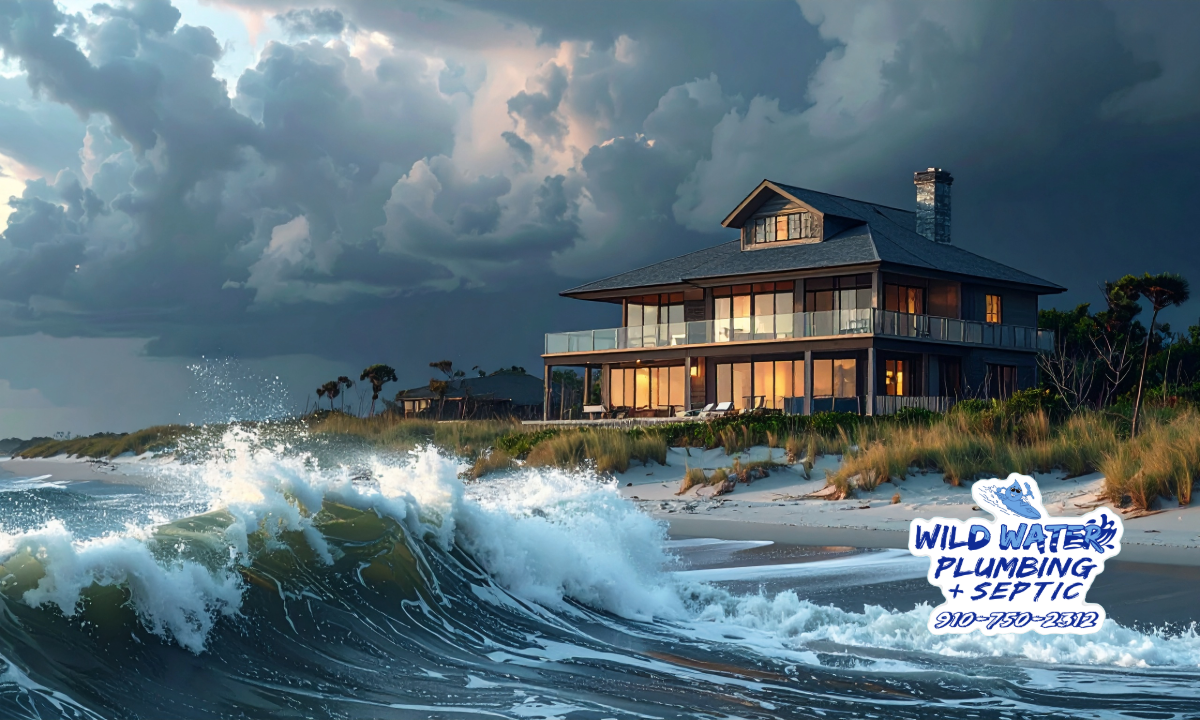
Swansboro’s historic waterfront sits at low elevation on the White Oak River, where the river itself is tidal and where the original town stormwater infrastructure was designed for a much smaller, less developed Swansboro. Properties along the waterfront and in the original downtown face a combination of tidal water table, low absolute elevation relative to the river, and aging drainage systems that no longer match current conditions. Drainage on these properties has to be designed around the worst conditions the site experiences, not the average. The newer Swansboro developments along NC-24 face different challenges that share the regional soil and water table characteristics but typically have better modern stormwater engineering.
The Two Different Swansboros
Swansboro covers two distinct property environments. The historic downtown and waterfront contain homes that date back generations, sit at low elevation along the White Oak River, and rely on stormwater infrastructure that has been in place for decades. The newer developments stretching along NC-24 and the surrounding county roads sit on higher ground, were built with current stormwater engineering, and face different drainage challenges that share the underlying coastal soil and water table characteristics with the rest of the region. A drainage approach appropriate for the historic district is often overbuilt for the newer areas, and a solution that works on a typical NC-24 corridor lot may be inadequate for a waterfront property.
The White Oak River at Swansboro is tidal, which means the water level rises and falls with the twice-daily tidal cycle plus seasonal and storm-driven variations. The regional water table beneath waterfront properties moves with the river. During sustained onshore winds, after extended rain, or during storm events, the river level rises and the water table rises with it. A drainage system designed for a static reference water level fails on a Swansboro waterfront property because the reference level is not static.
Drainage Challenges Specific to Historic Swansboro
Low Absolute Elevation
Many historic Swansboro properties sit at elevations only a few feet above mean high water in the river. During major storm events, the difference between yard elevation and river elevation can collapse to zero or below. Gravity drainage that depends on the river being below the yard fails during these periods, which is exactly when drainage is needed most. Properties at the lowest elevations often need mechanical drainage (sump pump systems) with battery backup as their primary defense rather than gravity-only solutions.
Aging Stormwater Infrastructure
The storm drainage in historic downtown Swansboro dates to an era when the town was smaller and the surrounding development less dense. Some original ditches have been paved, some culverts have aged, and some sections of infrastructure that exist on the historic record may have failed without ever being formally replaced. A drainage solution for a historic Swansboro property has to account for what the surrounding stormwater system can actually accept, not what its original design capacity suggested.
Original Foundation Construction
Historic Swansboro homes often have foundation construction (raised piers, masonry crawl space walls, partial basements) that predates current waterproofing standards. The foundations themselves are sound but they were not designed to resist the hydrostatic pressure that current conditions produce. Water management around the foundation is more critical than it would be on a newer property with modern waterproofing.
Drainage Approach for Historic Waterfront Properties
The drainage strategy that works on historic Swansboro waterfront properties typically combines several elements. A perimeter foundation drain captures water before it reaches the structure. A yard interception drain captures runoff from uphill sources. A sump pump system with battery backup handles the periods when gravity discharge to the river is not available. Downspouts route to the drainage system rather than to grade. Crawl spaces include vapor barriers and active moisture control. None of these measures alone is sufficient. The combination provides the layered protection these properties need.
Swansboro experienced significant flooding during Hurricane Florence in 2018 and faces tropical storm exposure during every hurricane season. Drainage systems on Swansboro properties have to be designed and maintained for these worst-case conditions. Battery backup on sump pumps is essential, not optional, because grid power typically fails during the same storms that produce the worst drainage conditions. Annual pre-season inspection of all drainage components is the maintenance step that determines whether a Swansboro property comes through a major storm dry or facing weeks of cleanup.
Newer Swansboro Drainage
Properties along NC-24 and the surrounding county roads were built with modern stormwater engineering and generally have better baseline drainage than the historic district. However, they still face the underlying regional conditions: clay-bearing subsoil, high water table, and increasing development pressure from new construction. Drainage problems on newer Swansboro properties often involve runoff from adjacent newer development, downspouts that worked initially but now discharge into compacted soil, and surface grading that has settled. The solutions are typically less complex than historic district work but still benefit from professional evaluation.
The Septic Connection on Swansboro Properties
Many Swansboro properties operate on individual septic systems, particularly outside the historic district where municipal sewer is available. The septic drainfields face the same regional conditions that affect yard drainage. The full septic failure picture for coastal Onslow properties is in our complete septic failure guide, and the connection between drainage and septic performance is one of the recurring themes across our service area.
Our French drain and yard drainage services in Swansboro include full property drainage evaluations, perimeter foundation drains designed for historic waterfront properties, sump pump systems with battery backup, surface drain systems, downspout integration, and crawl space sump systems. Our sewer line camera inspection and repair covers the older pipe materials common in the historic district.
📖 Swansboro waterfront drainage is one chapter in a broader coastal NC story that varies dramatically by town, elevation, and tidal influence. The complete coastal NC drainage cornerstone covers the eight warning signs and county-by-county breakdown: Why Coastal NC Yards Flood: The Complete French Drain and Yard Drainage Guide.
Wild Water Plumbing and Septic designs drainage solutions for historic waterfront and newer NC-24 corridor properties throughout Swansboro and the surrounding coastal Onslow County.Call 910.750.2312 or request a drainage evaluation online.
Frequently Asked Questions
Why do Swansboro waterfront properties have specific drainage challenges?
Swansboro’s historic waterfront sits at low elevation along the White Oak River, where the river itself can be tidal and where the original town stormwater infrastructure dates to a time when much of the surrounding area was undeveloped. Waterfront and near-waterfront properties face the combination of a tidal water table, low absolute elevation, and old stormwater systems that were never designed for current development density. Yard drainage on these properties has to work in conditions where the receiving water can be higher than the source.
What is the difference between historic Swansboro and newer Swansboro drainage?
Historic Swansboro along the waterfront and the original downtown sits on older infrastructure with low elevation and tidal influence. Newer Swansboro developments along NC-24 and the surrounding county roads sit on higher ground with modern stormwater engineering, though some still face the underlying clay soil and high water table issues common to the region. The drainage solutions appropriate for each context are different, and the historic properties typically need more careful design.
Does the White Oak River affect Swansboro property drainage?
Yes. The White Oak River is tidal at Swansboro, and the regional water table beneath properties near the river moves with the tidal cycle. During sustained onshore winds, after heavy rain, or during storm events, the river level rises and the water table along the waterfront rises with it. Drainage systems on these properties have to account for the river level as part of the design rather than treating it as a fixed reference point.
Are Swansboro historic homes prone to crawl space moisture?
Most are. The combination of low elevation, tidal water table, and aging foundation systems on historic Swansboro homes produces crawl space conditions that almost always need active moisture management. A vapor barrier, sump pump, and either sealed encapsulation or controlled ventilation are standard recommendations for crawl spaces on properties of this age and location.
Does Wild Water Plumbing service Swansboro NC?
Yes. Swansboro is part of our core Onslow County service area, and our base location is in the immediate vicinity. We provide drainage evaluation, French drain installation, sump pump systems, septic services, sewer line camera inspection, and full residential plumbing throughout Swansboro, including the historic waterfront and the newer developments along NC-24.
Can a French drain protect a Swansboro waterfront property?
Yes, when designed for the conditions. A French drain on a Swansboro waterfront property has to account for the tidal water table, the elevation of available discharge points relative to peak high water, and the soil profile beneath the property. The right design typically combines an interception drain to capture lateral groundwater with a sump pump system that moves water mechanically when gravity drainage is not available during high water conditions.
What sewer issues are common in historic Swansboro homes?
Historic Swansboro homes often have sewer lines made of older materials (clay tile, orangeburg, cast iron) that have aged into characteristic failure modes: root intrusion from mature waterfront vegetation, joint separation in clay tile, corrosion in cast iron, deformation in orangeburg. A camera inspection identifies the current condition and locates any specific defects, which is important for both maintenance planning and real estate transactions.
How do hurricanes affect Swansboro drainage?
Hurricane events combine extreme rainfall with storm surge in the White Oak River, raising both surface water and the regional water table simultaneously. Swansboro experienced significant flooding during Hurricane Florence in 2018. Drainage systems on Swansboro properties have to be designed for these worst-case conditions, not the average rainfall the region experiences. Properties without proper drainage and elevated equipment face accumulating damage from each successive major storm.
References
Federal Emergency Management Agency. (2021). Flood Insurance Rate Maps and Special Flood Hazard Areas in Onslow County. FEMA. https://www.fema.gov
North Carolina Floodplain Mapping Program. (2022). Flood zone designations and residential flood risk in Onslow County. NCFMP. https://ncfloodmaps.com
U.S. Geological Survey. (2021). Groundwater resources of the surficial aquifer system, Coastal Plain, North Carolina. USGS Scientific Investigations Report 2021-5042. https://www.usgs.gov
North Carolina Department of Environmental Quality. (2022). Stormwater best management practices manual for coastal counties. NCDEQ Division of Energy, Mineral, and Land Resources. https://www.deq.nc.gov