
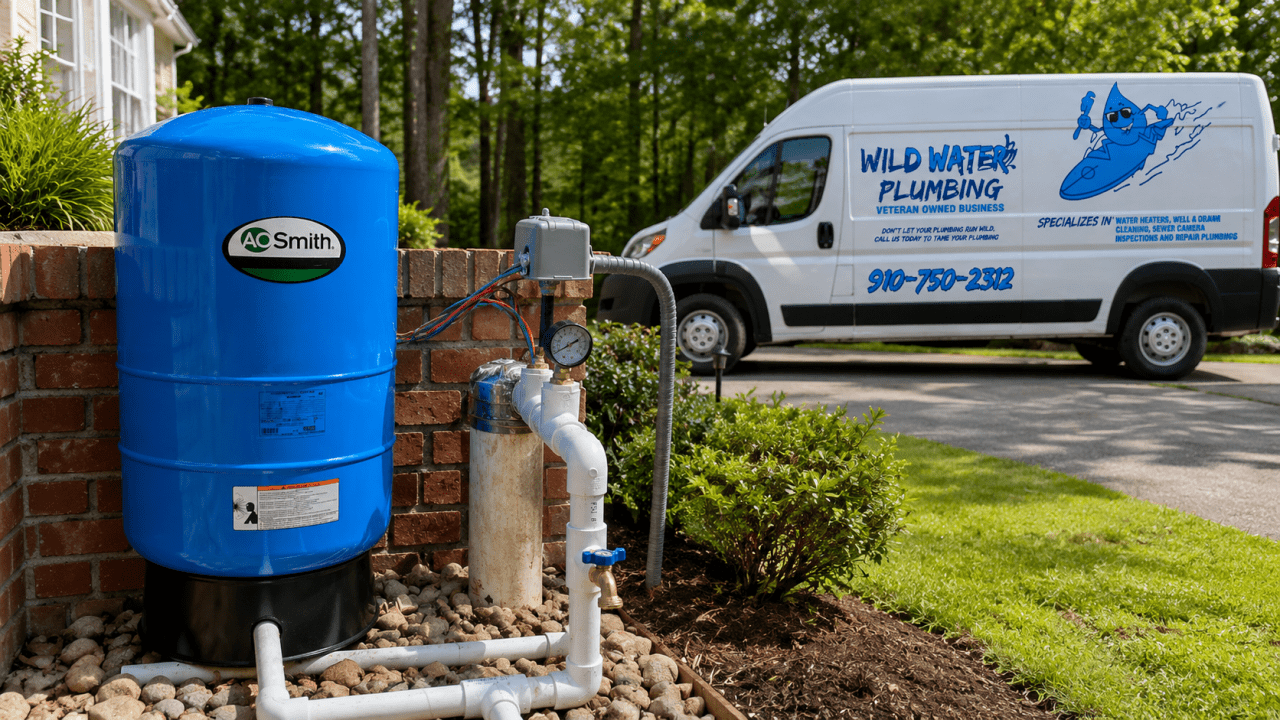
THE SHORT VERSION
Replacing a well pump in coastal North Carolina usually runs somewhere between $900 and $3,000 fully installed, with the national average sitting close to $1,900. Where your job lands inside that range comes down to three things: how deep your well is, what type of pump it takes, and what else has to be replaced along with the pump. A shallow jet pump on an easy-to-reach well sits at the low end. A submersible pump pulled from a few hundred feet down, with new drop pipe and wire, sits at the high end. Here are the real numbers, what an honest quote includes, and how to tell whether your pump needs replacing at all.
What a Well Pump Replacement Actually Costs
National cost data for 2026 puts a complete, professionally installed well pump replacement in the range of about $900 to $3,000, with the national average around $1,900. The full range runs wider than that at both ends. A simple shallow well pump swap can come in under $900, and a deep submersible system with new pipe, wire, and a constant-pressure setup can reach $5,000 or more. Most coastal North Carolina homes land in the middle, because most homes here run submersible pumps set somewhere between 100 and 300 feet below the surface.
Cost figures in this article come from 2026 national pricing data published by Angi, HomeGuide, DrillerDB, and The Well Guide.
A well pump replacement is not just the pump. A complete quote covers the pump unit, the drop pipe that carries water up from the pump, the electrical wire running down the well, the labor and equipment to pull the old pump and set the new one, and any permit your county requires. When a quote looks surprisingly low, the usual reason is that it covers the pump and labor only, and the drop pipe and wire turn up later as separate charges. Ask up front whether new pipe and wire are included. On a deep well, those parts and the labor to handle them often cost more than the pump itself.
What Drives the Price Up or Down
Well Depth
Depth is the single biggest cost multiplier. Every additional 100 feet of well depth adds roughly $500 to $1,000 to the total, because a deeper pump means more pipe, more wire, and more time and equipment to pull and reset the pump. A pump set at 80 feet is a straightforward job. A pump set at 350 feet needs a service truck with a hoist, a two-person crew, and several hours of work just to bring the old pump to the surface.
Pump Type
Submersible pumps are standard for coastal North Carolina wells deeper than 25 feet. They sit at the bottom of the well and push water up, they run quietly, and they last longer than the alternatives. Jet pumps sit above ground and draw water up by suction, they cost less, and they work for shallow wells, but they are noisier and less efficient. Constant-pressure systems use a variable speed drive to hold steady pressure across the whole house and run from about $2,000 to $5,000 installed. The pump type your well needs is set by your well depth and your household water demand, not by preference.
The Parts You Do Not See
A pump job often includes parts most homeowners never think about. New drop pipe runs about $300 to $800 depending on well depth. New wire runs about $200 to $500. If the pressure tank has failed along with the pump, which is common because a waterlogged tank wears the pump out, tank replacement adds about $800 to $3,900. A worn check valve, a corroded pitless adapter, or a failed pressure switch can each add to the total. None of these are upsells. They are the parts that make the system work, and replacing a pump while leaving a failing tank in place just sets up the next service call. Our guide to well pressure tank replacement breaks down the signs and the cost of that part.
What Coastal North Carolina Adds
Two local conditions push well costs here above the national baseline. Salt air corrodes every exposed metal component faster than it would inland, so pressure switches, wiring connections, and tank fittings wear out sooner. The mineral-heavy water from the Castle Hayne Aquifer carries iron, sand, and hardness that grind down pump components over time. Both shorten pump life, which means coastal homeowners replace pumps a little more often than the national average suggests.
After-hours and weekend well pump service typically adds 25 to 50 percent to the cost, and storm season is the worst possible time to lose water and need an emergency crew. Almost every pump gives warning before it quits, with months of dropping pressure, sputtering, or short cycling. Acting on those early signs lets you schedule the work on a normal weekday at a normal price instead of paying the emergency premium during a hurricane week. For the full set of warning signs, see our guide to the warning signs of a failing well water system.
Repair or Replace? How to Make the Call
Getting this decision wrong is expensive in both directions. Replacing a pump that only needed a $200 pressure switch wastes thousands. Repairing a worn-out pump on an old system buys a few months and then fails again. The honest rule most well professionals use is simple: replace the pump if it is more than 10 years old, has needed repeated repairs, has lost noticeable flow, or if the repair would cost more than half of a full replacement. Repair makes sense the rest of the time.
When Repair Makes Sense
A pump under about 8 years old with a single, specific problem is usually worth repairing. A failed pressure switch, a stuck check valve, or a damaged wiring connection are component-level fixes that restore the system for a fraction of replacement cost, as long as the pump and the well casing are otherwise sound.
When Replacement Is the Honest Answer
A pump past 10 to 12 years with declining output, a system that has needed two or three repairs in quick succession, or a pump that failed in a well whose casing is also near the end of its life all point toward replacement. Putting money into one worn component on an aging system usually just moves the next failure a few months down the line. We walk through this same logic in more detail in our complete guide to well water problems across coastal North Carolina.
These are complete ranges that include the pump, drop pipe, wire, and labor for a scheduled weekday job:
- Shallow well jet pump: about $800 to $1,800
- Submersible pump, 100 to 200 feet deep: about $1,500 to $3,000
- Submersible pump, 300 to 400 feet deep: about $2,800 to $5,500
- Constant-pressure system: about $2,000 to $5,000
Source: The Well Guide and HomeGuide 2026 installed-cost data.
Our well pump services cover pump repair and replacement, pressure tank service, pressure switch and check valve replacement, service line repair, and full system diagnostics. We test the whole system before we recommend anything, so you replace what actually failed instead of guessing. For water testing, filtration, and softeners, see our well water system services. We serve Onslow, Pender, and New Hanover Counties and the Cedar Point area of Carteret County.
📖 Well pump cost is one piece of a much bigger picture. Our complete guide covers every common well water problem across the region, every warning sign, and every option: Well Water Problems: The Complete Coastal NC Homeowner Guide.
Wild Water Plumbing and Septic provides honest well pump diagnostics, repair, and replacement across Onslow, Pender, New Hanover, and the Cedar Point area. The earlier you call, the more options you have. Call 910.750.2312 or request a service visit online.
Frequently Asked Questions
How much does it cost to replace a well pump in coastal North Carolina?
Most well pump replacements in coastal North Carolina run between $900 and $3,000 fully installed, with the national average around $1,900. Shallow jet pump jobs sit at the low end, while deep submersible pumps that need new drop pipe and wire sit at the high end. Your final price depends mostly on how deep your well is, the type of pump it takes, and what else has to be replaced along with the pump.
What causes a well pump to fail?
Well pumps fail from normal wear after 8 to 15 years of service, from running dry when the water level drops below the pump, from rapid cycling caused by a failed pressure tank, from electrical problems like a bad capacitor or corroded wiring, and from sand and mineral buildup that wears the pump faster. In coastal North Carolina, mineral-heavy water and salt air corrosion on exposed parts tend to shorten pump life compared to inland systems.
How long does a well pump last?
A submersible well pump typically lasts 8 to 15 years, and some reach 20 years with good water quality and proper sizing. Jet pumps generally last a shorter time. In coastal North Carolina, mineral content in the water and salt air on exposed components often push pumps toward the lower end of that range, so any pump past 10 years with no maintenance history is worth evaluating.
Should I repair or replace my well pump?
Repair usually makes sense for a newer pump, under about 8 years old, with a single specific problem like a failed pressure switch or check valve. Replacement is the better call when the pump is more than 10 years old, has needed repeated repairs, has lost noticeable flow, or when the repair would cost more than half of a full replacement. Putting money into one worn part on an old system usually just moves the next failure down the road.
How do I know if my well pump is failing?
Common signs of a failing well pump include water pressure that has slowly dropped over months, air sputtering from the faucets, the pump running constantly or cycling on and off rapidly, sand or discolored water, strange noises, and a rising electric bill with no other explanation. These signs usually show up before the pump quits completely, so catching them early turns an emergency into a scheduled repair.
Does a deeper well cost more for a pump replacement?
Yes. Well depth is the single biggest cost factor. Every additional 100 feet of depth adds roughly $500 to $1,000 to the total, because a deeper pump means more drop pipe, more wire, and more labor and equipment to pull the old pump and set the new one. On very deep wells, the pipe, wire, and labor can cost more than the pump itself.
How long does a well pump replacement take?
Most well pump replacements are finished in one day, often in about 3 to 6 hours. Shallow wells go faster. Deep wells take longer, because pulling and resetting a pump from several hundred feet down, along with new pipe and wire, simply takes more time and equipment.
Do you offer emergency well pump replacement in coastal NC?
Yes. Wild Water Plumbing and Septic provides well pump repair and replacement across Onslow, Pender, and New Hanover Counties and the Cedar Point area of Carteret County, including urgent service when a home has lost water. Keep in mind that emergency and after-hours work usually adds 25 to 50 percent to the cost, which is one more reason to act on the early warning signs rather than waiting for the pump to quit.
References
Angi. (2026). How much does well pump replacement cost? Angi Cost Guides. https://www.angi.com
HomeGuide. (2026). How much does a well pump cost to replace or install? https://homeguide.com
National Ground Water Association. (2021). Wellowner.org: Well system components, pump service life, and maintenance. NGWA. https://wellowner.org
North Carolina Cooperative Extension. (2021). Private well system care for Coastal Plain homeowners. NC State Extension Publications. https://content.ces.ncsu.edu
U.S. Environmental Protection Agency. (2022). Private drinking water wells: Maintenance and testing guidance. EPA Office of Water. https://www.epa.gov/privatewells