THE SHORT VERSION
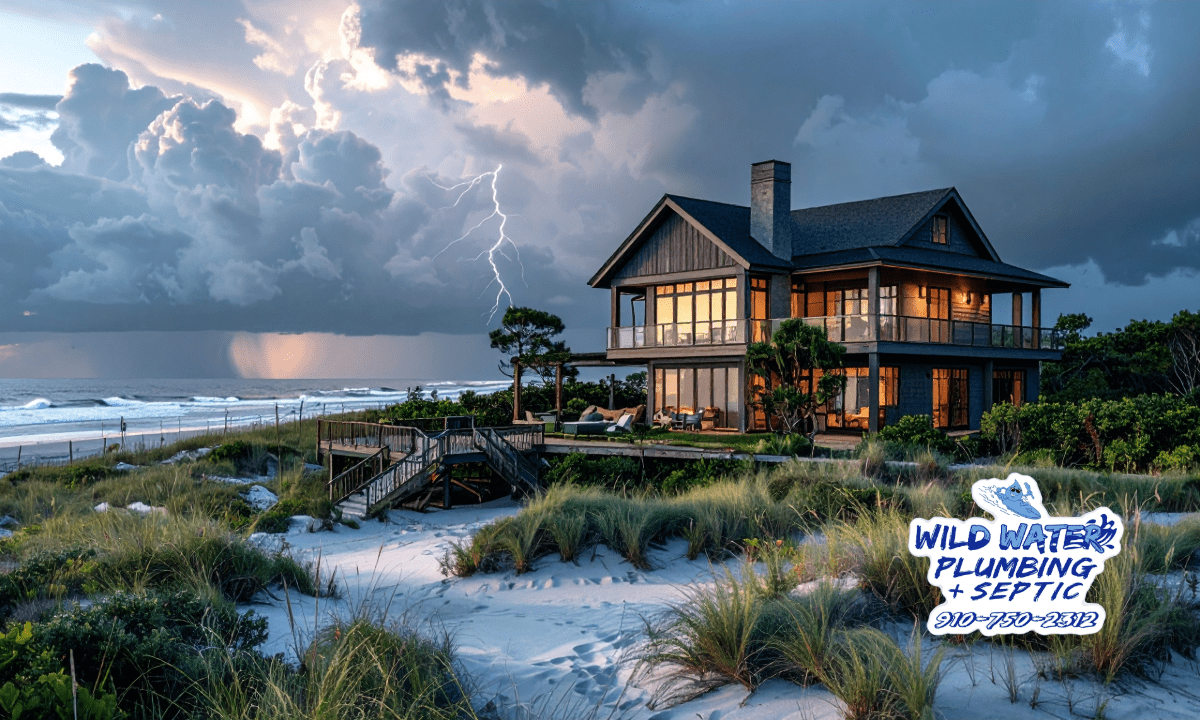
Kure Beach occupies the southern end of Pleasure Island, between Carolina Beach to the north and Fort Fisher to the south. The town is quieter than Carolina Beach, more uniformly residential, and characterized by single-family homes rather than the mixed-use density of its northern neighbor. The underlying drainage conditions are barrier island standard: sandy soils, high water table, ocean exposure on the east, Cape Fear River and marsh exposure on the west, FEMA flood zone designations across most of the community, and storm surge risk during tropical events. Drainage design here focuses on individual home protection within these constraints.
Kure Beach in the Context of Pleasure Island
Pleasure Island runs from Carolina Beach in the north through Kure Beach in the middle to Fort Fisher at the southern tip. The three areas share the same underlying barrier island geography but have developed differently. Carolina Beach has the boardwalk, the higher-density mixed-use development, and a busier overall character. Kure Beach is predominantly residential with smaller commercial nodes and a quieter feel. Fort Fisher includes the state historic site and ferry terminal with less residential development. For drainage purposes, the underlying conditions are similar across all three, but Kure Beach properties typically face the design problem in its single-family residential form rather than the mixed-use form more common in Carolina Beach.
The sandy soil throughout the profile drains quickly at the surface but offers limited capacity once the water table is reached, which on Kure Beach is rarely more than a few feet below grade. The water table moves with tidal cycles on both the ocean and river sides. Storm surge during tropical events raises the water table across the entire island. The FEMA flood zone designations across most Kure Beach lots reflect the modeled risk from these conditions, and most newer construction is built on elevated piling foundations to comply with the base flood elevations.
Drainage Approach for Kure Beach Single-Family Properties
Perimeter Foundation Drains
Kure Beach properties with crawl space construction benefit from perimeter foundation drains that intercept groundwater before it reaches the structure. The trench is placed to function during peak high water conditions, with the discharge routed to a sump pump system that handles cases where gravity drainage to a surface outlet is not available. Marine-grade components extend system life in the salt air environment.
Sump Pump Systems With Battery Backup
Given the storm exposure on Pleasure Island, battery backup on sump pumps is essential rather than optional. The primary pump handles routine groundwater management. The battery backup activates automatically when grid power fails, which typically happens during the same storms that produce the worst drainage conditions. Generator-connected backup provides unlimited runtime as long as fuel is available.
Surface Drains for Small Yard Areas
Kure Beach lots are typically more uniform residential than the small barrier island lots on Topsail Beach or the dense urban lots on Wrightsville Beach, but yard space is still limited compared to mainland properties. Surface drains at low collection points capture water before it migrates toward the foundation. The discharge ties into the same sump pump system handling subsurface water.
Discharge Line Routing
Discharge lines on Kure Beach properties have to terminate at locations that remain functional during high water conditions. Routing to the street, to a daylight outlet downhill, or to a designated yard area is the standard approach. Check valves prevent backflow during peak conditions. Lines are buried at sufficient depth to avoid damage from landscaping and surface activity.
Most newer Kure Beach homes are built on elevated piling foundations to raise the floor above FEMA base flood elevations. The structure stays dry during flood events but the ground beneath the elevated floor still faces moisture from the high water table, salt air, and storm exposure. Storage and mechanical equipment located beneath the floor needs moisture management similar to what a crawl space would receive: vapor barrier on the ground where appropriate, drainage of the subgrade, and elevation of any equipment that cannot tolerate flood water exposure.
FEMA Flood Zones and Drainage Decisions
Most Kure Beach lots fall within FEMA-mapped flood hazard areas, with base flood elevations that determine how new construction has to be built and how existing properties are evaluated for flood insurance. The flood zone designation does not change the drainage requirements directly, but it does indicate the level of flood risk the property has been modeled to face. Properties in higher-risk zones benefit from more conservative drainage design with more margin for the worst-case events.
The Vacation Rental and Second Home Considerations
Many Kure Beach properties function as vacation rentals or second homes, with full-time residents making up a smaller share of the community than would be typical for a mainland town. Drainage management on these properties has to work automatically without owner presence. The systems are tested by storms that often happen during the off-season when no one is on property to notice problems or call for service. Automatic sump pumps with battery backup, remote monitoring where available, and annual professional inspections before hurricane season are the standard recommendations for non-owner-occupied Kure Beach properties.
Our French drain and yard drainage services in Kure Beach include barrier island drainage design with marine-grade equipment, perimeter foundation drains, sump pump systems with battery backup, surface drain systems, subgrade moisture management for elevated piling construction, and seasonal inspection programs for vacation rentals and second homes. Our sewer line camera inspection covers pre-purchase work throughout the southern New Hanover County coastal corridor.
📖 Kure Beach drainage is part of a broader coastal NC drainage picture that varies by barrier island, lot conditions, and storm exposure. The complete coastal NC drainage cornerstone covers the eight warning signs and county-by-county breakdown: Why Coastal NC Yards Flood: The Complete French Drain and Yard Drainage Guide.
Wild Water Plumbing and Septic designs drainage solutions for barrier island residential properties throughout Kure Beach and the southern New Hanover County coastal corridor.Call 910.750.2312 or request a drainage evaluation online.
Frequently Asked Questions
How is Kure Beach drainage different from Carolina Beach drainage?
Kure Beach sits at the southern end of Pleasure Island, with a more residential character, fewer high-rise structures, and a quieter overall feel than Carolina Beach to the north. The underlying drainage conditions are similar (sandy soils, high water table, tidal influence, storm surge exposure), but Kure Beach lots tend to be more uniform single-family residential, and the drainage design typically focuses on individual home protection rather than the mixed-use considerations more common in Carolina Beach.
Why are Kure Beach properties in FEMA flood zones?
Kure Beach sits on a barrier island with low elevation, ocean exposure on the east, and Cape Fear River and marsh exposure on the west. The combination produces flood risk from multiple directions during tropical events and during seasonal high water conditions. FEMA flood zone designations on Kure Beach properties reflect the historical and modeled flood risk, and most island properties fall within mapped flood hazard areas. Building elevations and flood insurance requirements follow from the zone designations.
What drainage approach works on Kure Beach single-family lots?
Kure Beach single-family lots typically benefit from a combination of perimeter foundation drains, sump pump systems with battery backup for storm conditions, surface drains for the small yard areas, and discharge lines routed to outlets that remain functional during high water events. The specific design depends on the property elevation, lot orientation, and the position of the home relative to the dune system and the ocean.
How does storm surge affect Kure Beach drainage?
Storm surge during tropical events can elevate water levels on both the ocean and the Cape Fear River sides of Pleasure Island simultaneously, raising the regional water table across the entire community. Properties at lower elevations face direct flooding during major events. Even properties not flooded directly experience elevated groundwater conditions that affect drainage system performance. Battery backup on sump pumps is essential because grid power typically fails during the same storms that produce the worst drainage conditions.
Does Wild Water Plumbing service Kure Beach NC?
Yes. Kure Beach is part of our New Hanover County service area. We provide drainage evaluation, French drain installation for barrier island conditions, sump pump systems, sewer line camera inspection, and full residential plumbing throughout Kure Beach and the surrounding coastal New Hanover communities including Fort Fisher to the south.
Should Kure Beach buyers get pre-purchase drainage and sewer inspections?
Yes. The barrier island conditions, FEMA flood zone exposure, and salt air environment all combine to make pre-purchase inspections particularly valuable on Kure Beach properties. A drainage and sewer evaluation identifies whether the systems are functional, whether they have been properly maintained, and whether any specific intervention is needed before the property changes hands. The cost is small compared to the financial exposure of unmanaged drainage on a coastal barrier island home.
Are Kure Beach sewer lines vulnerable to specific issues?
Older Kure Beach homes may have sewer lines made of cast iron, clay tile, or orangeburg, all of which fail in characteristic ways accelerated by the salt environment and high water table. A camera inspection identifies the current condition. The town’s sandy soils mean root intrusion is less aggressive than in inland neighborhoods with mature tree canopies, but joint separations and material degradation in older lines remain common.
How often should Kure Beach drainage equipment be inspected?
Annual inspection before hurricane season is the minimum standard. Salt air accelerates wear on mechanical components, and storm exposure tests equipment harder than inland conditions. Battery backup systems should be tested annually and replaced on a 3 to 5 year cycle. Discharge lines should be cleared and verified before each storm season. Properties used as vacation rentals or second homes benefit from twice-yearly checks because the systems often have to function during periods when no one is on property to notice problems.
References
Federal Emergency Management Agency. (2021). Flood Insurance Rate Maps and Special Flood Hazard Areas in New Hanover County. FEMA. https://www.fema.gov
North Carolina Floodplain Mapping Program. (2022). Coastal barrier island flood risk and drainage standards. NCFMP. https://ncfloodmaps.com
North Carolina Department of Environmental Quality. (2022). Coastal Area Management Act standards and barrier island development. NCDEQ Division of Coastal Management. https://www.deq.nc.gov
Town of Kure Beach. (2023). Building, drainage, and floodplain construction standards. Town of Kure Beach. https://www.townofkurebeach.org