THE SHORT VERSION
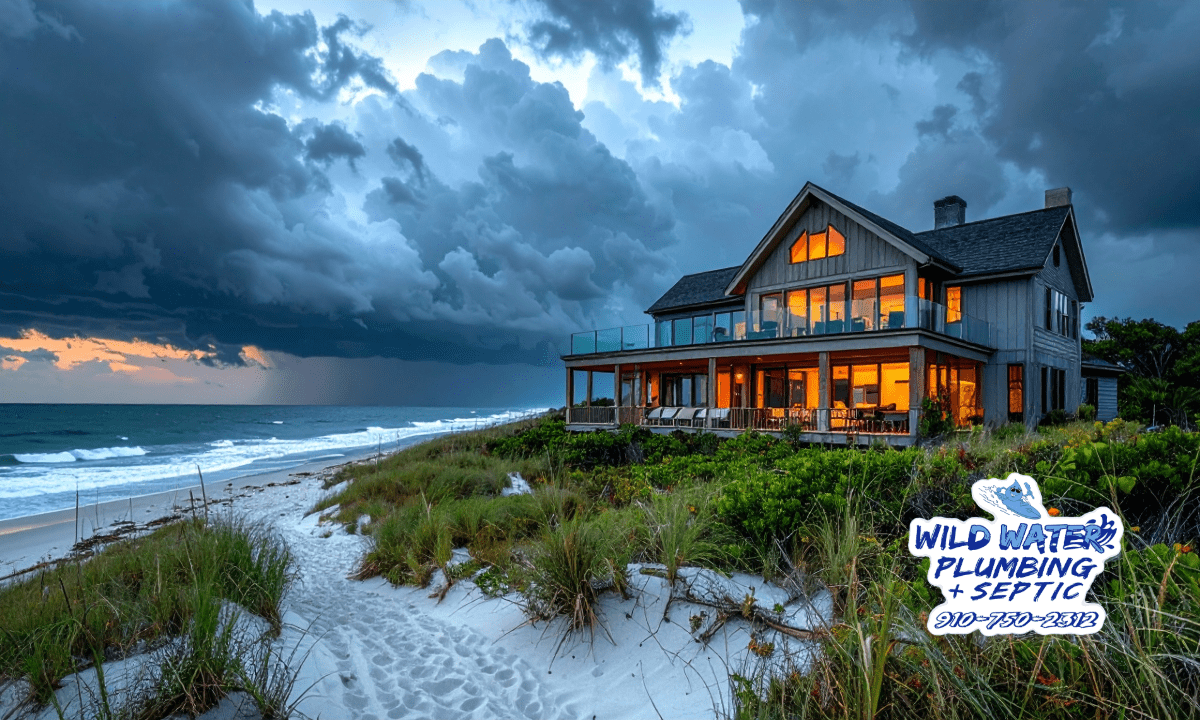
Wrightsville Beach is a small, densely developed barrier island where most lots are tight, property values are high, the water table sits within a few feet of the surface, and the regional water level moves with tides on both the ocean and the Intracoastal Waterway. Storm surge during tropical events can elevate groundwater across the entire island at once. Drainage work has to be done carefully and properly the first time because the conditions are unforgiving and the cost of redoing failed work on these properties is high.
What Makes Wrightsville Beach Drainage Demanding
Wrightsville Beach combines four conditions that, individually, would complicate drainage and, together, require professional design. The lot geometry is tight, with most properties measuring less than 75 feet wide and many far less. The water table sits within a few feet of the surface and rises with tidal cycles on both sides of the island. Storm surge during tropical events dramatically elevates the regional water table. Salt air corrodes exposed metal components on drainage equipment faster than they would degrade in inland environments. None of these conditions can be designed around in isolation. The drainage system has to handle all of them at the same time.
Property drainage on Wrightsville Beach has three possible outcomes. The first is a properly designed system installed with marine-grade components that handles the conditions the island actually experiences. The second is an undersized or improperly placed system that worked initially and fails after the first major event. The third is no real drainage system at all, where the property has historically gotten by on luck and will eventually face an event it cannot absorb. The right outcome for a high-value Wrightsville Beach property is the first one, designed for the worst conditions the property will encounter over its useful life.
Drainage Approach for Wrightsville Beach Properties
Perimeter Foundation Drains for Crawl Space and Lower-Elevation Construction
Older Wrightsville Beach homes with crawl spaces require a perimeter foundation drain to intercept groundwater before it reaches the structure. The trench is set above the seasonal high water table where possible, with the discharge routed to a sump pump system that handles cases where gravity drainage is not available. Marine-grade pump components are the standard recommendation given the salt air environment.
Subsurface Drainage Beneath Elevated Piling Construction
Newer Wrightsville Beach homes built on elevated piling foundations raise the floor above flood elevation, but the ground beneath the elevated structure still faces moisture concerns from the high water table, salt air, and storm exposure. Storage and mechanical equipment located beneath the elevated floor needs the same moisture management considerations a crawl space would have: ground covered with vapor barrier where appropriate, drainage of the subgrade, and elevation of any equipment that cannot tolerate flood water exposure.
Surface Drains for the Small Yard Areas
What yard space exists on a Wrightsville Beach lot often pools water during heavy rain because the small footprint cannot absorb the volume. Grated surface inlets connected to the sump pump system or to a separate discharge line capture surface water before it migrates toward the foundation.
Drainage equipment on Wrightsville Beach degrades faster than equivalent equipment inland because salt-laden air continuously corrodes exposed metal components. Pump motors, float switches, control panels, electrical connections, and discharge piping all show accelerated wear. Marine-grade components are the right specification when available. Maintenance intervals should be more frequent than the manufacturer’s standard recommendations. Annual inspection before hurricane season is the minimum standard, and many properties benefit from twice-yearly checks. The cost of more frequent service is small compared to the cost of equipment failure during a major storm.
The Second Home and Vacation Rental Challenge
Many Wrightsville Beach properties function as second homes or vacation rentals, which adds drainage management considerations that owner-occupied homes do not face. The systems must operate automatically without owner presence during off-season storm events. Heavy seasonal use during peak summer months stresses sewer and drainage systems. Salt air degrades equipment whether the owner is on the property or not. Wrightsville Beach second homes and rental properties particularly benefit from automatic sump pump systems with battery backup, remote monitoring through smart home integration, and professional annual inspection schedules that catch problems before they affect rental income or owner stays.
Pre-Purchase Inspections for Wrightsville Beach Buyers
Given the price points common in the Wrightsville Beach market, pre-purchase drainage and sewer evaluations are particularly valuable. A standard home inspection does not include sewer camera work and does not evaluate drainage performance during representative conditions. A drainage and sewer evaluation identifies whether the property’s water management systems are sound, whether previous owners have invested in proper drainage, and whether specific repairs or improvements are needed before the property changes hands. The cost is a small fraction of the financial exposure of inheriting unmanaged drainage on a high-value coastal property.
Our French drain and yard drainage services in Wrightsville Beach include barrier island drainage design with marine-grade equipment specification, perimeter foundation drains for crawl space and lower-elevation construction, sump pump systems with battery backup, surface drain systems, subgrade moisture management for elevated piling construction, and seasonal inspection programs for second homes and vacation rentals. Our sewer line camera inspection covers pre-purchase work throughout New Hanover County.
📖 Wrightsville Beach drainage is one chapter in a broader coastal NC drainage picture that varies dramatically by town and lot conditions. The complete coastal NC drainage cornerstone covers the eight warning signs and county-by-county breakdown: Why Coastal NC Yards Flood: The Complete French Drain and Yard Drainage Guide.
Wild Water Plumbing and Septic designs drainage solutions for barrier island conditions throughout Wrightsville Beach and the surrounding coastal New Hanover County.Call 910.750.2312 or request a drainage evaluation online.
Frequently Asked Questions
Why is drainage especially challenging on Wrightsville Beach?
Wrightsville Beach is a small, densely developed barrier island where most lots are tight, property values are high, the water table sits within a few feet of the surface, and the regional water level moves with tidal cycles on both the ocean and the Intracoastal Waterway. Storm surge during tropical events can elevate groundwater across the entire island simultaneously. The combination of constrained lot sizes, high property values, and demanding conditions means drainage work has to be done carefully and properly the first time.
What is the most common Wrightsville Beach drainage problem?
The most common pattern is groundwater intrusion beneath elevated piling foundations or into crawl spaces during high tide and storm conditions, surface runoff that has nowhere productive to go on small lots, and discharge outlets that may be flooded themselves during the worst events. Salt air corrosion of mechanical components accelerates wear on sump pumps and drainage hardware, which means equipment failures often happen during the storms that need the drainage most.
Are Wrightsville Beach homes built on slabs, crawl spaces, or pilings?
Most newer Wrightsville Beach homes are built on elevated piling foundations to raise the floor above FEMA-required base flood elevations. Older homes may have crawl space construction at lower elevations. Some smaller cottages have slab construction. The drainage approach depends on the foundation type. Elevated structures need to manage the area beneath the floor. Crawl spaces need vapor barriers and sump pumps. Slab construction needs perimeter drainage to keep water from migrating under the slab.
Does salt air affect drainage equipment on Wrightsville Beach?
Yes. Salt air corrodes exposed metal components on sump pumps, pump float switches, control panels, electrical connections, and discharge piping faster than equivalent equipment would corrode in inland conditions. Drainage equipment specified for Wrightsville Beach applications should be marine-grade or coastal-rated where available, and the maintenance interval should be more frequent than the manufacturer’s standard recommendation. Annual inspection before hurricane season is the minimum standard.
Does Wild Water Plumbing service Wrightsville Beach NC?
Yes. Wrightsville Beach is part of our New Hanover County service area. We provide drainage evaluation, French drain installation for barrier island conditions, sump pump systems with battery backup, sewer line camera inspection, and full residential plumbing throughout Wrightsville Beach and the surrounding coastal New Hanover communities.
Should second home buyers on Wrightsville Beach get drainage inspections?
Yes. Second home and vacation rental buyers on Wrightsville Beach face the same drainage exposure as full-time residents but typically have less visibility into how the property handles routine wet weather and storm conditions. A pre-purchase drainage and sewer evaluation identifies whether the systems are functional, whether they have been properly maintained, and whether any specific intervention is needed before the property changes hands. The cost is small compared to the financial exposure of unmanaged drainage on a high-value coastal property.
What sewer issues are common in Wrightsville Beach homes?
Older Wrightsville Beach homes commonly have sewer lines made of materials that no longer meet current standards: aging cast iron, clay tile, or orangeburg in some properties. Salt environment and high water table conditions accelerate failure modes. A camera inspection identifies the current condition and locates any specific defects. Pre-purchase camera inspections are especially valuable on Wrightsville Beach because of the price points involved.
How does Wrightsville Beach drainage cost compare to mainland Wilmington drainage?
Wrightsville Beach drainage costs typically run higher than equivalent mainland Wilmington work for several reasons: smaller lot size requires more careful design, work has to be done around mature landscaping and hardscape features, marine-grade equipment costs more than standard equipment, and access to lots is often more constrained than mainland equivalents. The cost difference reflects the actual conditions of working on a barrier island rather than any premium for the location alone.
References
Federal Emergency Management Agency. (2021). Flood Insurance Rate Maps and Special Flood Hazard Areas in New Hanover County. FEMA. https://www.fema.gov
North Carolina Department of Environmental Quality. (2022). Coastal Area Management Act standards and barrier island development. NCDEQ Division of Coastal Management. https://www.deq.nc.gov
New Hanover County Engineering Department. (2022). Stormwater management for residential properties. New Hanover County Government. https://www.nhcgov.com/engineering
Town of Wrightsville Beach. (2023). Building, drainage, and floodplain construction standards. Town of Wrightsville Beach. https://www.townofwrightsvillebeach.com