THE SHORT VERSION
Surf City sits on both the barrier island and the mainland sides of the Intracoastal Waterway, which is unusual for a coastal NC town and creates two distinct drainage environments within the same community. Island properties are on sandy soils with a tidal water table close to the surface, narrow lots, and storm-surge exposure. Mainland Surf City properties sit on transitional soils that combine coastal sandy topsoil with clay-bearing subsoil, larger lots, and runoff patterns shaped by ongoing development upstream. A drainage solution designed for one side of town often does not fit the other, and properties straddling the swing bridge face conditions that genuinely require different approaches depending on the side.
Why Surf City Has Two Drainage Environments
Most coastal NC towns operate within a single environment. Topsail Beach is entirely barrier island. Burgaw is entirely inland. Surf City has both. The island portion runs along the Atlantic Ocean and Topsail Sound. The mainland portion extends inland from the Intracoastal Waterway, with continued residential development through Holly Ridge and into the surrounding county. The two environments produce different drainage problems, and the right solution for any specific property starts with knowing which side of the bridge it sits on.
Island-side Surf City properties face barrier-island geometry, sandy soils throughout the profile, a tidal water table that moves with sound and ocean conditions, narrow lot widths that limit drainage placement options, and storm-surge exposure from both directions during tropical events. Mainland Surf City properties feature larger lots, transitional sandy-to-clay soil profiles, runoff from upstream development, and a water table that responds more to rainfall than to tides. Both environments need professional drainage design, but the designs themselves look very different.
Island-Side Surf City Drainage
The Narrow-Lot Constraint
Island-side Surf City lots share the barrier island geometry that limits drainage placement. Backyard space may be shared with dune protection systems. Front yard space runs to the only access road. Conventional drainage that needs 20 to 30 feet of clearance from the foundation often will not fit. The standard approach is a perimeter foundation drain tied to a sump pump system that discharges through a routed line to the street or another available outlet.
The Tidal Water Table
The water table beneath island properties moves with the tidal cycle on both the ocean and sound sides. Drainage systems on these properties have to function during the peak high water periods, which means either placing the drain shallow enough to stay above seasonal high water or pairing the drain with a sump pump that moves water mechanically when gravity discharge is not available.
Storm Surge Exposure
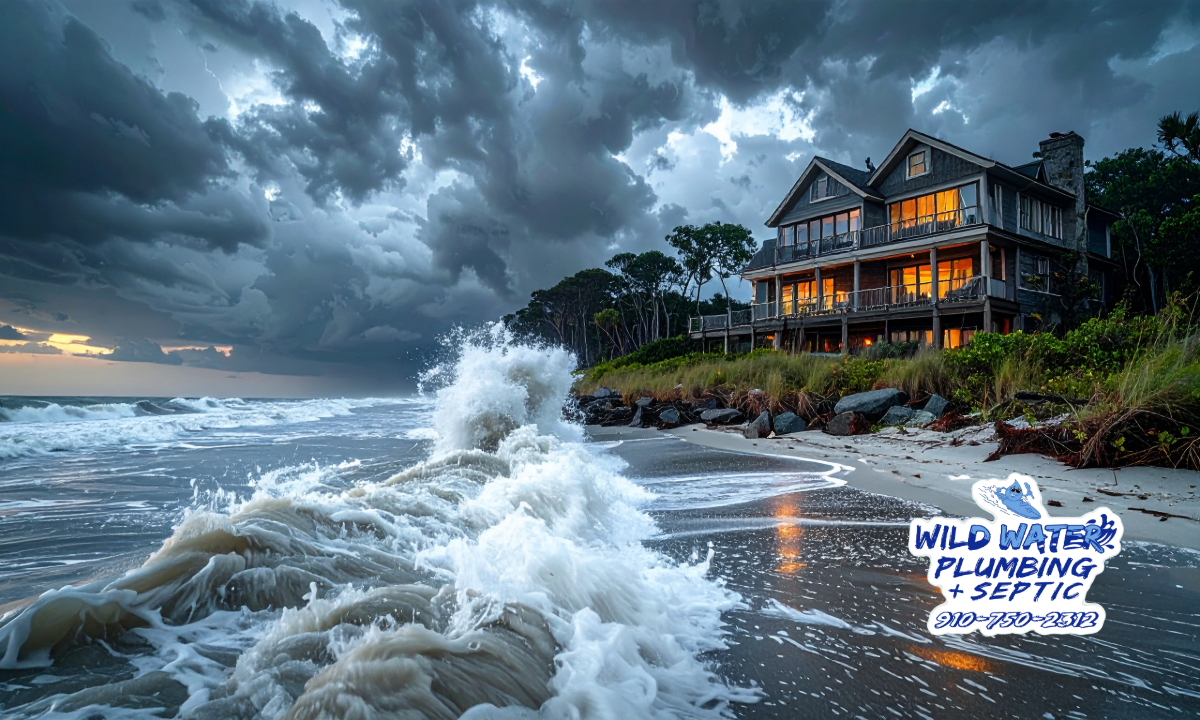
During tropical events, storm surge raises water levels on both ocean and sound sides simultaneously. The regional water table rises across the entire island. Battery backup on sump pumps is essential, not optional, because grid power typically fails during the same storms that produce the worst drainage conditions.
Mainland Surf City Drainage
Transitional Soil Profile
Mainland Surf City properties sit on soils that transition from sandy topsoil to clay-bearing subsoil within the depth where French drains and septic drainfields operate. Water moves quickly through the surface layer, then either pools at the clay horizon or spreads laterally. A drainage solution that worked on the sandy island side may not address lateral water movement in mainland soils.
Upstream Development Runoff
Mainland Surf City has experienced significant residential development in recent decades, and properties at lower elevations now receive runoff from upstream construction that did not exist when the original drainage was designed. An interception drain at the uphill property line often handles this category of problem better than a downhill yard drain.
Larger Lots, More Options
The lot geometry on the mainland side typically allows for conventional French drain placement, surface drain systems, and downspout extensions to daylight outlets. Drainage installations here are usually less constrained than equivalent work on the island, though the soil profile means the trenches still need to be cut deep enough to reach below the clay layer.
Many Surf City properties operate as vacation rentals, particularly on the island side. Rental properties face drainage challenges owner-occupied homes do not. The systems have to work automatically without owner intervention during off-season storm events. Heavy seasonal use stresses both drainage and sewer systems. Salt air accelerates wear on mechanical components. Vacation rental properties on Surf City particularly benefit from sump pump systems with battery backup, automatic operation, and annual professional inspections before hurricane season.
The Septic Connection on Mainland Surf City Properties
Many mainland Surf City properties operate on individual septic systems, and the drainfields face the same transitional soil conditions that produce yard drainage problems. When yard drainage fails and the soil around the drainfield stays saturated, the drainfield loses absorption capacity. The full septic failure picture is in our coastal NC septic failure guide, and the drainage protection options that extend drainfield life apply here the same way they do across the region.
Our French drain and yard drainage services in Surf City cover both island and mainland conditions. Services include full property drainage evaluations, French drain design and installation, sump pump systems with battery backup for storm conditions, perimeter foundation drains, surface drain systems, downspout integration, septic drainfield protection on mainland properties, and seasonal inspection programs for vacation rental properties. Our sewer line camera inspection covers pre-purchase work for buyers entering the Surf City market.
📖 Surf City’s dual barrier island and mainland drainage situation is one chapter in a broader coastal NC drainage picture that varies dramatically by town and lot conditions. The complete coastal NC drainage cornerstone covers the eight warning signs and county-by-county breakdown: Why Coastal NC Yards Flood: The Complete French Drain and Yard Drainage Guide.
Wild Water Plumbing and Septic designs drainage solutions for both barrier island and mainland properties throughout Surf City and the surrounding coastal Pender County.Call 910.750.2312 or request a drainage evaluation online.
Frequently Asked Questions
Why is Surf City drainage different from inland Pender drainage?
Surf City straddles both barrier island and mainland sides of the Intracoastal Waterway, which means properties face different drainage conditions depending on which side of the bridge they sit on. Island properties operate on sandy soils with a tidal water table close to the surface. Mainland Surf City properties sit on transitional soils that share characteristics with both coastal Pender and the regional clay-bearing inland profile. The drainage solution that works on one side of town often does not fit the other.
What is the typical Surf City drainage problem on the barrier island?
On the island side, the most common pattern is groundwater rising into crawl spaces or beneath elevated piling foundations during high tide and storm conditions, surface runoff that has nowhere to go on small lots, and discharge points that may be flooded themselves during the worst conditions. The fix usually involves sump pump systems with battery backup, perimeter foundation drains, and discharge lines routed to outlets that remain functional during peak events.
What is the typical Surf City drainage problem on the mainland?
On the mainland side of Surf City, drainage problems often involve clay-bearing subsoil that holds water once it gets through the sandy topsoil, plus runoff from newer development upstream of established properties. The solutions usually combine French drains cut deep enough to reach below the clay layer with surface drainage improvements that handle runoff before it soaks in.
Does storm surge affect Surf City drainage?
Yes, particularly on the island. Storm surge during tropical events raises water levels on both the ocean and sound sides simultaneously, elevating the regional water table across the entire island. Mainland Surf City properties face less direct surge exposure but still experience elevated water tables during major storm events. Drainage systems on both sides have to be designed for the worst-case conditions, not the average rainfall.
Are Surf City vacation rental properties harder to manage for drainage?
Yes. Vacation rental properties face drainage challenges that owner-occupied homes do not. The systems have to work automatically without owner intervention during storm events that often happen during the off-season. Heavy seasonal use stresses sewer and drainage systems during peak summer months. Salt air corrosion accelerates wear on mechanical components. Vacation rentals particularly benefit from automatic sump pump systems with battery backup, annual professional inspections before hurricane season, and remote monitoring where available.
Does Wild Water Plumbing service Surf City NC?
Yes. Surf City is part of our Pender County service area. We provide drainage evaluation, French drain installation for both barrier island and mainland conditions, sump pump systems, sewer line camera inspection, septic services for properties not on municipal sewer, and full residential plumbing throughout Surf City and the surrounding coastal Pender communities.
What drainage solution fits a Surf City vacation rental?
Vacation rental properties on Surf City typically benefit from a perimeter foundation drain tied to a sump pump system with battery backup, surface drains for the yard areas, and a discharge line routed to an outlet that remains functional during storm conditions. The systems run automatically without owner intervention, which is essential for rental properties during off-season storm events. Pre-purchase camera inspections are especially valuable on these properties because rental income depends on the systems working when guests arrive.
How does Surf City drainage compare to Topsail Beach drainage?
Topsail Beach is entirely barrier island and faces uniformly constrained narrow-lot conditions. Surf City has both island and mainland portions, which means drainage solutions vary depending on the side of town. Surf City lots on the island tend to be similar to Topsail Beach lots in their constraints. Mainland Surf City properties typically have more lot space and more options for conventional drainage approaches.
References
Federal Emergency Management Agency. (2021). Flood Insurance Rate Maps and Special Flood Hazard Areas in Pender County. FEMA. https://www.fema.gov
North Carolina Floodplain Mapping Program. (2022). Coastal barrier island flood risk and drainage standards. NCFMP. https://ncfloodmaps.com
North Carolina Department of Environmental Quality. (2022). Coastal Area Management Act standards and barrier island development. NCDEQ Division of Coastal Management. https://www.deq.nc.gov
Pender County Planning. (2023). Coastal and barrier island residential drainage standards. Pender County Government. https://www.pendercountync.gov